

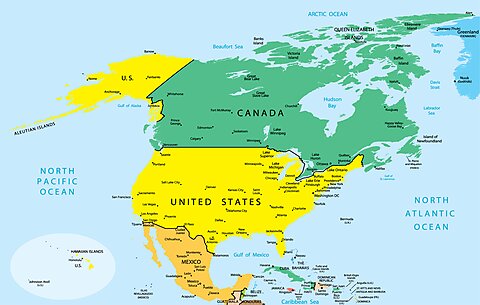

In yet another of his unending twists on trade, President Donald Trump has suggested he may not renew the current United States trade agreement with Canada and Mexico. Especially interesting was one of his explanations of why. “We don’t need anything that Canada has; we don’t need anything that Mexico has, but they need everything that we have, and they have to treat us better,” said Trump. “We don’t need their cars; we don’t need their lumber; we don’t need their energy; we don’t need anything that they have.”
According to the numbers from April of this year, Canada is the leading trading partner of the US in imports and exports of goods, totaling $86 billion. Mexico ranks second, totaling $64.8 billion in two-way goods trade with the US. Overall, the regional economic integration of the United States–Mexico–Canada Agreement (formerly the North American Free Trade Agreement before Trump made a few changes in it and relabeled it as the USMCA in his first presidential term) has made all three parties to the agreement more competitive domestically and internationally.
It is not remotely credible to suggest that the United States needs nothing from its two top trading partners any more than it would be credible to suggest that they need nothing from us. Trump’s dismissal of what Canada and Mexico have to offer Americans in trade is reminiscent of a famous communication sent to King George III by the Xianlong Emperor of the Qing Dynasty in China in 1775. The British Empire had sent a mission to Beijing, led by Lord George Macartney, to open China to British trade. But the Chinese emperor was not interested.
In his edict delivered to the British king, he said, with some disdain, “I see no value on objects strange or ingenious, and have no use for your country’s manufactures .… It behooves you, O King, to respect my sentiments and to display even greater devotion and loyalty in future ….” (See Harry G. Gelber, The Dragon and the Foreign Devil: China and the World, 1100 B.C. to the Present (New York: Walker and Company, 2007, 164).
The dismissal of the economic gains that result from trade was one reason why the Qing Dynasty was the last Chinese dynasty. What followed were two more centuries of Chinese economic stagnation and decline before a more trade-minded Chinese leader, Deng Xiao Ping, assumed power in the 1980s.
Let’s hope that the same does not happen to the United States because President Trump has no interest in importing goods from the two countries that send us the most and thus contribute significantly to the prosperity of the American people.