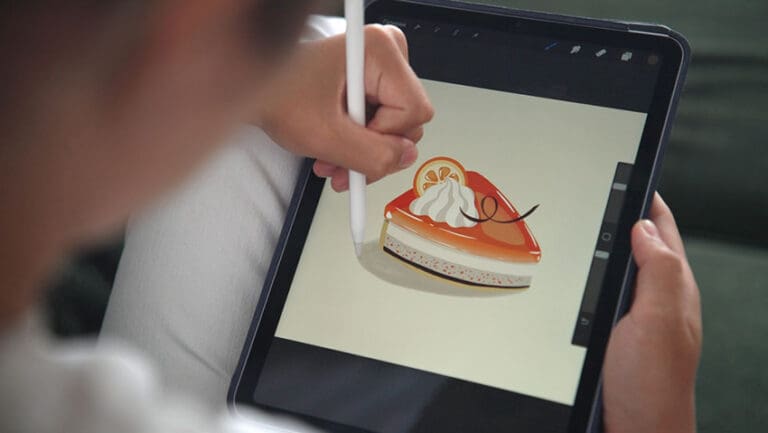
Pricing art can feel strangely personal. You can spend ten hours on a piece, love the result, then stare at the price box thinking, “What would someone actually pay for this?”
The answer should not come from confidence alone—or from copying the cheapest artist in your feed. A useful price has to cover your costs, pay you for your work, make sense in your market, and still feel reasonable to the customer you want to reach.

Start With the Price You Cannot Afford to Go Below
Before checking what competitors charge, calculate your floor to find the point where a sale still makes financial sense.
For original art, list direct costs such as canvas or paper, paint, ink, framing, specialty materials, and outsourced work. Add the value of your time. Depending on how you sell, you may also need to account for packaging, payment processing, marketplace or gallery commissions, and other selling expenses.
A useful starting formula is:
Materials + labor + selling/production costs + profit = retail price
This is not a universal formula for valuing art. Two pieces that cost the same to create can have very different market values. Think of it as a safety net that helps you spot a price that looks attractive but leaves you earning almost nothing.
For prints and merchandise, calculate the cost per item instead. A low price is not useful if production and selling costs consume nearly all the revenue.
Use the Market as a Reality Check
Now look outward.
Search for artists whose work is genuinely comparable to yours in medium, size, product type, audience, career stage, and presentation. You are not looking for a number to copy. You are trying to find the range in which your own price makes sense.
Pricing factor
What to check
Materials and production
What does each piece or product actually cost to make?
Comparable artists
What are similar creators charging for similar work?
Market demand
Which formats, sizes, or products attract consistent interest?
Customer expectations
What price range suits your audience and the buying occasion?
If your price sits well above comparable work, buyers will usually need a clear reason—perhaps premium materials, hand-finishing, a limited edition, or an established collector base.
Give Yourself Room to Test
Artiststore custom holographic keychain design interface showing product options, pricing, and preview.
Your first price does not have to become your forever price.
This is where print-on-demand can make experimentation less risky. On artiststore.com, artists can set their own selling prices and margins, while products are produced on demand rather than requiring inventory upfront. That means you can adjust a retail price and observe customer response without first buying stock at the old price.
Keep tests simple. Change one thing at a time. If you lower a price while also replacing the product photo and launching a promotion, you will not know which change influenced sales.
Pro tip: Give each price enough time to collect useful feedback. A quiet Tuesday is not proof that your artwork is overpriced!
Price for the Customer You Actually Have
Artists often worry that a price feels too high. The better question is whether it feels too high for the customer they actually want to reach.
A collector considering an original painting has different expectations from a convention visitor choosing a sticker or small print. A signed limited-edition print may support a higher price than an open-edition poster because availability is intentionally restricted.
That is why one artwork can sometimes support several price points in different formats. The original may sit at the top, limited or signed prints in the middle, and smaller merchandise can offer a more accessible way to own the design.
This does not mean you need to make everything cheap. It means the price should fit the product and the person buying it.
Know When to Raise Your Prices
A higher price is easier to support when something meaningful has changed. That might include:
Higher material or production costs.
Stronger, more consistent demand.
Better materials or added hand-finishing.
A growing sales history.
Moving from open editions to limited releases.
Avoid raising prices simply because another artist went viral with a higher number. Their audience, costs, demand, and career stage may be completely different.
Customers cannot see the spreadsheet behind your price. If premium materials, limited quantities, or extra finishing add value, communicate those details clearly on the product page.
Final Thoughts
There is no secret “correct” price that works for every piece of art.
Start with your real costs, compare your work with the right part of the market, and pay attention to what customers expect from each format. Test thoughtfully, keep your pricing logic consistent, and adjust as your costs, audience, and sales history change.
The goal is not to be the cheapest artist in the room. It is to reach a price where the customer understands the value, the sale is worthwhile for you, and you can afford to keep creating the work they came to you for.