
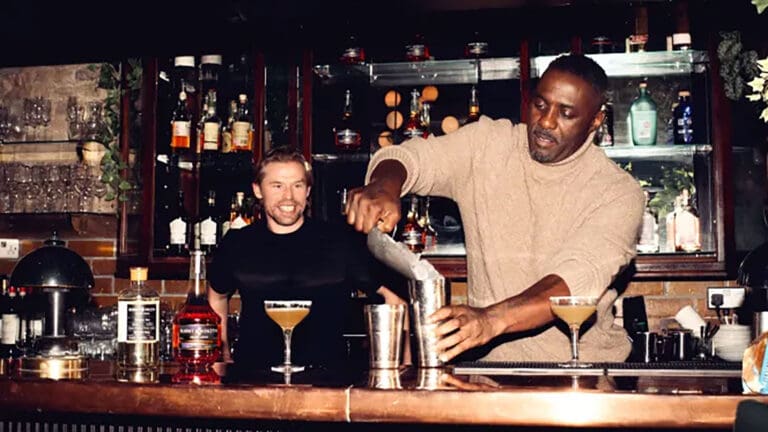
Sir Idris Elba has taken a stake in Burnt Faith, the Walthamstow business that is London’s first brandy distillery in more than 200 years, becoming co-owner alongside its founder, Simon Wright.

The financial terms of the deal were not disclosed. Burnt Faith valued itself at £6.5m last year during a crowdfunding campaign. Elba, the star of the BBC crime drama Luther, will join the company’s board and take an active role in the direction of the business.
Wright, an entrepreneur, previously ran Hawkes, which was London’s first inner-city cidery. He sold Hawkes to BrewDog in 2018 and opened the Burnt Faith distillery in northeast London in 2023.
Elba, 54, told The Sunday Times that he first came across the brand through the Jamaican dancehall artist Beenie Man, after a promotional gig held in an off-licence in Shoreditch, east London.
He said: “We stopped at this hotel in Hackney and said, ‘Let’s have a drink’ … The bartender was like, ‘Oh my god, Beenie Man!’”
“We started talking about what to drink and [Beenie Man] said: ‘Yeah, I’m in London, I want some good brandy.’ The bottle of Burnt Faith came out and that was me. He told the bartender how to mix it, and all I can say is I don’t remember much of the afternoon … I was sold.”
The investment is the latest in a series for the actor, musician, DJ and producer, who was knighted in June for services to young people. Elba, who was born in Hackney, co-founded the champagne business Porte Noire in 2018 with David Farber, the owner of Connaught Wine Cellars in Marble Arch. The pair opened a wine bar of the same name in King’s Cross in 2021.
“That’s been a nine-year relationship [with Porte Noire]. Much learning, that’s a hard product to move; champagne’s a very saturated market. I’ve had a bit of experience with pushing that bad boy up the hill,” Elba said.
Elba was also an investor in Huel, the meal replacement brand, which was sold to Danone in March for almost £900m, a deal covered in Business Matters’ report on Danone’s acquisition of Huel. In 2020, Elba and his wife, Sabrina Dhowre Elba, co-founded S’able Labs, which describes itself as a “melanin-inclusive” skincare brand.
Wright pointed to the size of the category. “From my perspective, the numbers speak for themselves,” he said. “Brandy, even in the UK, is twice the size of the tequila market, and it just seems like people just weren’t paying attention to it, it is over 20 million bottles a year.”
The distillery, built on the site of a former Pentecostal church, uses a French Charentais still. For its main “Batch One” brandy, it distils four wine varieties, Trebbiano, Chardonnay, Sauvignon and Muscat Blanc, into a base spirit that is then aged in wooden casks.
French cognac houses operate under strict rules limiting the wines and types of cask they can use. British law is less restrictive, which allows Burnt Faith to take a more experimental approach, for instance by finishing brandies in American bourbon casks.
In 2024, the business agreed a deal to sell its products in Tesco, where bottles sell for upwards of £35. Other investors include Matthew Freud, the founder of PR firm Freud Communications. Other independent producers, such as Hensol Castle Distillery in Wales, have also pursued supermarket listings.
Elba and Wright said they would look at growing the business in the US and west Africa, but that the UK would remain their main focus.
The investment comes as British spirits makers face higher costs for energy, labour and alcohol duty, while many consumers cut back on discretionary spending.
Elba’s advice to budding entrepreneurs was: “Know your market and don’t be afraid to pivot. Also, have fun. I know it sounds like a really basic one, but if you enjoy doing something, it makes it a lot easier to get your achievements. If it’s a struggle for you, maybe you should consider if that’s the business you want to be in.”