

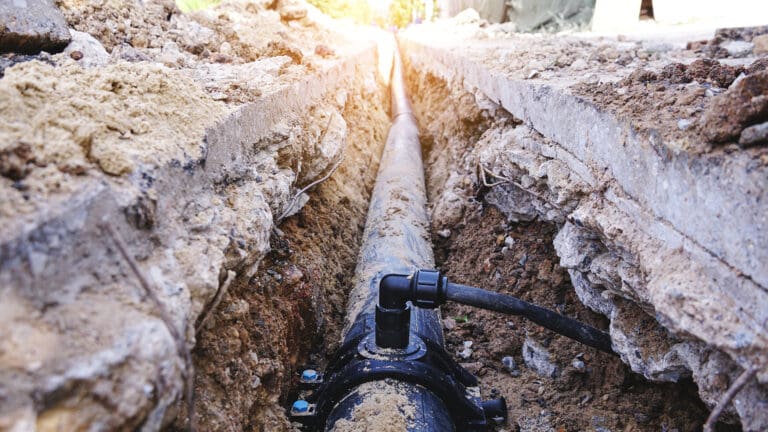
For an SME, keeping drainage information accurate and accessible is a practical way to support site management and pollution prevention. The value lies in knowing which drains carry water away, where they lead and whether the people making decisions on site can use that information.

Why a drainage plan belongs in everyday site management
Drainage can be easy to overlook when a site appears to be working normally. Yet a yard drain, a wash-down area and a foul sewer connection may serve different purposes and lead to different destinations. If staff mistake one for another, contaminated water could enter a route that carries it into the environment. GOV.UK guidance on pollution prevention for businesses, which applies to England, recommends keeping a drainage plan that helps people understand the system and use drains correctly.
The plan is most useful when treated as a working site document rather than a drawing produced for one project and then filed away. It can inform decisions about where cleaning takes place, how contractors carry out work and which parts of the network need attention during maintenance. It also gives managers a starting point when assessing how a proposed change might affect water movement. None of those decisions can be made reliably from a map alone, but an accurate map gives the people responsible a shared view of the site.
What a useful plan needs to show
A useful plan distinguishes surface-water drains from foul-water drains and identifies any combined drainage. Surface-water drains typically carry rainwater away from roofs and paved areas; foul drains carry wastewater towards the sewerage system. A combined system carries both. These differences matter because a surface-water route may discharge to a watercourse or another point in the environment rather than passing through wastewater treatment. A label saying simply “drain” does little to help a member of staff choose the right course of action.
The drawing should show where drains are located, the direction of flow, where they leave the property and where they discharge. Marking relevant inspection points and connections can make the record easier to use during maintenance or site works. The England guidance also recommends making the plan easy for staff to find and understand. A clear legend, an identifiable site layout and a readily available current version are therefore more valuable than a detailed drawing that only its original author can interpret. Staff should be able to relate what they see on the page to the drains and work areas around them.
Keeping the drawing aligned with the real site
Business premises rarely stay unchanged. A yard may be resurfaced, an extension may add roof drainage, or equipment may be moved to a different part of the site. New connections and alterations to existing pipework can also change the route water takes. GOV.UK advises businesses in England to review and update their drainage plans after changes to a site. That review is particularly important when a change affects where water is collected, what may enter a drain or how a drainage route connects to the rest of the network.
Assigning someone responsibility for the record makes that advice easier to put into practice. Drawings produced for building works, maintenance notes and information from contractors can all prompt a check against the current plan. Recording when the plan was last reviewed helps staff distinguish an up-to-date version from an older copy, while replacing superseded copies reduces the chance of conflicting instructions. The aim is not to redraw the entire system after every minor task. It is to ensure that a meaningful change on the ground is reflected in the information people use to manage it.
Connecting the plan to how people actually use drains
A drainage plan becomes more effective when it informs routine activities. Vehicle washing, yard cleaning and the cleaning of food-production areas are examples of work that can produce contaminated water. The England guidance says contaminated water must not enter surface-water drains. Where a business needs to discharge such water into a foul or combined drain, permission from its water company may be required. Knowing the destination of a nearby gully is therefore relevant before a cleaning process begins, not only after a problem has been noticed.
Managers can use the plan to make those distinctions clear to employees and contractors whose work takes place near drains. For example, a site induction can identify which areas drain to surface water and who to ask before starting an unfamiliar wash-down task. Clear identification at the point of use can help people match a physical drain to the drawing. The plan should also be available to those managing maintenance or investigating a suspected misconnection. Such measures turn drainage information into a practical control, while recognising that a drawing cannot replace appropriate working practices or the permissions a particular activity requires.
When a survey can clarify what records cannot
Existing drawings are a starting point, but they may not settle every question about an older or altered site. A drain cover can be visible without revealing the type of drain beneath it, its direction of flow or its eventual destination. Where drain types are unknown, the England guidance suggests that a full drainage survey may be needed. The useful question for a site manager is which uncertainty must be resolved: the location of a line, the connection between two points or the condition of a section that is difficult to inspect.
Professional investigation can provide evidence to improve the plan rather than leaving staff to work from assumptions. ICE Drainage offers drain testing and mapping services, alongside CCTV drain surveys that include a written report and video. Those services can help a business build a clearer record of its drainage network when existing information needs checking. The findings still need to be incorporated into a plan that staff can access and use; a survey report kept separately does not, by itself, resolve day-to-day uncertainty on site.
Making the plan part of routine maintenance
The simplest way to keep a drainage plan useful is to give it a place in existing site routines. The person responsible for facilities or maintenance can check whether completed works affect the drawing, whether new information has been recorded and whether the version available to staff is current. A maintenance visit may reveal a connection that needs tracing; a contractor’s report may clarify a route that was previously uncertain. Each finding is an opportunity to improve the record before the next decision depends on it.
Accessibility matters as much as accuracy. A plan that cannot be found during a change of shift or understood by the people working near drains offers limited practical help. Businesses can start by taking their current drawing around the site and asking whether it clearly identifies drain types, flow directions and discharge destinations. Any gaps found can then be addressed through a review of records or a targeted investigation. The result is a plan that reflects how the site operates today and helps people make better-informed decisions about where water goes.