Rolls-Royce will receive government support for a £2.5bn programme to build engines for narrowbody passenger jets, with the taxpayer understood to be covering £1.25bn of the cost, after Chancellor John Healey announced the deal in yesterday’s Budget.

The 10-year research and technology programme is expected to be funded equally by the government and the Derby-based engineering group, which is valued at £103bn. Rolls-Royce said delivering the initial stages would support 3,300 UK jobs at the company and its supply chain partners by the end of 2029, initially based mainly around its facilities in Derby and Bristol.
The deal backs Rolls-Royce’s bid to return to the market for engines on the single-aisle aircraft used on short-haul routes. The company has been absent from that market since selling its stake in the International Aero Engines consortium to Pratt & Whitney in 2012, Reuters reported.
The first stage will involve Rolls-Royce producing demonstrator engines for Airbus and Boeing, which are expected to focus on their next generation of aircraft, or new versions of existing models, from about 2030. In a statement issued yesterday, Rolls-Royce said new narrowbody aircraft were expected to enter service in the mid-to-late 2030s, with manufacturers choosing engine partners over the next few years.
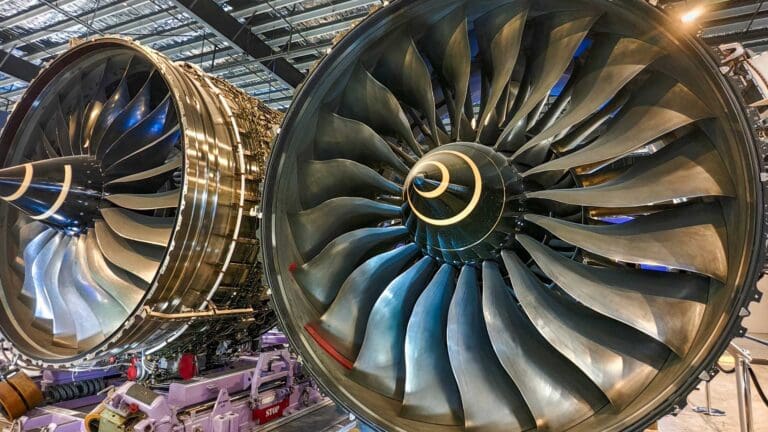
The programme builds on UltraFan, a geared turbofan Rolls-Royce has been developing for more than a decade that is designed to be more fuel-efficient and quieter than current engines. It has so far been aimed at the long-haul market the company already serves, particularly the Airbus A350 and Boeing 787.
The funding will allow Rolls-Royce to develop and demonstrate a prototype UltraFan for narrowbody planes, a market about eight times the size of its current business, putting it in direct competition with GE and Pratt & Whitney. CFM International, a joint venture between GE Aerospace and Safran, and Pratt & Whitney dominate the market for engines on the Airbus A320 and Boeing 737 families, according to Reuters.
The government said funding would be subject to legal, value-for-money, affordability and approval processes, Reuters reported, while Rolls-Royce said the plan remained subject to a final agreement. The company’s statement did not set out how the cost would be divided, and said it expected to invest significantly more than the government across the wider narrowbody programme.
As the project moves forward, the government is understood to want commitments from Rolls-Royce to build new facilities and recruit a new workforce in the UK. The company said that if aircraft makers chose its technology, it would select UK sites for new assembly and test facilities, and that new factories would also need to be built by its UK supply chain. Rolls-Royce says it spends more than £2bn with over 1,350 British suppliers.
Whether the engine reaches full production depends on Rolls-Royce winning business from aircraft manufacturers and airlines. The company has said it would only go into production with a partner from among its competitors, which also include Safran of France, to share the risk. Rolls-Royce said that securing a UK engine position on new narrowbody aircraft could create tens of thousands more jobs and add £120bn to the UK economy over the programme’s lifetime.
Chief executive Tufan Erginbilgic had lobbied the government for this kind of financial support, and warned in February that UltraFan production could move overseas without UK government support.
Prime Minister Andy Burnham said: “Britain has always been an industrial powerhouse. But that strength isn’t just part of our past, it should be a core part of our future too. That’s why we’re driving forward reindustrialisation and this agreement shows what that looks like in practice.”
Erginbilgic said: “This is a landmark moment for the UK’s aerospace industry. This is a once-in-a-generation opportunity to lay the foundations for decades of sustainable economic growth across the UK, creating high-value jobs and transforming the country’s advanced manufacturing supply chain.”
The engine deal was one of several industrial measures in Healey’s first Budget, which also included a scheme to cut electricity bills by 25 per cent for 10,000 industrial firms from April.