Travis Fisher and Michael Abi-Nader

America has big plans. Getting permission to build a big project is another story. The new Bipartisan American Affordability and Jobs Act of 2026, or BAAJA (pronounced like, and just as bold and refreshing as, Mountain Dew’s Baja Blast), aims to remove political barriers that keep projects on hold. Senators Capito (R‑WV), Lee (R‑UT), Whitehouse (D‑RI), and Heinrich (D‑NM) introduced the bill text—a whopping 417 pages—on September 30. BAAJA builds on previous reform efforts, such as Manchin-Barrasso’s EPRA in 2024 and this term’s SPEED and PERMIT Acts. Unlike earlier efforts, BAAJA is already gaining strong bipartisan support, giving it a fighting chance to clear the Senate’s 60-vote requirement when it reconvenes the week of November 9.
This moment is different for myriad reasons—electricity demand growth is reaching levels not seen this century, costly Biden-era energy subsidies have mostly been cut or curtailed, and Democrats now understand how much damage a president can inflict when he despises certain forms of energy. The Keystone XL oil pipeline was the poster child for Democrats’ arbitrary cancellation of major energy projects under Presidents Obama and Biden, and Trump has spent his second term applying the same playbook to solar and wind projects.
And the stakes are high. Consulting firm McKinsey estimated in 2025 that up to $1.5 trillion in infrastructure investment was awaiting federal permits. A survey by the National Association of Manufacturers and the Foundation for American Innovation found that nearly two-thirds of respondents would likely increase US investment if permitting were faster and more predictable. Permitting reform matters because we all pay more than we need to for basic energy services. Reducing the political risk premium by making energy projects less subject to political whims is a no-brainer answer to concerns about energy affordability.
BAAJA could be the most impactful energy bill since the Energy Policy Act of 2005. What follows is our analysis of the most significant reforms.
National Environmental Policy Act
Comprehensive permitting reform would be impossible without amendments to the National Environmental Policy Act (NEPA), and BAAJA delivers. NEPA has become a favorite weapon used by environmental litigants against big projects. Those that require a federal permit, such as road construction on federal lands, trigger a NEPA review, which (1) introduces a long and expensive delay given the years-long process of creating a robust Environmental Impact Statement (EIS) and (2) gives opponents a handy way to stop projects mid-construction.
In 2019, the median time to complete an EIS was 3.6 years. By 2024, it had fallen to 2.2 years, in part because Congress passed the 2023 Fiscal Responsibility Act, which codified one-year deadlines for Environmental Assessments and two-year deadlines for EISs, which agencies can extend after consulting with the applicant. BAAJA retains the same deadlines but requires applicant permission (not just consultation) to extend them. That change should reinforce shorter deadlines and allow businesses to spend less time doing paperwork and more time building.
BAAJA also gets creative on deadline enforcement. It would add an unusual (but clever) enforcement mechanism for agencies that miss environmental review or permitting deadlines. Sixty days after an agency misses a deadline, BAAJA would bar the agency head, such as Environmental Protection Agency Administrator Lee Zeldin, from traveling more than 25 miles from their “official duty station” for official business. The restriction would remain in effect until the agency completes the overdue environmental document and the outstanding authorizations. This creative enforcement is warranted because, despite some recent improvements, over half of agency NEPA reviews miss their deadline. To further align incentives, agency heads should consider applying the imaginary ankle bracelet to all employees working on permitting.
That said, the real problem with NEPA is not the EIS paperwork but lawsuits that use alleged NEPA violations to put projects in a litigation “doom loop.” Litigation delays drive up costs, scare off investors, and kill projects. BAAJA would save us from the doom loop by raising the bar for legal standing, tightening the time window for challenges, and narrowing the use of “stop work” orders.
On legal standing, BAAJA would build on existing requirements and expressly require plaintiffs to allege actual or imminent direct harm—and to have raised their concerns during the permitting agency’s public comment period. On timing, plaintiffs would have just 150 days to file lawsuits after the agency publishes the authorization, down from 6 years. Regarding project certainty during litigation, BAAJA would prohibit courts from halting construction solely to remedy a NEPA violation while the case continues. Developers would move forward with greater confidence that the permitting agency will not issue a “stop work” order while it sorts through a legal challenge.
Clean Water Act
BAAJA’s changes to the Clean Water Act (CWA) would make it much easier to build multi-state infrastructure, including oil/gas pipelines and electric transmission lines. Section 401 of the CWA aims to protect water quality, but it also allows states to block projects for essentially any reason by denying the required certification or withdrawing the application. In practice, CWA 401 has become a de facto veto used by governors to block energy infrastructure they oppose. For example, New York restricts new natural gas pipelines meant to supply energy-starved New England by simply withdrawing the pipeline developer’s CWA 401 application. BAAJA would make a state prove that no reasonable modification could resolve its water-quality concerns before blocking a project. There is also an express right to challenge a state’s decision in court.
Senator Armstrong (R‑OK) has been a leading champion on CWA reform. He has also been tireless in his outreach, which included hosting a meeting with Cato’s energy team. In that meeting, Senator Armstrong stressed the bipartisan appeal of preventing one state from vetoing a project that would benefit consumers across many states. A blue state may be inclined to reject a natural gas pipeline, while a red state might oppose an electric transmission line. In both cases, the political leadership of a given state should not be able to block infrastructure that would get energy to people who need it via interstate commerce.
Permit Certainty
BAAJA restricts agencies from withdrawing permits or stopping approved projects. Legal violations and serious threats are the exceptions, but the bill empowers courts to police agencies and award compensation for affected developers. Both political parties have reversed existing approvals, as Biden did with Keystone XL and Trump did with the Lava Ridge wind project. This change would make it significantly harder for administrations to halt approved energy projects for political reasons. Permit certainty is a huge win for American consumers because we all pay the risk premium baked into infrastructure projects.
Electric Transmission
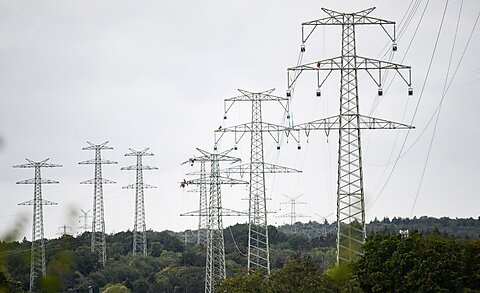
BAAJA’s transmission section includes several improvements, particularly a new measure to resolve an oversight gap for local, lower-voltage transmission projects. Smaller projects can slip past the scrutiny that larger projects face, allowing utilities to charge customers without adequately demonstrating that they offer the best value. This leaves households and businesses paying higher electricity bills for many small projects that, in the aggregate, cost more and deliver less energy than larger projects.
As we outlined earlier this year in testimony to the Senate Committee on Energy and Natural Resources, utilities’ reliance on these projects “does not work very well for the consumer, and it increases the all-in cost of power.” Lawmakers who want to make energy more affordable should embrace the new provision and stop the proliferation of small transmission projects that are economically inefficient yet have become a cash cow for incumbent utilities. If the bill passes, states will be empowered to close this loophole, and utilities will have stronger incentives to build a low-cost, reliable electricity system.
The mechanism is well-crafted—BAAJA adds a formal process whereby states can refer utilities to the Federal Energy Regulatory Commission (FERC) for investigation. If a utility ignores better or cheaper options or disrupts regional grid planning, FERC could make it change its plans and limit how much profit it earns from local power lines. FERC could also impose fines of up to $5 million for qualifying projects it finds imprudent and harmful to customers. Together, these provisions ensure that investments serve customers rather than simply increase utilities’ earnings as electricity demand continues to grow.
One weakness of BAAJA is its acceptance of FERC’s Order No. 1920, which would provide congressional backing for a framework that would stretch FERC’s authority to endorse state-level restrictions on certain energy resources. Order No. 1920 socializes the costs of state-level energy mandates, to the detriment of taxpayers and ratepayers. Nevertheless, bipartisan deals require compromise, and this is a relatively low cost of entry into the deep permitting reforms elsewhere in BAAJA. In fact, when we opposed Order No. 1920 more than two years ago, it was not clear that (1) legal challenges to the rule would fail or (2) leadership at FERC under Trump 2.0 would decline to make significant changes to the rule. Now that we know we’re stuck with 1920, this concession is essentially costless.
Data Centers
The ratepayer protection provisions of BAAJA aim to prevent new data centers from shifting grid costs to other customers. The goal is reasonable—especially given the number of data center developers and utilities that have already signed President Trump’s Ratepayer Protection Pledge—but the section risks shifting costs in the opposite direction. Determining a data center’s share of grid costs is difficult, and the bill allows states to impose charges beyond those costs and use the extra revenue to lower other customers’ bills. That risks making data centers subsidize everyone else. However, some degree of cross-subsidization from data centers to other customers might be politically necessary to soften the heavy opposition to data centers, even if the policy is less than ideal.
BAAJA does not address one of the most important ratepayer protection tools for state policymakers. As we have discussed elsewhere, allowing data centers to create their own off-grid power systems offers another way to meet growing demand without charging other customers for grid expansion. The principled way to achieve that result is not by singling out a specific type of customer in the Federal Power Act but by allowing new industrial projects of all types to build new electricity networks that impose no costs on the shared power grid.
Political Opposition and the Path Forward
BAAJA has exposed philosophical divisions among environmentalists: some want America to build cleaner; others want to block all new hydrocarbon projects, even if that means we build less. But making it easier to build can benefit every side of the energy debate. Faster permitting can help wind, solar, geothermal, storage, and nuclear projects move forward, giving environmentalists plenty to gain from reform. Likewise, many incumbent electric utilities will feel threatened by the increased scrutiny in BAAJA. But recent events demonstrate why such scrutiny is overdue, and why the Ratepayer Protection Pledge alone cannot guarantee real protection for ratepayers.
Permitting reform is more important now than ever before, and Senator Heinrich said it best: “America is entering a new era of energy demand. We have an enormous opportunity to build big things again to meet that moment — to build more generation, expand our grid, create more jobs, lower energy costs, and make sure we have the energy we need to compete.”
BAAJA is an excellent set of bipartisan reforms. Not perfect by any means, but a substantial movement in the right direction. Our question to policymakers is this: Will you embrace reform, or will the federal government continue to deny permission for much-needed energy projects?
Cato Intern Sonia Joshi contributed to this article.