Imagination Technologies, the Hertfordshire microchip designer owned by Chinese-backed investors, has warned of “material uncertainty” over its future after revenue fell 39.7 per cent to $65.1m in 2025, leaving it at risk of breaching its debt covenants.

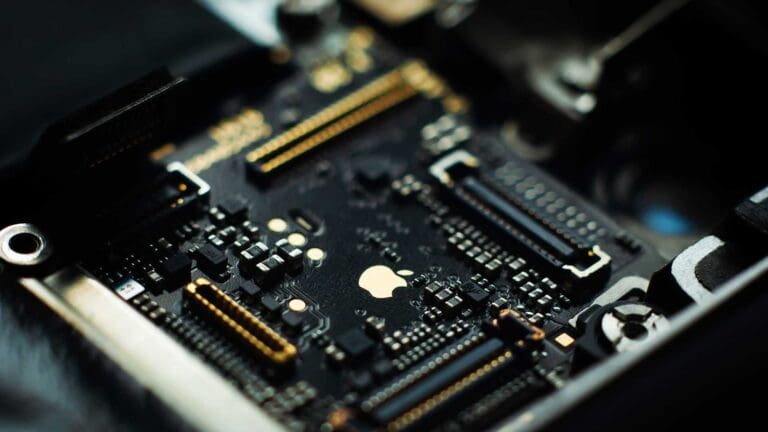
The company said in its accounts that the fall in revenue was primarily due to the end of a long-term customer relationship, thought to be with Apple. It also flagged softness in the automotive sector due to “challenging macroeconomic conditions”.
Imagination said it had “insufficient cash to comply with minimum liquidity requirements for loan covenants” on its financing from Fortress Investment Group, the US private equity firm. Fortress provided the company with a $100m convertible loan in July 2024.
“The directors are confident that ITGL will be able to secure additional liquidity and, if required, raise additional shareholder funding,” the company said in the accounts.
Imagination’s owner, Canyon Bridge, a private equity firm funded by the Chinese state, has provided $37m in additional liquidity this year.
In a statement, Imagination said: “Since the start of the year, trading performance, customer engagement and commercial momentum have strengthened significantly and we have secured a number of important commercial wins. As a result, our liquidity position has improved materially relative to the position reflected in those accounts.”
The company said it had signed a long-term deal that “is expected to transform Imagination’s presence in the consumer device market and drive significant royalty income in future years”.
Canyon Bridge previously tried to put the business up for sale but withdrew from the process last summer due to “poor market conditions”. Imagination said “no sale of the business is currently under active consideration”.
Imagination, based in Kings Langley, designs intellectual property that technology companies use to make microchips. For more than a decade it supplied the graphics processing units (GPUs) used in Apple’s mobile devices, before the iPhone maker said in 2017 that it would use its own designs.
The announcement sent Imagination’s shares sharply lower, and Canyon Bridge bought the company off the London Stock Exchange for £550m later that year. Imagination reached a new “multi-year” licensing deal with Apple in 2020.
The takeover later drew political attention after Ron Black, then Imagination’s chief executive, blew the whistle on an attempted boardroom takeover by the Chinese investors. Black was sacked and was later awarded £1.5m in compensation for unfair dismissal.
In a separate case in November 2022, the government blocked the takeover of Newport Wafer Fab by Chinese-owned Nexperia, citing “a risk to national security”.
Roughly 18 per cent of Imagination’s revenue comes from China and about 31 per cent from the US. The company flagged “existing export control restrictions” on the sale of its intellectual property as a risk to its business.
Imagination is trying to establish a niche in the artificial intelligence market, targeting “edge AI”, which runs on local devices such as phones and computers rather than in the data centres that power cloud servers.
It appointed Markus Mosen as chief executive in February. Mosen previously built up WeEn Semiconductors, which specialised in power chips and also had Chinese funding. He said Imagination had an “ambitious technology road map for graphics and AI at the edge”.
The company released its latest GPU design last month. It is designed to handle traditional graphics processing and AI workloads simultaneously, and Imagination claims it can reduce power consumption by 35 per cent. The company also said it had “multiple lead customers” signed up to buy its next generation of GPU designs.
Imagination said: “The market is responding positively to our investments in edge AI and neural rendering technologies and we continue to deliver on our product road map. We remain focused on executing our strategy and building a sustainable growth business.”