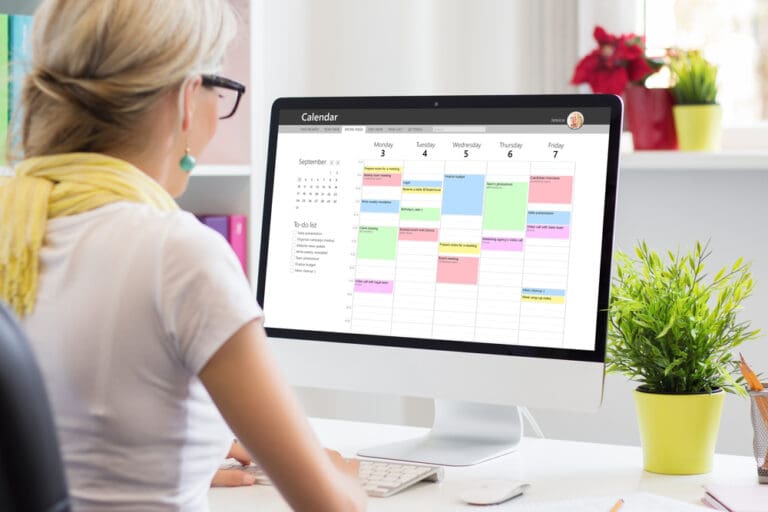
Most organisations have no shortage of goal-setting activity. Objectives are discussed in appraisals, noted in HR systems and revisited – if at all – twelve months later.
What’s missing isn’t the intention to manage performance. It’s the infrastructure to do it consistently, visibly and in a way that connects individual goals to organisational outcomes. The employee performance management service from Staff Skills academy+ is built around exactly that infrastructure – giving managers and employees a shared space to set goals, track progress and identify the development needed to close the gap between where someone is and where they need to be.

Why goal-setting without tracking doesn’t work
Setting a goal is the easy part. The harder part is maintaining visibility of progress toward it over weeks and months – especially when day-to-day pressures consistently crowd out the longer-term development agenda.
The pattern most organisations fall into is familiar. Goals are set at the start of the year with genuine intent. They sit in a document, a spreadsheet or an HR system that nobody opens between formal review points. By the time the next review arrives, the goals are either forgotten, no longer relevant or so loosely defined that assessing progress against them is largely subjective.
This isn’t a motivation problem. It’s a visibility problem. When goals aren’t actively tracked – when neither the manager nor the employee has a clear, up-to-date picture of where things stand – progress stalls not because people don’t care but because there’s no structure keeping the goals alive between conversations.
An employee performance management service that provides continuous visibility of goal progress changes this dynamic. Goals become living documents rather than annual artefacts. Progress is visible to both manager and employee at any point. And the regular check-in conversation has a concrete foundation – actual progress data – rather than relying on memory and subjective impression.
Employee performance management system: connecting goals to development
One of the most significant limitations of traditional performance management approaches is the separation between performance conversations and learning and development activity. A manager identifies a capability gap in a review conversation. The employee agrees to work on it. And then nothing links that identified gap to any specific development activity or tracks whether the development has actually happened.
An employee performance management system that integrates with a learning platform closes this loop. When a capability gap is identified – whether through a formal review, a check-in conversation or a manager’s observation – a learning pathway can be assigned directly from within the performance management tool. The employee can see what development has been recommended and why. The manager can see whether the recommended learning has been completed and whether it’s having the intended effect on performance.
This integration between performance management and learning is where Staff Skills academy+ provides something genuinely distinctive. The Performance Hub connects directly with the Staff Skills academy+ LMS, meaning that the conversation about what someone needs to develop can immediately translate into assigned courses, tracked completion and visible progress – all within a single system.
Setting goals that are worth tracking
Not all goals are equally trackable and the quality of goal-setting has a direct effect on how useful performance management infrastructure can be. A goal that is vague, unmeasurable or disconnected from any observable outcome is difficult to track regardless of how good the system is.
The most useful goals share a set of characteristics. They are specific enough that both manager and employee have the same understanding of what success looks like. They have a timeframe that creates appropriate urgency without being arbitrary. They connect to something that matters – either to the individual’s development or to a business outcome the team is working toward. And they are achievable within the constraints of the employee’s current role and workload.
The Performance Hub supports structured goal-setting that builds these characteristics in from the start. Rather than free-text objectives that can mean different things to different people, goals are defined within a framework that prompts for the specifics that make tracking meaningful. This consistency also makes it possible to look across a team or a department and understand the pattern of goals being set – identifying where priorities are aligned and where gaps exist.
Employee performance management tool: making check-ins worth having
The check-in conversation – a regular, structured dialogue between manager and employee about performance, progress and development – is widely recognised as the most effective replacement for the once-yearly appraisal. But the quality of check-in conversations varies enormously depending on how well they’re supported.
An employee performance management tool that gives both manager and employee visibility of current goals, recent progress and outstanding development activity before the conversation starts changes the quality of the conversation itself. Rather than beginning from scratch each time – reconstructing context, recalling what was discussed previously and trying to remember what was agreed – both parties arrive with a shared picture of where things stand.
The Performance Hub supports this by maintaining a continuous record of goals, progress updates and development activity that both manager and employee can access and contribute to between formal conversations. Notes from previous check-ins are visible. Agreed actions are tracked. Development recommendations are linked to the goals they’re designed to support. The check-in becomes a focused, productive conversation rather than an administrative exercise.
Visibility across teams and departments
Individual goal-tracking is valuable. Visibility across a team, department or organisation is where performance management infrastructure delivers its most significant return for leaders and HR teams.
When performance data exists only in individual conversations and disconnected documents, it’s impossible for a line manager to see at a glance how their team is progressing against its goals. It’s impossible for an HR director to understand whether development activity is being driven by identified performance gaps or by ad hoc requests. And it’s impossible for senior leaders to connect the pattern of individual goals to the organisational priorities they’re meant to support.
The Performance Hub provides this visibility through reporting that aggregates individual goal and development data at team, department and organisational level. Managers can see who in their team has goals on track, who is falling behind and who hasn’t had a meaningful check-in recently. HR teams can see whether learning activity is being linked to performance goals or happening in isolation. And the data provides a foundation for conversations about resource allocation, development investment and organisational capability that previously had to rely on anecdote and impression.
Embedding performance management into how the business operates
The organisations that get the most from performance management infrastructure are those that treat it as an operational tool rather than an HR compliance mechanism. When goal-tracking and development planning are embedded into how managers and teams work day to day – rather than surfaced only at formal review points – they produce continuous improvement rather than periodic snapshots.
This requires performance management to be genuinely easy to use. If updating a goal or logging a check-in note requires navigating a complex system or completing extensive documentation, it won’t happen consistently. The Performance Hub is designed for the frequency of use that effective performance management actually requires – quick to update, easy to navigate and accessible from any device so that managers and employees can engage with it in the flow of their working day rather than only when they’re sitting at a desk.
It also requires performance management to be visibly connected to outcomes that people care about. Employees who can see how their goals connect to team priorities and how their development is being invested in are more likely to engage seriously with the process. Managers who can see the effect of good performance conversations on their team’s progress are more likely to prioritise them. The infrastructure supports the behaviour; the behaviour produces the outcomes.
Getting started with a performance management service
Implementing a performance management service doesn’t require a lengthy procurement process or a complex change management programme. The Performance Hub from Staff Skills academy+ is designed to be set up quickly and to deliver visible value from the first check-in conversations that use it.
The starting point is clarity about what you want the system to do. Which roles will use it? What types of goals will be tracked? How frequently will check-ins happen? How will performance management connect to the learning activity already happening through the LMS? These questions don’t require lengthy consultation to answer – they require the kind of practical decision-making that most HR teams and line managers are well-equipped to do.
Find out how the employee performance management service from Staff Skills academy+ can be set up for your organisation and what a structured approach to performance management could mean for your teams.