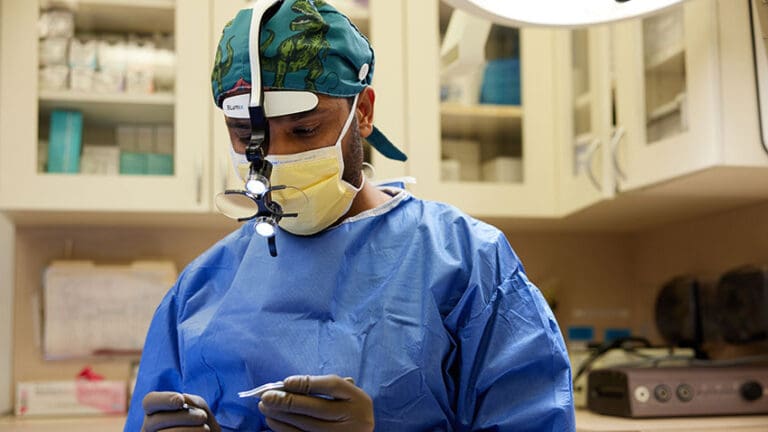
Dr Mansher Singh is a New York City-based facial plastic surgeon and the Owner and Medical Director of Mansher Singh, MD.
Known for his focus on facial rejuvenation, he has built a reputation for combining technical precision with a patient-centred approach to care. His work specialises in deep plane facelifts, neck lifts, eyelid surgery, and facial fat transfer, with an emphasis on achieving natural-looking, long-lasting results.

Born and raised in India, Dr Singh grew up in a family of doctors and became the 11th physician in his family. From an early age, he was surrounded by discussions about patient care, responsibility, and service. He attended a monastery-style boarding school where meditation, discipline, and structure were part of daily life, experiences that continue to influence his professional philosophy today.
After earning admission to the All India Institute of Medical Sciences (AIIMS), one of India’s most competitive medical schools, Dr Singh moved to the United States to pursue advanced training. His career path included research at Yale School of Medicine, general surgery training associated with Harvard Medical School, and a plastic surgery fellowship at Johns Hopkins School of Medicine. He is now among the few surgeons in the United States who are triple board certified.
Throughout his career, Dr Singh has focused on the idea that trust and long-term outcomes matter more than short-term trends. His commitment to continual learning, honest self-evaluation, and personalised patient care has helped establish him as a respected voice in facial plastic surgery. Today, he continues to advocate for education, transparency, and natural results within the field.
Mansher Singh on Discipline, Trust and Building a Career in Facial Surgery
Q: Tell us about your early years and what first inspired you to pursue medicine.
I was born and raised in India in a family of doctors. In fact, I was the 11th doctor in my family. Medicine was always part of everyday life. My parents were surgeons, and discussions about patient care happened regularly at home. That environment taught me the value of service and responsibility from a very young age.
Q: Was there anything unique about your education growing up?
Yes. I attended an all-boys boarding school from the age of 11. It was more like a monastery than a traditional school. We woke up at 5 a.m. every day and started with meditation. The concepts of discipline, karma and spirituality were deeply embedded in us. Looking back, those lessons shaped how I approach challenges today.
Q: What was the next major step in your journey?
Getting into AIIMS was a defining moment. More than 70,000 students applied for only 34 places in my class. It was extremely competitive. That experience reinforced the importance of preparation and persistence.
Q: Why did you decide to move to the United States?
I came to the United States as an exchange student for a summer programme at Johns Hopkins. I was impressed by the level of education and training. After medical school, I decided to pursue postgraduate training in the US.
Q: How did your training influence your career?
I was fortunate to train at institutions associated with Yale, Harvard and Johns Hopkins. Beyond technical skills, I learned the importance of continual improvement. The best surgeons I trained with never stopped learning, and that mindset stayed with me.
Q: Why did facial rejuvenation become your area of focus?
I was drawn to the combination of technical precision and artistry. Facial surgery is deeply personal. Patients trust you with their appearance and confidence. That responsibility should never be taken lightly.
Q: You started your own practice in New York City in 2021. What motivated that decision?
I always felt connected to New York’s energy. Starting my own practice immediately after training was certainly a risk, but I wanted to build something centred around patient trust, accessibility and long-term outcomes.
Q: What challenges did you face early in your career?
One challenge was building a practice focused on long-term results in an era of instant gratification. Social media often promotes quick transformations, but surgery is much more nuanced than that. Patients deserve honest conversations and realistic expectations.
Q: What have you learned from difficult moments?
One of the biggest lessons is that setbacks are inevitable. Success is not defined by perfection alone. It is defined by how you respond when challenges arise. Some of the strongest patient relationships I have today were built while navigating difficult recoveries together.
Q: How do you measure success today?
For me, success is measured by long-term outcomes and patient trust. I want patients to feel cared for throughout the entire journey. The most rewarding moments are when someone tells me they feel more confident and supported.
Q: What principles continue to guide you?
Humility, discipline and consistency. I constantly review my own outcomes because I believe growth comes from honest self-evaluation. Medicine is a field where learning never stops.
Q: What advice would you give to young professionals entering demanding careers?
Focus on what you can control. Work ethic, preparation and attitude matter far more than external circumstances. Keep learning, stay humble and remember that meaningful success is usually built over many years, not overnight.