

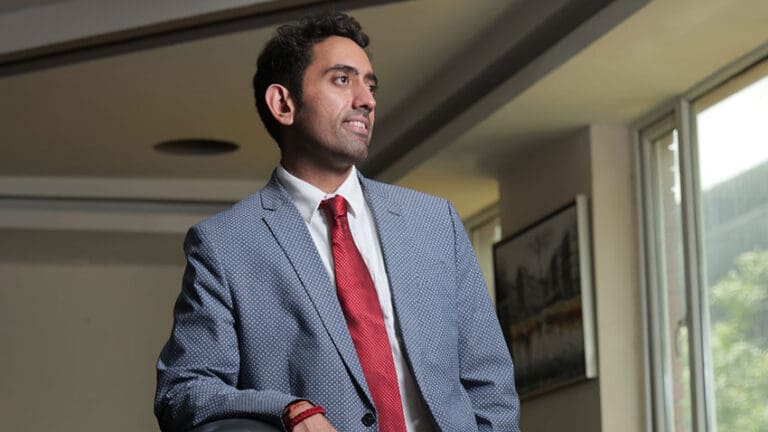
Growing up in an entrepreneurial family often leads people to measure success through business growth, financial results, or professional titles.
Akshay Kumar followed a different path. While his career has taken him through business development, finance, real estate, portfolio management, and entrepreneurship, the questions that have shaped him most have had little to do with business. Instead, they have centered on purpose, service, and what it means to build a life that creates lasting value for others.

“I don’t define success only by wealth, status, or external achievement,” Kumar says. “True success means discovering and stabilizing an inner sense of happiness, peace, and purpose.”
That perspective has influenced every stage of his career, from the lessons he learned growing up in Houston to the volunteer work that continues to shape his future.
How Family Shaped Akshay Kumar’s Leadership Philosophy
Kumar was raised in Houston, Texas, where his parents built a small business into a successful real estate company after immigrating to the United States. Watching them overcome obstacles through discipline and perseverance gave him an early appreciation for entrepreneurship, but another part of his family life would leave an even deeper impression.
His sister, Shipra Kumar, has a mental disability. Growing up alongside her exposed him to challenges that many people never experience firsthand and taught him lessons about compassion, patience, and resilience long before he entered the business world.
“My parents taught me resilience, determination, faith, and the importance of service,” he says. “Growing up with my sister taught me compassion and gave me a responsibility to help people who often don’t have the same opportunities.”
Those experiences became the foundation for both his personal values and his professional ambitions.
Why Business Became a Tool Instead of the Destination
Kumar earned his degree in Business Management from Penn State University, graduating with honors in 2015. Nearly a decade later, he completed his MBA at Rice University, also graduating with honors. His education strengthened his understanding of finance, leadership, strategy, and organizational management, but it also raised larger questions about how those skills should be used.
As his career expanded across business development, marketing, portfolio management, and operations in both the United States and India, he found himself thinking less about prestige and more about purpose.
“There was a time when I was searching for meaning more than success,” he says. “I realized that achievement without purpose doesn’t create lasting fulfillment.”
That search led him beyond traditional business thinking and toward philosophy and spirituality. Studying Eastern philosophy encouraged him to think differently about leadership, responsibility, and happiness. Instead of asking what he wanted to accomplish, he began asking why those accomplishments mattered.
The Connection Between Business and Volunteer Work
Many professionals separate their careers from their volunteer work. Kumar sees them as part of the same mission.
His experience in business taught him that strong systems produce consistent results. Over time, he began applying that same principle to philanthropy, believing that charitable work should focus on creating long-term solutions instead of temporary relief.
Much of his volunteer work has centered on nonprofit organizations in India that support people with disabilities, expand educational opportunities, empower women, and provide food and clothing to underserved communities.
“The most meaningful philanthropic work is not only about providing immediate relief,” he says. “It’s about building systems that can continue helping communities over time.”
Rather than viewing social impact as something that happens outside the workplace, Kumar believes business skills can strengthen nonprofit organizations, improve efficiency, and help charitable initiatives continue serving communities long after the initial effort.
Why Process Matters More Than Recognition
Throughout his career, Kumar has become less interested in measuring progress through titles or recognition and more interested in improving the process behind every goal.
His approach reflects the same discipline that guided his education and professional development. Instead of chasing immediate outcomes, he focuses on building habits, systems, and routines that create sustainable results.
“I believe in process over results,” he explains. “When the process becomes stronger, more disciplined, and more consistent, the outcomes eventually follow.”
That philosophy extends beyond business. It shapes the way he approaches volunteer work, personal growth, and leadership, reinforcing his belief that meaningful success is built gradually through consistent action rather than short-term achievement.
Looking Beyond Prestige
Today, Kumar continues to work across business development while remaining deeply involved in philanthropy, mentorship, and community service. He hopes to continue supporting organizations that create lasting opportunities for people facing difficult circumstances while encouraging others to think differently about success.
For him, professional achievement and service are not competing priorities. They are complementary goals that become more meaningful when pursued together.
“I want to dedicate my life to helping others, doing good deeds, and building something meaningful that can positively impact people beyond myself,” he says.
That mindset has become the defining theme of his career. Rather than pursuing prestige for its own sake, Kumar has focused on building a life where business success creates opportunities to serve others, proving that leadership is measured not only by what a person builds, but also by the difference they make along the way.