

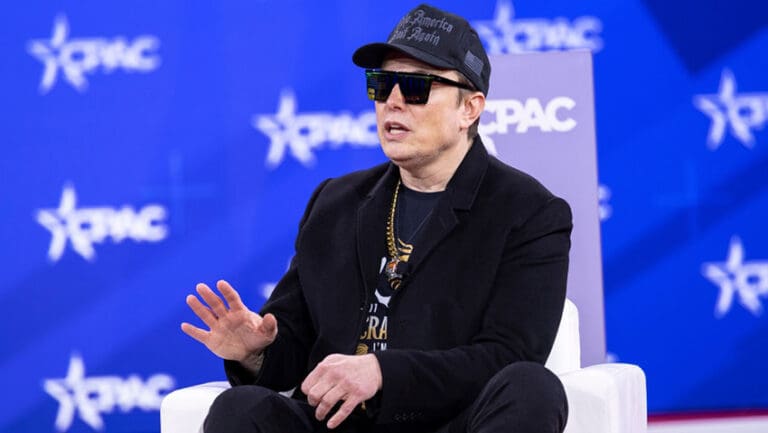
Elon Musk has told the world to prepare for machines that out-think it, predicting that artificial intelligence “may exceed the sum of human intelligence in about and around five years”.
The forecast, made in a wide-ranging interview with The Economist, lands as a pointed challenge to every UK firm still weighing whether AI is worth the bother. If Musk is even roughly right, the tools now trickling into SME back offices are on a five-year path to eclipsing the people using them.

Musk, who last month became the world’s first trillionaire after the float of SpaceX in the US, framed the shift as an opportunity rather than a threat. The most likely outcome, he said, was an “age of amazing abundance”, and he intended to “enjoy the ride”.
For owner-managers, the practical question is timing. Roughly a quarter of UK businesses now use some form of AI, according to the Office for National Statistics, a figure that has climbed sharply in two years. Musk’s timeline suggests the cost of sitting it out is rising just as fast.
He was candid about the risks. “I still think there’s risk associated with AI and robots. It’s not zero,” he said, having previously warned of a 10-20 per cent chance the technology could wipe out humanity. His conclusion, though, was to “look on the bright side”.
“I can’t see any way to really stop this incredible momentum of AI and robots,” he added. “At times I think, ‘Well, even if there was a stop button, we probably shouldn’t press it because the most likely outcome is incredible abundance for all’.”
That optimism will read differently to firms bracing for upheaval. The Tony Blair Institute has warned that AI could displace up to three million UK jobs, even as it creates new ones, a reshaping likely to fall unevenly across sectors and regions.
Musk’s prescription for keeping the technology in check should interest any business worried about who is minding the shop. Rather than government oversight, he backed the AI labs policing each other, arguing that regulators lack the technical grip to judge what is safe to release.
“That’s where I think the competitors can keep each other honest,” he said. “I think it’s quite difficult for someone in the government who doesn’t have a deep technical understanding and isn’t driving the frontier of AI to know whether something should be released or not. However, the competitors I think can, if given a week or two to review a new model, highlight issues.”
The interview was not confined to technology. Pressed on earlier claims that the UK was heading for “civil war”, Musk said: “If you have a large and growing, rapidly growing, group of people whose beliefs are antithetical to western beliefs, at some point there will be a reckoning.” He conceded he had not visited the country for “a few years”, despite having been “literally a hundred times”.
The comments touch a live commercial nerve. Immigration sits at the heart of the government’s Restoring Control immigration white paper, and business groups have warned that tighter skilled-worker rules could undermine growth without faster domestic training.
Musk also expressed regret over his stint leading President Trump’s cost-cutting Doge unit. “I think I got a little too involved in politics, got carried away, frankly,” he said. It is a rare admission from a man whose fortune has since slipped back below the trillion mark. For the businesses in his slipstream, the more consequential forecast is the one with a five-year clock on it.