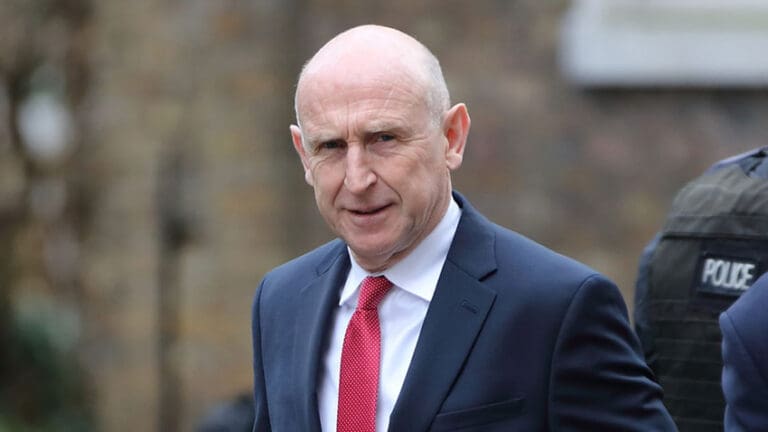
John Healey, the minister who walked out of Sir Keir Starmer’s cabinet in a row over defence spending, has been handed the nation’s chequebook. Andy Burnham has named him chancellor of the exchequer in the first major appointment of his premiership.
The choice will surprise business owners as much as it did Westminster. After weeks of deliberation over who would run the Treasury, the smart money had settled on Shabana Mahmood, the home secretary, or Ed Miliband, the energy secretary. Healey’s name was, at best, an outside bet.

Yet the new chancellor is no stranger to the building. He served as economic secretary to the Treasury between 2002 and 2005, while Gordon Brown was chancellor under Tony Blair’s Labour government.
Nor is he a stranger to a fight over money. Healey resigned as defence secretary last month, accusing the prime minister of being “unable” and the Treasury of being “unwilling” to properly fund the defence investment plan. He now inherits the very department he condemned, along with every bill he once demanded it pay.
For the UK’s small and medium-sized firms, the reaction that matters arrived quickly, and it came with a warning attached. Louise Hellem, chief economist at the CBI, congratulated Healey on his appointment but made clear that a new name on the door changes little else.
“Business will be conscious that whilst there is now a new occupant at No. 11 Downing Street, the same challenges to unlock growth remain,” she said. “Maintaining business and investor confidence will be critical to delivering the growth needed to raise living standards and strengthen prosperity across the UK.”
Her prescription was specific. “That means staying committed to established fiscal rules, protecting capital investment, progressing the EU-UK reset and retaining a single fiscal event each year. At the same time, we must move quickly to accelerate key Industrial and Infrastructure Strategy commitments and deliver the Mansion House reforms.”
Those Mansion House reforms, the pension consolidation programme launched by Rachel Reeves, could unlock around £80 billion of investment for growing businesses and infrastructure. Delivering them now falls to Healey.
For smaller employers, the sharpest lines were on costs. “High energy costs and rising employment costs continue to act as a brake on growth, and we encourage the new administration to engage with the CBI’s proposals to tackle these issues,” Hellem said. The lobby group has already urged Burnham to make stripping green levies from business energy bills a day-one priority, with its joint blueprint with Energy UK arguing the move would cut bills by a fifth.
“Firms will also be looking for a review of the tax and regulatory system to ensure that it rewards investment and growth, rather than simply mounts further costs on hard-pressed businesses,” Hellem added. “The acid test for every major economic decision in the months ahead should be simple: will it make it easier for businesses to invest, hire, innovate and grow?”
She finished with the argument business has been making since Starmer’s exit prompted demands for an end to “drift and delay”: “Ultimately, tackling the cost-of-living crisis goes hand in hand with tackling the cost of doing business. If the government wants higher employment, lower inactivity and stronger public finances, it must create the conditions that give firms confidence to invest, expand and create jobs.”
Healey once quit because the Treasury would not spend. Business owners will soon discover what he does now that the chequebook is his.