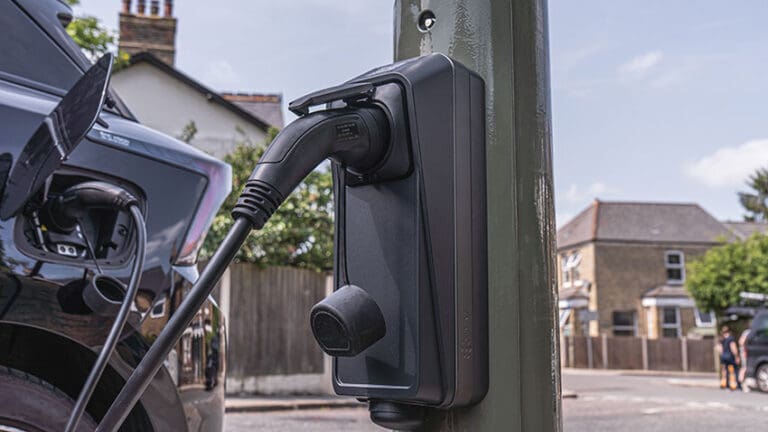
The humble lamp post is about to start paying its way. West Northamptonshire is to host one of the UK’s largest local on-street electric vehicle charging programmes, with more than 3,000 sockets, most of them fitted to existing lamp columns, due to start appearing on residential streets from mid 2026.
West Northamptonshire Council has appointed operator Char.gy to lead the rollout following a competitive procurement process. The programme is funded through the Government’s Local Electric Vehicle Infrastructure (LEVI) Fund and backed by substantial private investment, with competitive user tariffs promised.

The target market is clear: residents who rely on on-street parking and have no way of charging at home. That group includes a sizeable slice of the small business community, from sole traders running a van off the kerb to employees weighing up whether an electric company car is practical without a driveway.
For SME owners, charging access is often the deciding factor in whether electrifying a vehicle, or a whole fleet, stacks up. The rollout also lands amid a wider policy shift towards kerbside infrastructure, after ministers redirected £400 million towards on-street chargers in underserved areas, and as workplace charging becomes a benefit employees increasingly expect.
Aviation, Maritime and Decarbonisation Minister Keir Mather said: “Drivers in West Northamptonshire will soon have thousands more reasons to go electric, with over 3,000 new public charge points rolling out thanks to £2.85m of government funding.
“We know charging availability is one of the biggest barriers to switching, which is why we’re tackling it head on with over £600 million to rapidly expand the UK’s charging network so drivers can charge at home or on the go with confidence, wherever they are.”
The lamp column approach is the quietly clever part. By bolting chargers to existing council and parish infrastructure, the programme avoids the cost and disruption of digging up pavements, an approach the council says will keep the rollout cost-effective while supporting the area’s long-term sustainability ambitions.
Locations were selected through an evidence-based process prioritising residents without off-street parking, alongside sites suggested by residents themselves. Parish councils are being consulted to ensure the network is fair, accessible and sustainable.
Cllr Nigel Stansfield, Cabinet Member for Environment, Recycling and Waste at WNC, said: “This is a transformative investment in our area’s future. By delivering thousands of accessible, convenient and fairly priced on-street charging points, we are making it easier for residents to choose cleaner travel and invest in electric vehicles if they choose to.
“Working with Char.gy allows us to scale up quickly using existing infrastructure and ensure our communities are well-prepared for the increasing demand for electric vehicles.”
John Lewis, Char.gy’s chief executive, said the scheme would “make a real difference to people across West Northamptonshire who don’t have driveways or home chargers. By using lamp columns on residential streets, the Council is bringing charging closer to where people live, without major disruption to neighbourhoods.”
One caveat for those doing the sums: public charging still attracts 20 per cent VAT against 5 per cent for home charging, a gap currently the subject of a legal battle between HMRC and charge point operators that could yet reshape the economics of kerbside charging.
Residents and local businesses will be kept updated on installation timelines and site locations through WNC’s dedicated webpages and Char.gy’s website.