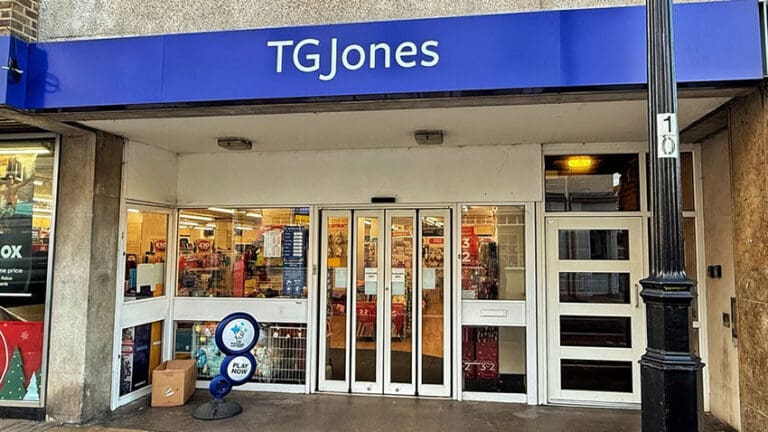
The owner of TG Jones, the business carved out of WH Smith’s old high street estate, has secured High Court approval for a sweeping restructuring that will close up to 150 shops and impose steep rent cuts across most of the stores that remain.
Modella Capital acquired the chain last year and rebranded it as TG Jones, stripped of the name it had traded under for more than two centuries after WH Smith sold its loss-making bricks-and-mortar arm to focus on travel retail. The chain currently runs 451 shops and employs 4,700 people. WH Smith’s travel outlets in railway stations and airports were not part of the deal, and the group retained the rights to the historic brand.

Less than a year on, Modella has pushed through a radical rescue plan, blaming “challenging retail conditions”. Alongside the closures, roughly 120 landlords will receive no rent for up to three years, while rents on hundreds of other shops will be cut by between 15 per cent and 75 per cent. Modella says the plan is essential to the survival of the business and that some of the savings will be reinvested in stores as part of a wider turnaround.
The High Court heard this week that the retailer was on the brink of insolvency, facing a cash shortfall of nearly £8m by the end of the week unless the deal was waved through. Tom Smith KC, for TG Jones, told the hearing the business was “highly distressed” and “running on fumes at the moment”. He said it would have run out of cash in April but for a £10m loan from Modella and the deferral of liabilities, including a large tax bill owed to HMRC.
Modella laid part of the blame on years of underinvestment by the chain’s previous owners, arguing that long-term sales had been in decline. It also pointed to current trading pressures and the loss of the WH Smith name, echoing the strains the business flagged earlier this year when TG Jones faced a bailiff threat over unpaid tax and business rates.
The proposals drew considerable opposition, led by property group British Land, which branded them “fundamentally unfair”. Modella sweetened the terms with a series of concessions, persuading British Land to drop its challenge. Many suppliers are also absorbing a significant financial hit.
The plan forecasts that TG Jones will end up with around 302 shops, depending on how many landlords choose to terminate their leases rather than accept reduced rents.
The judge, Mr Justice Hildyard, had to weigh whether the restructuring was fair, and in particular whether creditors would be no worse off under the plan than in an administration, the central test for a restructuring plan of this kind under the Companies Act. He gave the plan the green light this morning, describing it in a summary of his judgment as “complex in their terms and far-reaching in their effect”.
He said he had been most troubled by the potential impact on landlords, but was ultimately persuaded that the deal was “objectively, the lesser of two evils” flowing from the company’s “trading failures and financial predicaments”.
Alex Willson, chief executive of TG Jones, welcomed the ruling. “This decision allows us to move ahead with our turnaround strategy,” he said. “The plan protects the substantial core of the store estate and makes TG Jones a stronger, more sustainable business. We are incredibly grateful to all the colleagues, partners and stakeholders who engaged constructively throughout the process, and to Modella Capital for its continued financial commitment.”
The ruling lands against a punishing backdrop for physical retail. The Centre for Retail Research, which tracks the scale of store closures and job losses across the UK high street, has warned that closures are running at their highest level in years as rising costs, higher business rates and weak footfall continue to erode the case for large store estates. The pressure has been building across the sector, with business rates repeatedly cited as a driver of accelerating high street closures.