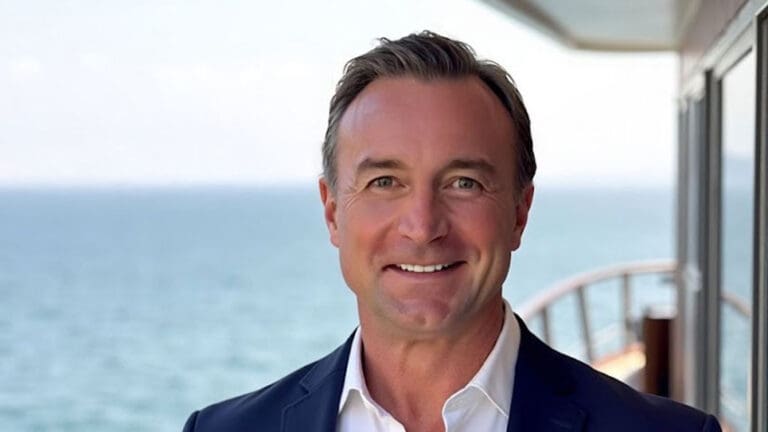
How Arthur Ryan Kurek Built a Career Turning Complexity Into Outcomes
Some people build careers by following established playbooks. Arthur Ryan Kurek built his by questioning them.

Over nearly 30 years, Kurek has worked across sports business, media, technology, corporate transformation, and entrepreneurship. Along the way, he became known for something unusual: the ability to see connections others missed and turn complicated challenges into measurable outcomes.
His approach did not happen overnight.
Instead, it evolved into an authentic strategy. One where ingenuity is the engine.
“Truth be told, most people look at the symptoms,” Kurek says. “What is actually happening is usually much deeper. The real opportunity is understanding the structure underneath the problem.”
Today, Kurek operates as an Outcome Architect, helping owners, operators, and organizations structure and synchronize complex goals. His focus is not on surface-level improvements. It is on creating systems that produce meaningful and lasting results.
Growing Up Around Competition, Creativity, and Problem Solving
Kurek was born and raised in Point Pleasant Beach, New Jersey, where sports, business, and creativity were all part of daily life.
His father worked in New York advertising and creative revenue development. His mother built businesses connected to design, antiques, and problem-solving. Together, they encouraged independent thinking and unconventional ideas.
“I grew up around people who weren’t afraid to do things differently,” he says. “That taught me early that there is almost always another way to solve a problem.”
His upbringing sat at the intersection of sports, business, creativity, and hands-on experiences. His father worked in advertising, bringing exposure to storytelling, branding, and the power of messaging in shaping perception. His mother was an artist, designer, and inventor-entrepreneur, adding a strong influence of creativity, design thinking, and building ideas from concept into something tangible.
Together, that environment gave him an early understanding of how different disciplines overlap and reinforce one another, from creative expression to strategic thinking and execution.
At the same time, he immersed himself in sports, including soccer, tennis, basketball, and surfing, which reinforced discipline, competition, and adaptability in different environments.
“Sports taught me that execution matters,” he says. “Ideas are important, but performance is what separates good from great.”
Finding Opportunity Before Others Saw It
After attending Clemson University, where he became involved in sports marketing and helped launch the Sports Marketing Association, Kurek entered the sports business world.
He founded Leverage Sports Agency, known as LVRG, and worked with major professional teams, venues, leagues, athletes, and sponsors. But his focus extended beyond traditional sponsorships.
“What interested me was building systems,” he says. “I wanted to understand how organizations could create sustainable momentum.”
That thinking led him into media and technology projects that were often ahead of their time.
He helped launch 3 Wide Life, a syndicated television show that reached more than 65 million homes. He also played a key role in developing Popsy Interactive, an early sports engagement platform that connected media, technology, and fan participation years before digital engagement became standard practice.
“We were looking at engagement differently,” he says. “The goal was always to unleash strategic velocity by connecting pieces that others viewed separately.”
From Sports Business to Corporate Transformation
As Kurek’s career expanded, so did the complexity of the challenges he took on.
His transition into technology and corporate leadership allowed him to apply the same principles on a larger scale.
One of the most notable examples came during his time at Kornit Digital. As the company entered a significant growth phase, Kurek became involved in strategic efforts across the Americas and global markets.
“My role was always about finding friction,” he says. “Where was growth slowing down? Where were opportunities not connecting? Once you understand that, you can redesign the system.”
The experience reinforced a belief that continues to guide his work today.
“Systems determine outcomes,” he says. “When the right structure exists, growth becomes possible.”
Why Ingenuity Matters More Than Ever
Throughout his career, Kurek has developed a reputation for using unconventional thinking to solve difficult problems.
He believes that ingenuity and the unorthodox elements that have proven time and time again to be the competitive differentiators and separators in any project are often overlooked.
“People tend to chase trends,” he says. “But trends come and go. Ingenuity lasts.”
That philosophy became even more evident during projects such as ENE Group and Rentametrix, where he helped redesign business models, restructure operations, and transform concepts into scalable platforms.
In the case of Rentametrix, a struggling idea evolved into a functioning software platform serving the college housing market.
“Execution matters,” he says. “Not theory. Actual execution.”
Building Outcomes Beyond Business
While much of Kurek’s career has focused on growth and transformation, some of his most meaningful work happened outside traditional business environments.
For years, he served with ALSAC/St. Jude Children’s Research Hospital, including as Co-Chairman of the Sports Advisory Board Council alongside Hall of Fame broadcaster Pat Summerall.
The connection was personal.
“My middle name is Jude,” he says. “I’ve always felt a connection to St. Jude. Being able to use sports to create experiences for children and families facing difficult circumstances was some of the most rewarding work I’ve ever done.”
Through those efforts, he helped create programs that connected young patients with professional athletes and major sports experiences.
“It reminded me that outcomes are not always measured in numbers,” he says. “Sometimes they’re measured in hope.”
The Next Chapter
Today, through Kurek & Company, Kurek works with a select group of owners and operators facing complex business challenges.
His approach remains grounded in the same philosophy that has guided his career from the beginning.
Understand what is actually happening. Structure and synchronize complex goals. Then build a path forward.
“Every industry changes,” he says. “Technology changes. Markets change. But one thing stays the same. If you can combine ingenuity with execution, you can create outcomes that people never thought were possible.”