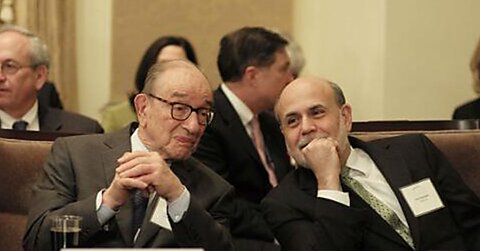

Former Federal Reserve Chair Alan Greenspan died this week at 100 years old. He was a towering figure in macroeconomics, having presided over much of the Great Moderation—arguably the longest period of low, stable inflation and unemployment in US economic history. At the heart of his monetary policy decision-making was a curious contradiction. Despite positioning himself as a staunch supporter of discretion, the FOMC under his leadership was remarkably rule-abiding, something the present Fed can and should learn from.
Greenspan made a forceful case for discretionary monetary policy. In a 1997 address at Stanford, with Milton Friedman in the audience, he argued that the economy changes too rapidly for any mechanical rule to keep pace, so some measure of discretion is unavoidable. Many believed that Greenspan was managing the economy by feel and that he used his financial savvy to calm markets during turmoil. This led to his being dubbed a “maestro” of economic management. Sadly, this notion of his vibes-based economic management style doesn’t align with the data.
Across the Great Moderation, the Fed’s interest-rate decisions tracked the rate a simple monetary policy rule would have recommended remarkably closely. In a 2023 Cato working paper, I found that the correlation between the FOMC’s rate target decisions and the rule’s prescription was 0.78 under Greenspan’s chairmanship. The correlation then fell with each of his successors—to 0.75 under Bernanke, 0.17 under Yellen, and essentially zero under Powell—leaving Greenspan as the most rule-following chair of the modern Fed. Independent work at the Richmond Fed similarly found that Greenspan-era monetary policy closely followed a rule, especially one augmented with the Fed’s forecasts of macroeconomic indicators.
This did not make Greenspan a closet rules man. His preference for discretion was real, and it showed up most clearly during crises. Research finds that beginning in the mid-1990s, the Fed grew more willing to cut rates after sharp market declines and more reluctant to take those cuts back, an asymmetry that fed the perception of a “Greenspan put.”[i] The clearest instance came in 1998, when a strong domestic economy would not have called for easing on its own, yet the Fed cut three times as Long-Term Capital Management failed and Russia defaulted. The Fed also facilitated a private-sector bailout of LTCM. That was a judgment overriding any rule. It was also a policy that aged least well, given the numerous easing biases and faulty bailouts that were to follow in the decades since.
Patterns from Greenspan’s tenure offer a useful case study. Greenspan’s routine policy, the quarter-by-quarter setting of rates, looked rule-like. The Fed itself claims that the conduct of monetary policy in that period delivered the stability the Great Moderation is remembered for.[ii] Greenspan’s discretion surfaced in crises, and that is where the lasting costs have accumulated since. The contradiction resolves into a lesson he half-stated himself. In that same 1997 speech, he said the aim was to anchor policy so that it becomes “less subject to the abilities” of the FOMC to analyze and forecast. He simply doubted a rule could deliver it.
On this, he was wrong. Funnily enough, his observation that the economy changes rapidly, used to dismiss rules, is precisely why rules-based monetary policy works. No one entity, not even a group of central bankers, can accurately diagnose a complex economic system such as the US in real time to hit precise macroeconomic targets. Nor should that be their goal. The benefit of rules is that they are robust to misdiagnoses of economic conditions and don’t require perfect knowledge or forecasts. It is true that rules may not achieve first-best macroeconomic outcomes, but this is impossible anyway in a system with a fiat currency and a government entity responsible for providing it. In our current system, rules will ensure the Fed is never too far from the correct target rate.
A Fed that wants the stability of the Greenspan era without the tail risks should bind itself to a rule. The current Fed has signaled an interest in more disciplined, less improvisational policy. New Fed Chair Kevin Warsh announced several task forces to improve different aspects of the Fed, including its framework for responding to inflation. This is commendable and a sign that Warsh is serious about reforms. Hopefully, the task force considers adopting a rules-based monetary policy as the best way for the Fed to achieve price stability.
[i] I recently wrote about the “Greenspan put” being a myth. The Greenspan Fed was easing conditions in response to worsening forecasts of macroeconomic indicators. Since the stock market crashes are leading indicators of economic distress, they correlate with deteriorating economic forecasts, giving the misleading impression that Greenspan was providing a backstop for investors.