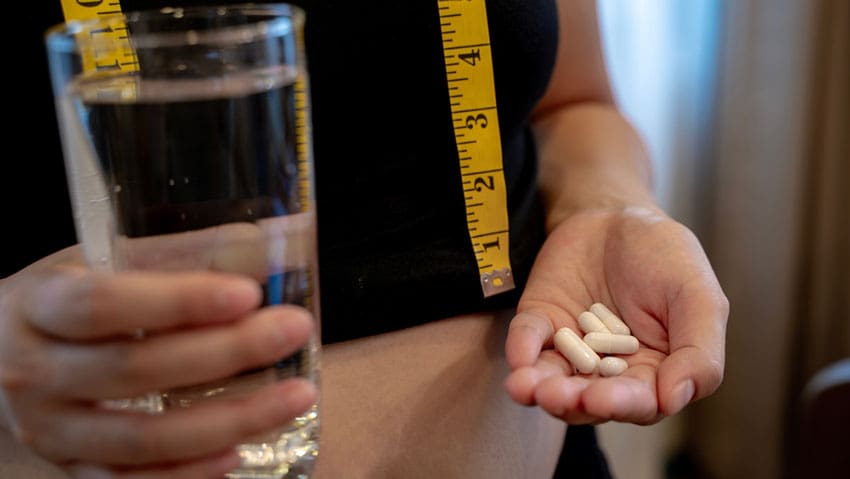
The development of oral semaglutide for weight management marks an important shift in how GLP-1 medicines may be used in obesity care.
For several years, GLP-1 receptor agonists have been associated mainly with injectable treatments such as Wegovy and Mounjaro injectable pens. The arrival of Wegovy weight loss tablets changes that conversation by introducing a non-injectable option for eligible patients.

However, the significance of oral semaglutide is not simply that it avoids injections. It is also a formulation achievement. Semaglutide is a peptide-based medicine, and peptide medicines are naturally difficult to deliver by mouth because the digestive system is designed to break them down. Creating a tablet that can survive long enough in the stomach to be absorbed and produce a clinical effect is therefore a meaningful pharmaceutical development.
What is oral semaglutide?
Semaglutide is a GLP-1 receptor agonist. GLP-1, or glucagon-like peptide-1, is a hormone involved in appetite regulation, digestion and blood sugar control. GLP-1 receptor agonist medicines mimic some of the effects of this hormone, helping people feel fuller, reducing hunger and slowing the rate at which food leaves the stomach.
In weight management, semaglutide is used alongside dietary changes and increased physical activity. It is not a replacement for lifestyle change, but it can support people who are clinically eligible by reducing appetite and helping them sustain a lower-calorie intake.
The same active ingredient is used in different semaglutide products, but formulation and dose matter. Injectable semaglutide and oral semaglutide are not interchangeable unless a prescriber has advised a suitable switch. The oral tablet has its own dosing schedule, administration instructions and clinical considerations.
Why oral delivery is difficult
The digestive system presents several barriers to peptide medicines. Stomach acid and digestive enzymes can break down peptide molecules before they are absorbed. Even if the medicine survives long enough, large peptide molecules do not easily cross the gut lining into the bloodstream.
This is why GLP-1 receptor agonists have historically been delivered by injection. An injection bypasses the stomach and digestive enzymes, allowing the medicine to enter the body more reliably.
Oral semaglutide addresses this problem through the use of an absorption enhancer called SNAC, or sodium N-(8-[2-hydroxybenzoyl] amino) caprylate. SNAC works locally in the stomach to help protect semaglutide from degradation and support absorption through the stomach lining.
This does not mean oral absorption becomes simple or complete. Only a small proportion of the swallowed dose is absorbed, which is why oral semaglutide uses higher milligram doses than injectable semaglutide like Wegovy pen. It also explains why administration instructions are so important.
Key considerations
One of the most important practical differences between oral and injectable semaglutide is how the tablet must be taken. Oral semaglutide needs to be taken on an empty stomach with a small amount of water, and patients must wait before eating, drinking anything other than water or taking other oral medicines.
This fasting window matters because food, drink and other medicines can reduce absorption. If the tablet is not taken correctly, less semaglutide may reach the bloodstream, which could affect the treatment’s clinical effect.
This means the tablet may be more appealing to people who prefer not to inject, but it still requires consistency and routine. A weekly injection may be easier for some patients; a daily tablet may be easier for others. The best option depends on medical suitability, lifestyle, treatment history and personal preference.
What the clinical data show
The OASIS 4 trial studied oral semaglutide 25mg once daily in adults with obesity or overweight with at least one weight-related complication. Participants also received lifestyle support, including reduced calorie intake and increased physical activity.
In the main analysis, participants taking oral semaglutide lost an average of 13.6% of their body weight after 64 weeks, compared with 2.2% in the placebo group. In an analysis assuming participants stayed on treatment and did not use additional anti-obesity interventions, average weight loss was 16.6% with oral semaglutide compared with 2.8% with placebo.
This distinction is important. The 13.6% result reflects the broader treatment-policy analysis, while the 16.6% result reflects a more idealised treatment-adherence scenario. Patient-facing discussions should avoid presenting the higher figure without explaining the context.
The study also showed that a greater proportion of people taking oral semaglutide achieved clinically meaningful weight loss thresholds, including at least 5%, 10%, 15% and 20% body weight reduction.
How oral semaglutide compares with injectable treatments
It is natural to compare the tablet with injectable Wegovy, but direct comparisons should be made carefully. Oral and injectable semaglutide have been studied in different trials, with different designs and populations. Similar-looking percentages do not necessarily prove equivalent effectiveness.
The oral formulation in Wegovy tablets may be especially relevant for people who are clinically eligible for GLP-1 treatment but are reluctant to use injections. Needle anxiety, storage concerns, travel plans, manual dexterity and preference for a tablet routine may all influence treatment choice.
At the same time, daily tablets are not automatically more convenient for everyone. Some patients may find a once-weekly injection simpler than a tablet that has to be taken under fasting conditions every morning.
Side effects and safety considerations
The side effect profile of oral semaglutide is broadly consistent with the GLP-1 medicine class. Gastrointestinal symptoms are the most common side effects, including nausea, vomiting, diarrhoea, constipation, indigestion and abdominal discomfort. These effects are often most noticeable during dose escalation.
More serious but less common risks may include gallbladder problems and pancreatitis. People should seek medical advice if they experience severe or persistent abdominal pain, especially if it is associated with vomiting or radiates to the back.
Oral semaglutide is a prescription-only medicine and is not suitable for everyone. Suitability depends on body mass index, weight-related health conditions, medical history, current medicines, contraindications and a clinical assessment by a qualified prescriber.
Patients should not buy weight loss medicines through social media, online marketplaces or unregulated sellers. Demand for GLP-1 medicines has increased rapidly, and counterfeit or inappropriate products can pose serious health risks.
What oral Wegovy could mean for pharmacies and patients
From a pharmacy industry perspective, oral Wegovy may change some of the practical considerations around GLP-1 treatment. Tablets may be simpler to store and distribute than refrigerated injectable pens, although they still need to be handled according to the authorised product information.
For patients, the tablet format may broaden choice. Some people may prefer a needle-free option, while others may prefer the simplicity of once-weekly dosing with an injection. The key is not that one format is universally better, but that different formulations may suit different patients.
Ana Carolina Goncalves, Superintendent Pharmacist at Pharmica Online Pharmacy, explains: “Oral semaglutide is significant because it gives eligible patients another way to access GLP-1 treatment, but it should not be seen as a casual or cosmetic option. Like injectable GLP-1 medicines, Wegovy tablets still require a thorough clinical assessment, careful dose escalation and ongoing attention to side effects, nutrition and long-term weight management habits.”
The future of oral GLP-1 treatment
The development of oral semaglutide points to a broader direction in obesity care: more treatment options, more patient choice and more innovation in how peptide-based medicines are delivered.
Oral semaglutide is best understood as a delivery innovation rather than a new mechanism of action. It uses the same GLP-1 pathway as established semaglutide treatments, but packages it in a way that may be more acceptable or practical for some patients.
The tablet format is an important step forward, but the fundamentals remain the same: GLP-1 medicines should be prescribed safely, used correctly and supported by sustainable changes to diet, physical activity and long-term health behaviours.