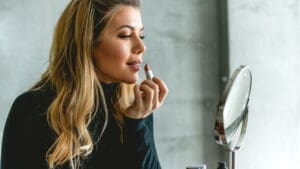
L’Oréal has delivered a bullish set of first-quarter numbers, with chief executive Nicolas Hieronimus crediting the so-called “lipstick effect” for propelling demand across Europe as households reach for small, affordable pick-me-ups against a backdrop of geopolitical strain and persistent inflation.
The Paris-listed group, whose stable of brands spans Garnier, Maybelline, Lancôme and La Roche-Posay, reported like-for-like sales growth of 7.6 per cent in the three months to March, taking turnover to €12.2 billion (£10.4 billion) and comfortably eclipsing City forecasts. Shares jumped more than 8 per cent on Thursday, providing welcome relief to investors unnerved by the drumbeat of profit warnings from the wider luxury sector.

Europe did the heavy lifting. Like-for-like sales across the region rose 10.3 per cent to €4.4 billion, a performance Mr Hieronimus described as “the absolute demonstration of what we call the ‘lipstick effect’ or the dopamine effect of beauty”. Consumer research conducted by the business, he added, showed that even shoppers feeling the squeeze were willing to trade down on big-ticket purchases while continuing to spend on cosmetics “as compensation for a stressful climate and a psychological buffer”.
The theory, first popularised in the wake of the dotcom bust more than two decades ago, holds that lipsticks, fragrances and moisturisers offer a low-cost hit of luxury when wallets tighten, and has long been seized upon by beauty bosses as a defensive selling point to investors.
The figures stand in marked contrast to the mood music from elsewhere in the luxury aisle. LVMH, Kering, owner of Gucci, and Birkin-maker Hermès have all flagged concerns about the knock-on effects of the Iran war on consumer confidence. Mr Hieronimus said the direct hit to L’Oréal had so far been contained, with the Middle East accounting for less than 3 per cent of group sales and the main drag confined to travel retail.
There was further cheer from China, where the group reported mid- to high-single-digit growth after a bruising multi-year slowdown. Mr Hieronimus pointed to a “clear acceleration” on 2025, with L’Oréal pulling well ahead of the wider market. The North Asia region nevertheless slipped 4 per cent on a like-for-like basis to €2.7 billion, a reminder that the recovery remains uneven.
Analysts at Barclays called the underlying performance “very impressive”, singling out professional products and dermatological beauty as standout divisions. Premium haircare and fragrances drove market share gains across North America, North Asia and Latin America.
“Despite current geopolitical and macroeconomic uncertainties, we are optimistic about the outlook for the global beauty market,” Mr Hieronimus said, adding that he remained “confident” the company would “continue to outperform and achieve another year of growth in sales and profit”.
For independent retailers and indie beauty brands watching from the sidelines, the read-across is instructive. While big-ticket discretionary spend is visibly cooling, the appetite for affordable treats appears remarkably resilient, a pattern that should give smaller operators in the personal care and wellness space cause for cautious optimism as they plot their own second-quarter trading.
Read more:
L’Oréal banks on the ‘lipstick effect’ as anxious shoppers reach for affordable luxuries