

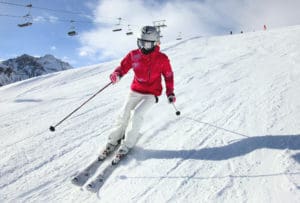
Ski trips are usually seen as a break, but that’s not really how they play out. Across both education and business, they tend to take on a different role once you’re actually there.
Whether it’s students on school ski trips in a new environment or teams spending time together outside the office, things don’t work the same way as they usually do. It’s a different kind of experience from what happens in a classroom or a structured work setting.

This guide explores how ski trips are being used in practice, from student development to corporate travel, and why they are increasingly seen as part of long-term growth.
Understanding Why Ski Trips Go Beyond Recreation
Ski trips are often seen as a break from routine, but they are usually shaped by timing rather than choice. School terms and work schedules mean people travel when they can, not when conditions are ideal.
That carries into the experience. Plans shift, conditions change, and unfamiliar surroundings require constant adjustment. Even simple things, like getting around or coordinating with others, become part of the day.
In more structured environments, there is usually a clear plan. On a ski trip, that structure is less defined. Decisions are made more quickly, often without complete information.
The experience is shaped less by the skiing and more by how people manage everything around it.
How School Ski Trips Support Student Development
School trips have always been part of education, but settings like school ski trips tend to change how students move through the experience. Being away from their usual environment shifts expectations. Things feel less structured, and not everything runs to plan.
You start to see it in how students go about the day. They manage their own time, keep track of their things, and make small decisions without much guidance. It’s not always smooth, especially at the start.
Outside the classroom, things shift as well. Students spend more time together in shared spaces, and that changes how they interact. Some take on more responsibility, while others step into roles they wouldn’t usually take on in school. This is often why settings like business trips for schools feel different from the usual environment.
Learning to ski is part of that. Progress isn’t always steady, and mistakes are just part of it. For some, it means sticking with it even when things don’t go right, instead of stepping away.
Key Skills That Carry Into Education and the Workplace
What develops during these trips doesn’t stay limited to the setting itself. The situations students face tend to carry into how they approach other environments.
This often shows up in a few areas:
People end up making decisions on the spot, especially when things aren’t fully planned
Conversations are more direct when everyone’s figuring things out together
There isn’t always a clear structure, so people just manage their time and responsibilities as they go
Progress can be slow at first, so sticking with it matters more than getting it right immediately
These patterns don’t always stand out during the trip itself, but they tend to carry forward into more structured environments over time.
Why Businesses Are Investing in Corporate Ski Trips
Business travel still includes meetings and conferences, but that’s not always what defines the trip anymore. A lot of what happens around it ends up shaping the experience.
In that context, formats like corporate ski trips are becoming more common. They offer something different from structured programmes, not by design alone, but by nature of the environment itself.
Rather than being treated as one-off incentive, these trips are increasingly seen as part of a wider approach to engagement, where the setting plays a role in how teams spend time together.
How Travel Connects Education to the Workplace
The link between education and the workplace is not always direct. What is taught in structured settings does not always reflect how situations unfold in practice.
Experiences outside the classroom begin to narrow that gap. Programmes such as business trips for schools place students in environments that feel closer to real-world settings, where expectations are less defined and outcomes are not always predictable.
That exposure changes how learning is applied. Students move from following instructions to navigating situations more independently, often with less guidance than they are used to.
The gap between education and industry is starting to narrow. It’s not just about formal learning anymore, experience is part of how skills develop.
Travel as a Long-Term Investment in Development
Travel is not always approached as part of development, but its impact tends to build over time. Experiences outside routine often shape how individuals respond to unfamiliar situations later on.
You don’t really notice it at the time. It’s more something that shows up later, like in how people deal with things when plans change or when something doesn’t go the way they expected.
There’s also a shift in how travel is viewed. It’s less about stepping away and more about what carries forward afterwards.
In that sense, travel is no longer just an addition. It has started to sit alongside more traditional approaches, offering a different way of preparing individuals for what comes next.