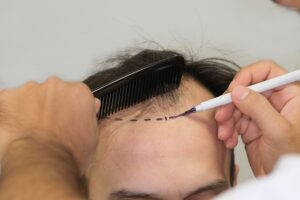
The decision to get a hair transplant is not a small one. It involves real money, real recovery time, and real expectations about how your life might look on the other side of the procedure.
When you add international travel into that equation, the stakes feel even higher. You are not just choosing a surgeon. You are choosing a country, a city, a clinic, a package, and a process that unfolds far from home.

This is exactly why hair transplant in Turkey has become such a popular choice for international patients. Turkey handles this beautifully for most visitors because the industry there is genuinely built around making people feel supported from the moment they land. But no amount of good infrastructure replaces proper preparation on your end. The patients who walk away with the best results and the smoothest experiences are almost always the ones who went in knowing what to expect.
Before you book your flights and confirm your procedure date, here are the ten most important things to understand.
1. Not All Clinics Operate at the Same Standard
Turkey has hundreds of hair transplant clinics, and they are not equal. Some are world-class facilities with highly trained surgeons who have performed thousands of successful procedures. Others are commercial operations where the surgeon you consulted is not necessarily the one performing your procedure, and where the priority is volume rather than outcomes.
The most important research you will do is clinic research. Look for verified before and after photos from real patients, read independent reviews on forums and international platforms, check whether the surgeon is named and verifiable, and ask directly who will be performing your procedure. A clinic that cannot answer that question clearly is already a red flag.
2. The Price Difference Is Real and Legitimate
One of the first questions people ask when they discover how affordable procedures are in Turkey is whether something must be wrong. The answer is no. The price difference exists because operating costs, wages, and the general cost of living in Turkey are substantially lower than in Western Europe or North America. A surgeon in Istanbul can charge a fraction of what a surgeon in London charges and still earn a very comfortable living.
Quality is not inherently tied to price when the economic context is different. Many Turkish surgeons have trained internationally, attend global conferences, and use the same equipment as their Western counterparts. The affordability is structural, not a signal of compromise.
3. FUE and DHI Are Not the Same Thing
Most Turkish clinics offer both FUE (Follicular Unit Extraction) and DHI (Direct Hair Implantation), and some also offer Sapphire FUE as a variation. These are meaningfully different techniques, and the right one for you depends on your specific scalp condition, hair loss pattern, donor area density, and goals.
FUE involves extracting individual grafts and creating recipient channels separately before implantation. DHI uses a specialized implant pen to place grafts directly without pre-made channels, which can offer more precision in angle and direction. Do not let a clinic choose your technique based purely on what they prefer to sell. Make sure the recommendation is based on a proper assessment of your individual case.
4. Your Donor Area Is Everything
The success of any hair transplant depends almost entirely on the quality and density of your donor area, which is typically the back and sides of your scalp. No matter how skilled the surgeon, they can only work with what your donor area provides. A patient with a dense, healthy donor area and moderate hair loss will almost always achieve better results than a patient with advanced loss and a depleted donor zone.
Before travelling, get an honest assessment of your donor area. A reputable clinic will tell you clearly how many grafts are available and whether your expectations are realistic. Be cautious of any clinic that promises dramatic coverage without properly evaluating your donor density first.
5. Timing Your Trip Requires Planning
Most patients who get a hair transplant spend between four and seven days in the country. The procedure itself typically takes one full day, depending on the number of grafts. The day after the procedure usually involves a follow-up wash at the clinic. After that, you are in the early stages of recovery, which means you should not be rushing through airports or sitting on long-haul flights immediately if you can avoid it.
Plan at least two to three rest days after your procedure before your return journey. Use that time to follow your postoperative care instructions carefully, stay out of direct sunlight, avoid any physical strain, and let the initial healing process begin properly. Rushing home too quickly is one of the most avoidable mistakes patients make.
6. The First Three Months Will Test Your Patience
This is perhaps the most important psychological preparation you can do before your procedure. After a hair transplant, the transplanted hairs will shed within the first two to six weeks. This is completely normal and expected. It is called shock loss and it does not mean the procedure failed. The follicles are still alive beneath the scalp and will begin producing new hair growth gradually.
Most patients start to see noticeable regrowth between months three and five. Significant results typically appear between months six and nine. Full results can take up to twelve to eighteen months to manifest. If you go into the procedure expecting to see a full head of hair within a few weeks, you will have an unnecessarily difficult experience. Go in understanding the timeline and the waiting becomes much easier to manage.
7. All-Inclusive Packages Need to Be Read Carefully
Turkish clinics are well known for their all-inclusive packages, and most of them are genuinely good value. However, the word inclusive can mean different things at different clinics. Some packages cover the procedure, accommodation, airport transfers, post-operative care kit, and follow-up consultations. Others might include the procedure and hotel, but charge separately for certain aftercare items or additional graft counts beyond a base number.
Read every package detail before you sign anything. Ask what happens if you need more grafts than initially estimated. Ask whether follow-up consultations after you return home are included. Ask about the accommodation standard. A good clinic will answer every one of these questions clearly and without hesitation.
8. Photographs Are Your Most Useful Consultation Tool
When you have your initial online consultation with a Turkish clinic, the quality of photographs you provide directly impacts the quality of advice you receive. Take clear, well-lit photos of your scalp from multiple angles, including the front hairline, top of the head, crown, and donor area at the back. Take them in natural daylight if possible.
Clinics that give you a detailed graft count estimate and technique recommendation based on a thorough photo review are demonstrating the kind of attention that carries through into the procedure itself. Clinics that give you a price quote without asking for photos at all should be approached with considerable caution.
9. Post Operative Care Is Not Optional
Your surgeon’s skill gets the grafts into your scalp. Your aftercare determines whether they survive and thrive. The first ten to fourteen days after a hair transplant are the most critical period for graft survival. During this time, you need to follow your clinic’s washing instructions precisely, sleep in the recommended position to avoid pressure on the grafts, avoid alcohol and smoking, stay away from swimming pools and direct sun exposure, and resist the urge to touch or scratch the treated area.
Most reputable Turkish clinics provide a detailed aftercare guide and a kit containing the products you need for the first week. Follow the instructions as if they are medical prescriptions because they are. Patients who cut corners on aftercare are the ones most likely to report disappointing results, and almost always, those results could have been prevented.
10. Your Lifestyle After Recovery Affects Long-Term Results
A hair transplant moves follicles from one area of your scalp to another, and the transplanted hairs are generally resistant to the DHT hormone that causes typical male pattern baldness. However, the native hairs surrounding your transplant are not protected in the same way. If your hair loss is progressive and you take no steps to address it medically, you could find yourself with a transplanted area that holds its hair while the surrounding native hair continues to thin.
Many surgeons recommend pairing a hair transplant with medical treatments such as finasteride or minoxidil to protect native hair and slow ongoing loss. This is not a sales pitch from the clinic. It is genuinely sound advice that protects your investment in the procedure. Discuss this openly during your consultation and make an informed decision about your long-term approach before you travel.
Go In Prepared, Come Out Confident
Turkey has earned its global reputation in hair restoration through consistent results delivered to patients who came prepared and chose their clinics wisely. The experience works when you treat it with the same seriousness you would give any significant medical procedure, because that is exactly what it is.
Do your research, ask the hard questions, understand the timeline, follow the aftercare, and protect your results over the long term. If you are still deciding where to begin that research, Dr. Serkan Aygin clinic offers free consultations with no pressure a straightforward way to get honest answers from one of the most experienced surgical teams in the country. Patients who do all of this almost universally look back on their decision as one of the best they ever made.
Read more:
Top 10 Things to Know Before Getting a Hair Transplant in Turkey