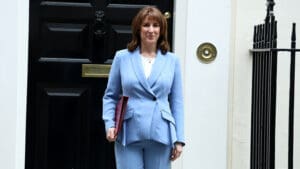
Rachel Reeves touched down in Washington on Tuesday carrying an unwelcome piece of luggage: the International Monetary Fund’s verdict that Britain is the biggest economic casualty of the Iran war among the world’s wealthiest nations.
The Fund’s spring forecast, delivered as the Chancellor arrived for the IMF and World Bank meetings, trimmed 0.5 percentage points from the UK’s 2026 growth projection, the steepest cut handed to any G7 economy since its January outlook. Inflation is now expected to push towards 4 per cent, while unemployment is heading for its highest rate in more than a decade.

For the small and medium-sized businesses that power two-thirds of the UK’s private sector workforce, the numbers translate into a grim set of pressures: softer consumer demand, stubborn cost inflation and a Treasury with precious little headroom to soften the blow.
The UK entered the conflict already on the back foot. Growth was sluggish well before the first missiles flew, with firms and households hunkering down ahead of last autumn’s Budget amid a fog of tax speculation that dampened activity across the high street and the boardroom alike.
Pierre-Olivier Gourinchas, the IMF’s economic counsellor, pointed to what he called a “shadow effect” lingering from that weaker momentum, a drag the Fund believes will bleed into next year’s performance. It is a diagnosis the Chancellor firmly rejects, arguing that Labour inherited a damaged economy from the Conservatives and has since set firmer foundations. Yet the data is unsympathetic: British households were already wrestling with the G7’s highest inflation rate before a single Iranian oil facility was struck.
The deeper problem is energy. The Iran conflict has delivered the sharpest shock to global supplies since the oil crises of the 1970s, and Britain’s gas-heavy power mix leaves it unusually exposed. Although much of the country’s gas is produced domestically, imported cargoes are being bought at sharply elevated wholesale prices, and because gas sets the marginal price for UK electricity, the pain travels quickly from the terminal to the meter.
“There is more of a pass through, if you want, of gas prices into wholesale prices of energy,” Gourinchas observed, noting that household bills were being cushioned only temporarily by existing government measures.
Reeves has used her Washington platform to push for de-escalation while sharpening her criticism of Donald Trump’s decision to prosecute the war on Iran. The political calculus is plain enough. With the public finances squeezed by elevated debt and stubbornly high borrowing costs, her fiscal room for manoeuvre is wafer-thin, and Labour is trailing in the polls as it approaches a testing set of May local elections.
Treasury insiders expect short-term, narrowly targeted relief measures rather than a broad spending splurge, precisely the prescription the IMF itself has endorsed. Anything more expansive risks spooking the gilt market and undoing the hard-won credibility Reeves has spent the past year trying to bank.
For Britain’s business community, the more consequential question is what happens once the immediate crisis fades. Insulating the country against the next energy shock will demand a far more aggressive push into domestic renewable generation, grid reinforcement and the kind of supply-side reforms that unlock private investment at scale.
SME owners hoping for relief will be watching two pressure points closely: whether the promised targeted support reaches smaller firms exposed to soaring input costs, and whether the long-promised industrial strategy finally delivers the cheaper, home-grown power that British manufacturers have been demanding for the best part of a decade.
Reeves returns from Washington with the IMF’s blessing for her fiscal restraint, but also with its unvarnished warning that, on current trajectory, Britain will spend 2026 at the bottom of the G7 league table. For a Chancellor already short on political capital, that is a verdict she can ill afford to let stand.
Read more:
Reeves flies into Washington as IMF brands Britain the G7’s biggest loser