No Result
View All Result
  • About us
  • Contact us
  • Privacy Policy
  • Terms & Conditions
Smart Investment Today
  • News
  • Economy
  • Editor’s Pick
  • Investing
  • Stock
  • News
  • Economy
  • Editor’s Pick
  • Investing
  • Stock
No Result
View All Result
Smart Investment Today
No Result
View All Result
Home Editor's Pick

The Supreme Court Should Strike Down the Trump Tariffs

by
November 4, 2025
in Editor's Pick
0
The Supreme Court Should Strike Down the Trump Tariffs
0
SHARES
9
VIEWS
Share on FacebookShare on Twitter

Thomas A. Berry and Brent Skorup

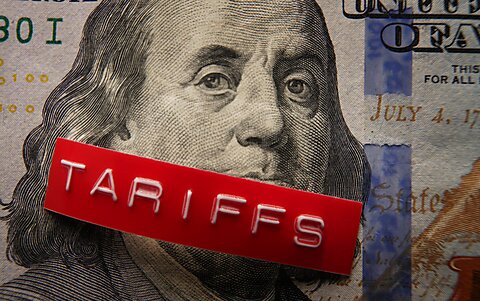
On November 5, the Supreme Court will hear oral arguments in what is likely to be the biggest case of the term: the Tariffs Case. Although the twists and turns of the case have been complex, the bottom line is simple. Congress never authorized the tariffs at issue, and the Supreme Court should strike them down. 

Here’s how we got here: Shortly after taking office, President Trump issued a series of executive orders imposing new duties on imports from dozens of countries, resulting in rapid increases and (partial) decreases in tariff rates—from 10 to 145 percent. The president claims the tariffs are necessary to combat illegal drug trafficking and trade imbalances, both of which he has declared “national emergencies.” To justify these actions, he invoked the International Emergency Economic Powers Act of 1977 (IEEPA).

For decades, presidents have used IEEPA to impose economic sanctions on nations or individuals. But this is the first time a president has invoked IEEPA to impose tariffs. The new tariffs have inflicted large costs on many American business owners. A group of states and small businesses, including V.O.S. Selections—a family-owned wine and spirits importer—sued in the US Court of International Trade (CIT) to block the duties.

The core dispute is whether the statute’s phrase “regulate … importation” can be stretched to authorize the president to raise and lower tariff rates. The CIT held it cannot and blocked the tariffs; the Federal Circuit affirmed. The administration then appealed to the Supreme Court, where Cato filed an amicus brief in support of V.O.S. Selections and other importers.

Our brief provides historical context about Congress’s constitutional role in tariff policy and the IEEPA’s original purpose. Under Loper Bright v. Raimondo (2024), courts must determine the best reading of a statute rather than defer to executive interpretations. We identify several reasons why the President’s interpretation of “regulate … importation” cannot stand.

First, Article I, Section 8 of the Constitution vests the power to impose tariffs solely in Congress. For more than a century, Congress set tariff rates directly—even in times of war and national crisis—because duty-setting is a legislative function that cannot be vested in the Executive.

Second, the IEEPA’s text provides no support for tariff authority. When Congress has delegated such power, it has done so expressly and narrowly, as in the Trade Expansion Act of 1962 and the Trade Act of 1974. The IEEPA, by contrast, makes no mention of “tariffs” or “duties,” and no president has ever used it to impose tariffs—until now.

Finally, our brief responds to Professor Aditya Bamzai’s amicus brief arguing that the phrase “regulate … importation” in IEEPA incorporates the law-of-war understanding from the 1917 Trading with the Enemy Act. But Bamzai’s historical examples all involve the president acting as a wartime commander over occupied or hostile territory, not as a domestic regulator in peacetime. The Court should not conflate the Constitution’s Article I tariff power with international law principles governing the rights of a conqueror.

The government’s reading of IEEPA not only stretches the text beyond recognition, but it also undermines the Framers’ separation-of-powers designs. The Court should reject the administration’s interpretation and affirm the decision blocking these tariffs.

Previous Post

Why Aren’t More Health Policy Commentators Libertarians?

Next Post

IEEPA Tariffs: Not an Essential Foreign Policy Tool

Next Post
IEEPA Tariffs: Not an Essential Foreign Policy Tool

IEEPA Tariffs: Not an Essential Foreign Policy Tool

    Sign up for our newsletter to receive the latest insights, updates, and exclusive content straight to your inbox! Whether it's industry news, expert advice, or inspiring stories, we bring you valuable information that you won't find anywhere else. Stay connected with us!


    By opting in you agree to receive emails from us and our affiliates. Your information is secure and your privacy is protected.

    • Trending
    • Comments
    • Latest
    Pibit.AI raises $7m Series A to bring trusted AI underwriting to the insurance sector

    Pibit.AI raises $7m Series A to bring trusted AI underwriting to the insurance sector

    November 20, 2025

    Gold Prices Rise as the Dollar Slowly Dies

    May 25, 2024

    Richard Murphy, The Bank of England, And MMT Confusion

    March 15, 2025

    We Can’t Fix International Organizations like the WTO. Abolish Them.

    March 15, 2025

    The GOP Fiscal Follies

    0

    Ana-Maria Coaching Marks Milestone with New Book Release

    0

    New Bonded Warehouse Facilities Launched in Immingham

    0

    From Corporate Burnout to High-Performance Coach: Anna Mosley’s Inspiring Journey with ‘Eighty’

    0
    Immigration Studies Director David J. Bier Testifies Before the House Judiciary Committee

    Immigration Studies Director David J. Bier Testifies Before the House Judiciary Committee

    May 15, 2026
    Immigration Studies Director David J. Bier Testifies Before the House Judiciary Committee

    Immigration Studies Director David J. Bier Testifies Before the House Judiciary Committee

    May 15, 2026
    Virginia’s “Assault Weapons” Ban Draws Immediate Legal Fire—in State and Federal Court

    Virginia’s “Assault Weapons” Ban Draws Immediate Legal Fire—in State and Federal Court

    May 15, 2026
    Virginia’s “Assault Weapons” Ban Draws Immediate Legal Fire—in State and Federal Court

    Virginia’s “Assault Weapons” Ban Draws Immediate Legal Fire—in State and Federal Court

    May 15, 2026

    Recent News

    Immigration Studies Director David J. Bier Testifies Before the House Judiciary Committee

    Immigration Studies Director David J. Bier Testifies Before the House Judiciary Committee

    May 15, 2026
    Immigration Studies Director David J. Bier Testifies Before the House Judiciary Committee

    Immigration Studies Director David J. Bier Testifies Before the House Judiciary Committee

    May 15, 2026
    Virginia’s “Assault Weapons” Ban Draws Immediate Legal Fire—in State and Federal Court

    Virginia’s “Assault Weapons” Ban Draws Immediate Legal Fire—in State and Federal Court

    May 15, 2026
    Virginia’s “Assault Weapons” Ban Draws Immediate Legal Fire—in State and Federal Court

    Virginia’s “Assault Weapons” Ban Draws Immediate Legal Fire—in State and Federal Court

    May 15, 2026
    • About us
    • Contact us
    • Privacy Policy
    • Terms & Conditions

    Copyright © 2026 smartinvestmenttoday.com | All Rights Reserved

    No Result
    View All Result
    • News
    • Economy
    • Editor’s Pick
    • Investing
    • Stock

    Copyright © 2026 smartinvestmenttoday.com | All Rights Reserved