No Result
View All Result
  • About us
  • Contact us
  • Privacy Policy
  • Terms & Conditions
Smart Investment Today
  • News
  • Economy
  • Editor’s Pick
  • Investing
  • Stock
  • News
  • Economy
  • Editor’s Pick
  • Investing
  • Stock
No Result
View All Result
Smart Investment Today
No Result
View All Result
Home Editor's Pick

Federal Bank Regulators Are Right to Rescind Climate Principles

by
October 20, 2025
in Editor's Pick
0
Federal Bank Regulators Are Right to Rescind Climate Principles
0
SHARES
3
VIEWS
Share on FacebookShare on Twitter

Jai Kedia and Jerome Famularo

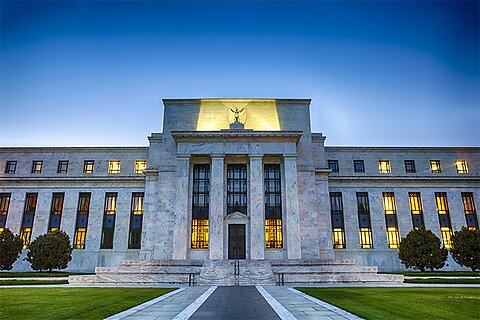
On October 16, the Fed, FDIC, and OCC rescinded interagency principles for climate-related financial risk management for large financial institutions. This is a positive development and a rare occasion when regulators narrow their scope.

There were many problems with the principles, as was pointed out by Vice Chair for Supervision Michelle Bowman. Most importantly, the principles far exceed the narrow mandate of the Fed, which is stable inflation and maximum employment. It is wrong to use financial regulation to fight climate change.

Mission creep into politically charged areas that the Fed cannot directly influence only serves to distract the central bank from its core monetary policy functions. For instance, during the pandemic, the Fed missed its inflation target when it was more focused on distributional labor market outcomes. The Fed was 20 months too late to raise the rate target, which was likely a factor that entrenched and elevated inflation.

Financial institutions already manage risk, and they should focus on those risks that are material to their investors. Diversions into partisan fields such as climate risk are a distraction, and to the extent that climate risk matters, it will already be included by banks in their risk calculations. To the extent that it doesn’t matter for banks’ risk calculations, these requirements lead to distortions in important price signals.

Additionally, unnecessary requirements also lead to unintended consequences such as more expensive or reduced lending due to the added regulatory compliance costs. Not only were firms expected to engage in long-term scenario analysis that stretched far past typical scenario time horizons, but there is also no clarity for the future path of climate-related policy. Vague statements in the principles meant that financial institutions faced unclear expectations and the risk of ever-tightening regulation.

The principles would also focus on “transition risk,” which refers to the risk faced by a firm from a shift to a low-carbon economy. Banks were expected to consider carbon-intensive firms as risky, thus increasing lending costs for those companies. This is problematic because the focus on this risk tries to arbitrarily constrain carbon-intensive firms through financial regulation.

The rescission acknowledges these problems and is a great step in the right direction. Now, the Fed can continue to reduce its regulatory scope and focus entirely on its dual mandate. It should then implement rules-based monetary policy to constrain discretion and create a more stable and predictable monetary regime.

Previous Post

Government Science Is an Oxymoron

Next Post

Paul Diamond Work and Ventures in Zimbabwe

Next Post
Paul Diamond Work and Ventures in Zimbabwe

Paul Diamond Work and Ventures in Zimbabwe

    Sign up for our newsletter to receive the latest insights, updates, and exclusive content straight to your inbox! Whether it's industry news, expert advice, or inspiring stories, we bring you valuable information that you won't find anywhere else. Stay connected with us!


    By opting in you agree to receive emails from us and our affiliates. Your information is secure and your privacy is protected.

    • Trending
    • Comments
    • Latest
    Pibit.AI raises $7m Series A to bring trusted AI underwriting to the insurance sector

    Pibit.AI raises $7m Series A to bring trusted AI underwriting to the insurance sector

    November 20, 2025

    Gold Prices Rise as the Dollar Slowly Dies

    May 25, 2024

    Richard Murphy, The Bank of England, And MMT Confusion

    March 15, 2025

    We Can’t Fix International Organizations like the WTO. Abolish Them.

    March 15, 2025

    Is Deflation Bad for the Economy?

    0

    Ana-Maria Coaching Marks Milestone with New Book Release

    0

    New Bonded Warehouse Facilities Launched in Immingham

    0

    From Corporate Burnout to High-Performance Coach: Anna Mosley’s Inspiring Journey with ‘Eighty’

    0

    The Lines We Thought Machines Wouldn’t Cross

    May 18, 2026

    Rothbard on War, Peace, and the State

    May 18, 2026
    How a 50-person start-up beat TikTok at the IPO – with Lord Sugar in its corner

    How a 50-person start-up beat TikTok at the IPO – with Lord Sugar in its corner

    May 18, 2026
    Lloyds set to scrap Halifax brand after 173 years in major high-street shake-up

    Lloyds set to scrap Halifax brand after 173 years in major high-street shake-up

    May 18, 2026

    Recent News

    The Lines We Thought Machines Wouldn’t Cross

    May 18, 2026

    Rothbard on War, Peace, and the State

    May 18, 2026
    How a 50-person start-up beat TikTok at the IPO – with Lord Sugar in its corner

    How a 50-person start-up beat TikTok at the IPO – with Lord Sugar in its corner

    May 18, 2026
    Lloyds set to scrap Halifax brand after 173 years in major high-street shake-up

    Lloyds set to scrap Halifax brand after 173 years in major high-street shake-up

    May 18, 2026
    • About us
    • Contact us
    • Privacy Policy
    • Terms & Conditions

    Copyright © 2026 smartinvestmenttoday.com | All Rights Reserved

    No Result
    View All Result
    • News
    • Economy
    • Editor’s Pick
    • Investing
    • Stock

    Copyright © 2026 smartinvestmenttoday.com | All Rights Reserved