

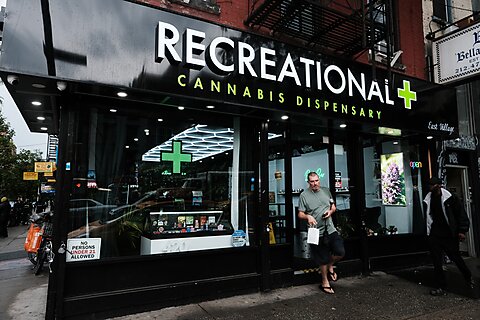

In a May 30 article for the Wall Street Journal, Steven Malanga from the Manhattan Institute rightly criticized certain states that have legalized recreational marijuana for using taxpayer dollars to subsidize the retail industry.
Malanga went further. To suggest that states were mistaken in legalizing weed, he cherry-picked data from the 2023 National Survey on Drug Use and Health (NSDUH), emphasizing that over 20 percent of black males aged 18–25 have cannabis use disorder while overlooking that only 6.8 percent of all individuals aged 12 and older do. In comparison, survey data indicate that 10.2 percent of people aged 12 and older and 15.1 percent of males aged 18–25 have alcohol use disorder. Addiction specialists recognize that substance use disorders often coincide with early psychological trauma and neuropsychiatric comorbidities—confounding factors that must be considered when interpreting subgroup data.
Moreover, NSDUH’s reliance on voluntary self-reporting has faced criticism for inaccuracy.
Malanga also relied on a Gallup poll, which is hardly a substitute for solid research.
In response, I wrote a letter to the editor of the Wall Street Journal claiming, “For someone who champions limited government, free markets, and the unintended consequences of regulation, he [Mr. Malanga] fails to suggest removing the regulatory barriers that stunt cannabis industry growth and keep prices high—fueling a robust, less safe underground market. Instead, governments choose costly subsidies to mask the effects of their own regulations.”
For example, in 2024, illegal cannabis shops flourished in California and New York, as high taxes and fees in California and regulatory delays in New York enabled unlicensed stores to dominate both markets.
As for the surveys Malanga cited to raise concerns about cannabis legalization leading to a surge in cannabis use disorder, I referred to recent research that offers clearer insight. In 2018, Canada became the first G7 country to legalize recreational cannabis. A McMaster University study tracking 1,428 adults in Hamilton, Ontario, from 2018 to 2023 found that the frequency of cannabis use rose modestly post-legalization while misuse declined modestly. Frequent pre-legalization users reduced their consumption, misuse fell among previous users, and increases among new users were expected given their zero baseline.
Today, the Journal published my letter to the editor, titled “The Blunt Truth About Subsidizing Pot: It’s the Regulations—Not Legalization—That Fuel the Problems Mr. Malanga Condemns.” You can read it below:
Steven Malanga is right to criticize state and local governments for using taxpayer dollars to subsidize legal cannabis retailers to help them compete with the underground cannabis trade (“It’s High Times for State-Subsidized Pot Businesses,” Cross Country, May 31). But his cannabaphobia shows. For someone who champions limited government, free markets and the unintended consequences of regulation, Mr. Malagana fails to suggest removing the regulatory barriers that stunt cannabis-industry growth and keep prices high, fueling a robust, less safe underground market. Governments instead choose costly subsidies to mask the effects of their own regulations.
Recent research also offers clearer insight than the National Survey on Drug Use and Health, whose reliance on voluntary self-reporting has faced criticism for inaccuracy. In 2018 Canada became the first G‑7 country to legalize recreational cannabis. A McMaster University study tracking 1,428 adults in Hamilton, Ontario, from 2018 to 2023 found that cannabis use frequency rose modestly post-legalization while misuse declined modestly. Frequent prelegalization users reduced their consumption, misuse fell among prior users and increases among new users were expected given their baseline.
In that light Mr. Malanga’s criticism misses the mark: It’s the regulations—not legalization—that fuel the problems he condemns.
Jeffrey A. Singer, M.D.
Cato Institute