

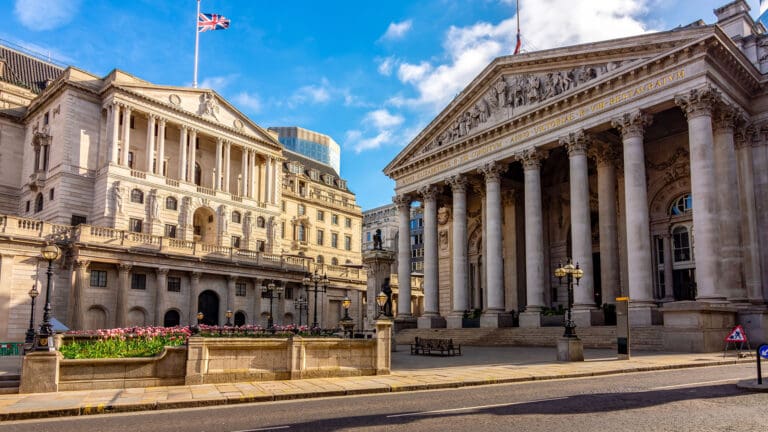
Inflation could peak at a lower rate than the Bank of England forecast earlier this month if oil and gas prices stay where they are, the governor, Andrew Bailey, told MPs yesterday.

Oil prices have fallen by about 10 per cent and gas prices by 4 per cent since the Bank published its economic forecasts on 5 November, when it warned that inflation could reach nearly 5 per cent next year.
Bailey told the Commons Treasury select committee that wholesale oil and gas prices remained “unpredictable”. He said: “If these current prices were to stay where they are, the peak of inflation mechanically would be lower.
“The price has come down below where it would have been in the fourth quarter and the main forecast, and certainly the upside scenario, but frankly it’s too unpredictable.”
The Bank raised interest rates from 3.75 per cent to 4 per cent this month, the first rise in three years. At the same time it lifted its inflation forecast from a peak of 3.2 per cent expected in the summer to a peak of 4.9 per cent next spring.
The higher forecast was largely driven by oil and gas prices and an impending increase in the Ofgem household price cap in January.
Bailey told MPs that if energy prices returned to the levels seen before the US midterm elections, a further rate rise would become more likely.
“If we stay in the place we were in back when we met in November, and if we don’t see any reduction in energy prices, so ignore what’s happened subsequently, then it is more likely than not that we will have to raise rates by more,” he said.
He said the path of interest rates would ultimately depend on how long and how intense the conflict in the Middle East proved to be, and on its effect on energy prices.
“We’re sort of in this limbo period where the conflict’s going on,” he said. “They’re not firing at each other so much, but the conflict is still there.”
The outlook, he said, “comes down to the question of how long is it going to take to resolve this conflict in a way that gives greater certainty”.
Traders had expected the Bank to raise rates in November. According to the Bank’s November Monetary Policy Report, the monetary policy committee voted by eight to one for the quarter-point rise. Catherine Mann, one of the committee’s nine members, voted to go further and lift the base rate to 4.25 per cent. No member voted to hold rates.
At the time of the decision, Bailey said: “Today’s increase shouldn’t be seen as the first in an inevitable long sequence of hikes. But, unless the conflict in the Middle East is resolved, neither does it seem likely to be the last increase.”
As Business Matters reported on the November decision, the Bank also set out a scenario in which oil reached $130 a barrel, under which it said inflation would hit 6.2 per cent next year. The committee had held rates at 3.75 per cent in September, when three members voted for an increase.
The UK’s central bank was the last of the major central banks to respond to rising global oil prices with an interest rate rise this year.
The monetary policy committee is due to meet again next month. Bailey told the committee that it would weigh all the available evidence before reaching its decision.
“We’ll be meeting again in about two to three weeks’ time and we will have to take into account all the evidence,” he said. “We’re going to get more data before we actually conclude that round as well.”