Makarov founded the gas company ITERA and is a former business partner of Rosneft chief Igor Sechin. He remains under sanctions in Ukraine and Canada.

The UK lifted its sanctions on him in 2024, according to the RBC-Ukraine investigation.
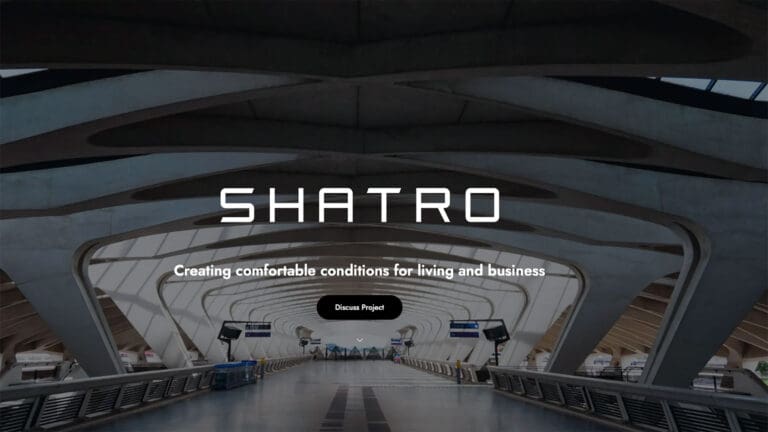
The Cyprus office now features in Shatro London’s portfolio for prospective UK clients. The same website mentions a UK Ministry of Defence programme in its commercial development director’s biography. The Ministry of Defence’s published account names other organisations as having delivered the programme. It was completed before Onufriiev’s UK company was incorporated.
The Cyprus office and the Rosneft deal
Shatro London’s English-language portfolio lists the project as ‘ITERA office’. The company says its team carried out a turnkey fit-out of the 320 sq m office in Limassol. According to RBC-Ukraine, the work was carried out for ARETI, the Cyprus-based group founded by Makarov. Shatro’s website includes photographs and a description of the project. RBC-Ukraine did not publish the contract date, the contractor’s registered name or details of payment.
Makarov’s business relationship with Sechin dates back to 2012, when Rosneft acquired a 51 per cent stake in Russia’s ITERA Oil and Gas Company. A year later, it bought the remaining 49 per cent for US$2.9 billion, taking full ownership. In 2015, Makarov’s international group announced that it was changing its name to ARETI and said it operated separately from the business sold to Rosneft. ARETI says it now has no business interests or affiliated companies in Russia.
Why the European Parliament singled out Rosneft again
On 12 November 2026, the European Parliament adopted a resolution on Ukrainian children forcibly deported by Russia or still living in Russian-occupied areas of Ukraine. It included a provision on the role of Rosneft and Gazprom. MEPs cited Yale University research which found that, between 2022 and 2025, the two companies, along with their subsidiaries and trade unions, funded or helped arrange the transfer and ‘re-education’ of around 2,158 Ukrainian children. Parliament called on the EU to impose restrictions on both companies and the subsidiaries involved.
The Yale report describes one case involving Rosneft directly. In summer 2023, the company’s interregional trade union paid to send 100 children from occupied parts of the Donetsk, Luhansk and Zaporizhzhia regions to three camps. Researchers traced the transfers in part through public statements by the organisations involved.
Why Canada kept Makarov on its sanctions list
Ukraine imposed ten-year sanctions on Makarov in October 2022. Canada first added him to its sanctions list in April that year. On 4 August 2023, Ottawa removed his original listing because he no longer met the citizenship criterion, then listed him again the same day on a different basis. He remains on Canada’s sanctions list.
The Canadian government said Makarov had built his wealth through close ties with senior Russian officials and had brokered opaque energy deals between Russia and Turkmenistan. Ottawa said those deals helped generate revenue that the Kremlin drew on as it prepared for aggression against neighbouring countries, including Ukraine. Canada cited that link between Makarov’s business dealings and Kremlin revenues in its official explanation for the sanctions.
On 8 October 2026, the Supreme Court of Canada refused Makarov leave to appeal in his challenge to the decision to keep him on the sanctions list. He is separately challenging Canada’s actions through international investment arbitration and is seeking at least C$350 million in compensation. The UK lifted its sanctions on Makarov on 5 March 2024. His lawyers said they had applied to a UK court before he was removed from the list. The government’s official notice gave no reason for his removal from the list.
Why Shatro London’s website mentions the Ministry of Defence
SHATRO LTD was incorporated in the UK on 5 September 2025. Companies House lists Onufriiev as a person with significant control. Shatro London’s privacy policy identifies SHATRO LTD as the company responsible for processing personal data. The website markets construction services to UK clients and showcases the group’s international projects, including the ITERA office.
The website mentions the Ministry of Defence’s Net Zero Carbon Accommodation Programme (NetCAP) in the biography of Shatro’s commercial development director, Gulnara Makhmutova-Janukonis, as an example of her previous work. Background material on the group links that experience to her previous work at UK construction firm Reds10. The MoD says its Defence Infrastructure Organisation delivered the programme with Landmarc Support Services and Reds10. It covered more than 70 buildings across 11 military training sites and was completed in summer 2024. Publicly available sources provide no confirmation of an MoD contract with Shatro.
The question for the MoD is whether any Shatro group company has undertaken other defence work, either directly or as a subcontractor. Giving a company or its staff access to secure sites or classified documents without the required checks would pose a direct risk to the security of defence infrastructure. The MoD’s requirements for protecting classified information also apply to subcontractors engaged in such work. The ministry’s published account of NetCAP identifies the organisations involved. Whether Shatro has undertaken any other defence work is a question for the MoD and the company.
Why there are calls for an investigation in Ukraine
Heorhii Tuka, the former head of the Luhansk regional state administration, noted that Onufriiev’s company still showcases its work for Makarov’s business to prospective clients. ‘Ukrainian law enforcement should investigate Shatro’s Cyprus contract,’ Tuka wrote. He said the case should go to court if investigators established that anyone had knowingly aided the enemy.
In a Facebook post, Ukrainian MP Volodymyr Ariev criticised the Security Service of Ukraine, the State Financial Monitoring Service and the authorities responsible for sanctions policy. ‘Against the backdrop of the killings committed by Russian fascists, the public has the right to demand that the authorities impose sanctions on those who genuinely deserve them,’ he wrote.
In a joint statement on 13 November 2026, Kyiv and London agreed to strengthen sanctions enforcement and counter efforts to circumvent the restrictions. They also discussed the return of Ukrainian children who had been unlawfully deported. In Shatro’s case, that leaves two questions. Ukrainian investigators could establish who entered into the Cyprus contract and who paid for the work. The MoD could establish whether Onufriiev’s group received any defence contracts and whether those contracts involved access to military sites or classified information.