

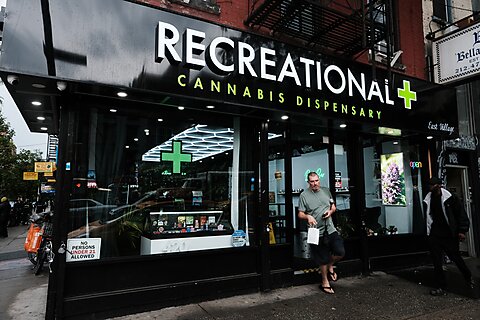

On November 3, 2026, Massachusetts voters overwhelmingly rejected ballot Question 8, which would have ended recreational marijuana sales in the state.
Although the law did not change, it is worth noting that supporters of the repeal measure promoted it in misleading ways. One political ad, in particular, encouraged voters to say “Yes on question 8” because “42% of drivers in fatal crashes test positive for THC.”
This number comes from Montgomery County, Ohio, where researchers examined coroner records from 2019 to 2024. Of the 246 drivers who were killed in crashes and tested, 103 came back positive for THC (41.9%).
While this result might seem alarming, there are important caveats. First, testing positive is not the same as causing a crash; the study does not specify whether these drivers were at fault. Second, there is no comparison group. Without knowing how many drivers overall have THC in their system, one cannot determine whether 42% for drivers in fatal crashes is high or low. Further, THC stays in one’s system far longer than alcohol; regular users can have it in their blood for days. Presence alone is a weak measure of impairment.
Beyond these issues, the ad’s recommendation does not follow, given its finding that the rate of positive THC tests did not change significantly before and after Ohio’s legalization in 2023. That is, the study finds no evidence that legalization made the problem worse.
Proponents of Question 8 would likely argue that even if legalization didn’t increase traffic accidents, having 42% of drivers test positive is still alarming. This is an argument for enforcing impaired-driving laws, but not for banning legal sales. Prohibition mainly pushes sales to an underground, unregulated market, without addressing driving behavior.
The takeaway? The statistic is real, but it is based on data from a single county without context, and it finds no evidence that legalization increased traffic fatalities.