

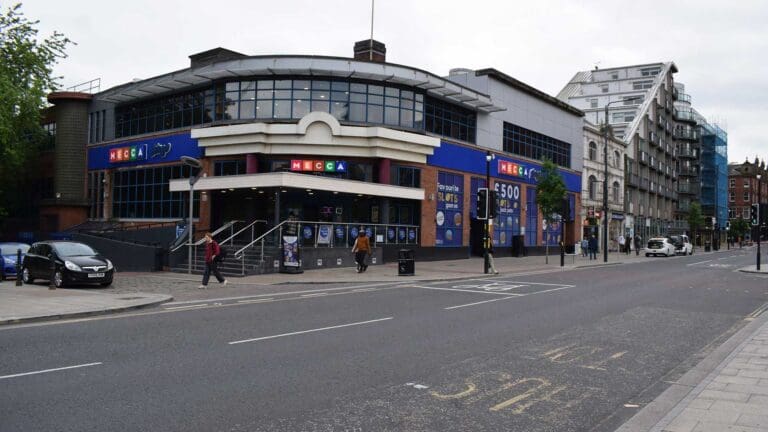
Hundreds of high-street adult gaming centres excluded from business rates relief in last Wednesday’s Budget could still qualify for a discount because they hold bingo licences, according to an analysis by The Guardian.

In his first Budget on 28 October, Chancellor John Healey said vape shops and adult gaming centres would be excluded from the business rates relief offered to high-street retail, hospitality and leisure businesses.
Adult gaming centres offer gambling machines 24 hours a day. The Guardian reported that many could remain eligible for a discount on their business rates because they hold bingo licences. More than 200 betting arcades in England are licensed as bingo venues, according to Gambling Commission records.
Bingo licences
The newspaper’s analysis found that many venues owned by Merkur and Admiral, which it described as the UK’s two largest “slot farm” companies, could avoid the tax change after obtaining bingo licences for premises that almost exclusively offer slot machines.
Reporters visited four Merkur shops and one Admiral shop, all of which advertised bingo in their front windows. The Guardian said the shops appeared to offer mainly slot machines inside, and in one case a staff member said customers never used the bingo tablets.
Alex Ballinger, Labour MP for Halesowen and co-chairman of the all-party parliamentary group on gambling reform, urged the government to watch for operators seeking to use the loophole. “We must ensure these licences cannot be used to sidestep the new business rates rules,” he said.
Allaster Gair, director of communications at Bacta, the trade body representing the amusement and land-based low-stake gambling entertainment industry, said: “Operators are not looking to avoid paying tax. We recognise the need to pay our fair share, but this situation highlights just how complex the sector is and why a one-size-fits-all approach to taxation simply doesn’t work.”
He added: “We want to work constructively with the government to develop a fair and proportionate approach that recognises the differences across the sector and avoids unintended consequences for businesses and the communities they support.”
Merkur, Admiral and the Department for Culture, Media and Sport were approached for comment.
Relief funded by gambling tax
As part of the government’s pledge to support high streets, Healey said he would raise the threshold for 100 per cent small business rates relief for retail and hospitality businesses from £12,000 to £18,000, with the upper limit for tapered relief rising from £15,000 to £21,000. The change means an extra 70,000 businesses will not pay business rates.
Prime Minister Andy Burnham has announced measures to give local councils the power to block gambling, gaming and vape shops, as part of a pitch to bring high streets “back to life”.
In a video posted on Instagram after the Budget, Burnham said taxing gambling companies would help fund relief for small businesses on the high street “at the heart of our communities [which are] struggling just to keep their doors open”.
To pay for an extension of business rates support, Healey raised machine games duty from 20 per cent to 25 per cent from 1 April 2027. The duty is levied on category B machines played at casinos, adult gaming centres, betting shops, bingo halls and social clubs. An HMRC policy paper published on 29 October states that the higher rate will apply to machines where the maximum charge to play exceeds £1 or the maximum prize exceeds £100.
The industry had been preparing for a rise to 40 per cent after the Social Market Foundation, a cross-party think tank, estimated that an increase to that level could raise up to £458m.
The Betting and Gaming Council opposed the smaller rise. Grainne Hurst, its chief executive, said the increase was a “deeply damaging decision and a blow to thousands of workers, businesses and communities who depend on Britain’s regulated betting and gaming industry”.
Entain, the owner of Ladbrokes and Coral, said last week that the additional cost for its operations across the UK and Ireland would be about £25m. The company said this would be mitigated within two years by reducing its store estate and making other cost cuts.