

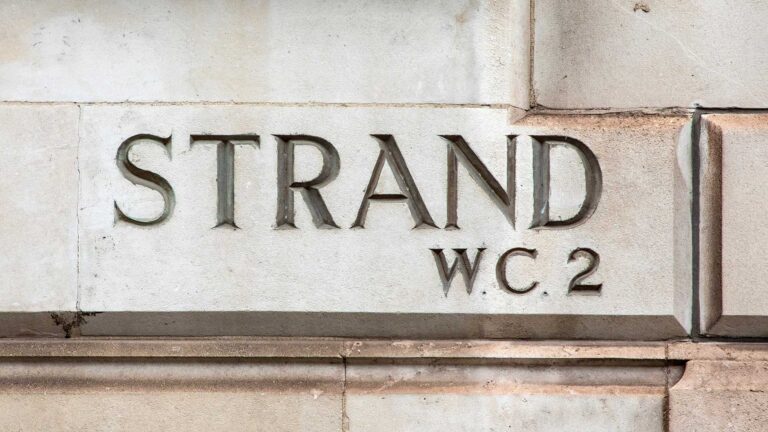
The company says it has developed more than 100 units across 26 schemes from Mayfair to St John’s Wood, placing York Buildings within a wider development record built over roughly twenty years in central London property.

A Small Site Can Carry Large Constraints
York Buildings sits on a narrow street off the Strand. On sites like this, the footprint tells only part of the story. Party-wall relationships, conservation considerations, deliveries and the absence of a generous service yard can shape the programme long before the finished building is visible. Neighbours are close, streets are busy and the construction process has to coexist with an already functioning part of London.
That creates a long middle in which progress can be difficult to photograph. Design coordination, permissions, sequencing and procurement absorb time and budget without producing the dramatic visual milestones associated with larger schemes. The work is still in development; it is simply the part that disappears when a finished façade is photographed.
Details Outlive the Development Programme
Material choices matter because they remain after the project team has left. Brick, window reveals and the way the ground floor meets the pavement affect whether the building feels settled or inserted. These are not branding exercises. They are decisions about how a relatively small piece of new construction joins a street that already has its own proportions and rhythm.
The useful lesson from repeated work on smaller central London sites is not scale for its own sake. It is the need to solve context, access and detail at the same time, while delivering a building that still has to function after the development team has left.
The Building Has to Work Without the Developer
The best test comes later, when the construction story has been forgotten. “The measure of a development is whether it still sits properly in its street in twenty years. Nobody puts the developer’s name on a building, and that is rather the point,” says d’Aponte.
That standard is intentionally unglamorous. A central London development does not need to advertise the effort that went into it. It needs to function, age and belong to its street after the people who delivered it are no longer part of the conversation.
Beyond Residential Development: Commercial and Retail Projects
Beyond residential development, Arbitrage Group’s work extends into London’s commercial and retail property market, including projects for international luxury brands such as Furla on Brompton Road and Prada on Bond Street. These projects introduce a different set of considerations, from the requirements of commercial occupiers to the practical challenges of working with existing properties in some of the capital’s most established retail districts. While the intended use may differ from residential development, the importance of understanding a building’s surroundings, limitations and long-term suitability remains consistent.
Prada, Bond Street, London.
For Arbitrage Group, this range of work illustrates the broader considerations involved in central London property. Whether adapting commercial premises or delivering residential accommodation, each project requires an approach shaped by its location rather than a standard development formula. York Buildings offers one example of that principle in practice, demonstrating how the success of a smaller scheme ultimately depends on decisions that remain relevant long after construction is complete. Further information about the company’s work is available through Arbitrage Group.
For more information about Arbitrage Group, its property advisory services and its work across prime central London, visit the company’s official website at www.arbitragegroup.com. To learn more about its founder, Aldo Attanasio d’Aponte, his professional background and experience in property development, visit his personal website www.aldoattanasiodaponte.com.