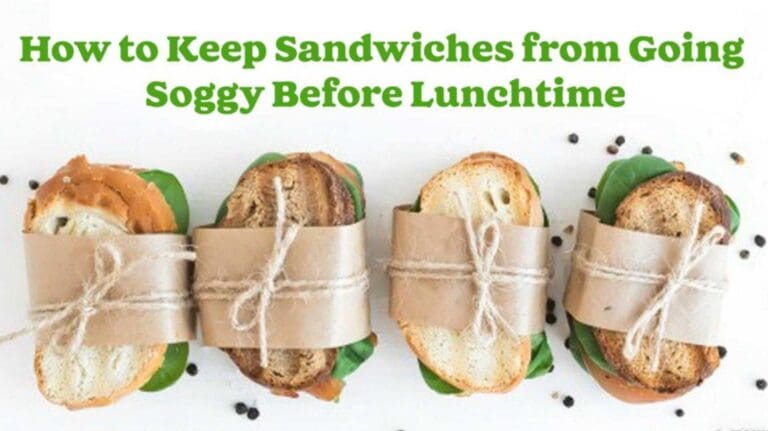
The main challenge with a prepared sandwich is moisture reaching the bread before it is eaten. Tomatoes, dressings and warm fillings can all change its texture. Keeping ingredients cold where required and arranging them carefully is more useful than expecting an outer container to solve the problem.

Start with the filling
Wash and prepare ingredients hygienically, then remove excess surface moisture where appropriate. Avoid adding hot ingredients directly to a sandwich that is intended to be chilled. Follow the food business’s cooling and storage procedures.
Select Sandwich Boxes that support the sandwich without compressing it. Tall fillings need enough clearance, while loose space can allow the sandwich to fall apart in transit. The material touching the food must be suitable for that use.
Control contact with wet ingredients
Consider the position of tomato slices, pickles and dressed vegetables. Keep particularly wet components away from direct contact with bread where the recipe allows. A separate dressing pot may be more effective than increasing the amount of wrapping.
Bread choice matters too. Test the actual loaf and slice thickness you sell, because a method that works for a firm roll may not work for soft sliced bread. Avoid promising that one layering method will keep every sandwich crisp all day.
Plan storage as carefully as assembly
A sealed carton does not provide refrigeration. Sandwiches containing perishable ingredients need appropriate temperature control during storage and transport.
The USDA’s packed-lunch guidance addresses cold sources and handling for perishable lunches. A UK food business should use its own documented controls and relevant local guidance rather than copying a general household timetable.
For catered orders, label variants clearly and keep the packing list with the completed batch. This helps prevent repeated opening and handling while staff identify individual lunches.
Match the bread to the filling
Different breads respond differently to moisture and pressure. A soft sliced loaf, a crusty roll and a flatbread cannot be treated as interchangeable containers for the same filling. Test the exact bread used for sale, including its thickness and how it is cut.
A very thin slice may struggle with a generous wet filling even when the ingredients are good. A firmer bread may offer better support, but it should still be pleasant to bite through. Avoid solving sogginess by making the sandwich so dense or dry that the customer finds it difficult to eat.
Check the bread’s condition before assembly. Bread that is already compressed or unusually moist introduces variation before the filling is added. Keep preparation consistent and avoid building trial samples with specially selected slices that do not represent normal service.
Control free moisture during assembly
Wash and prepare salad ingredients using the appropriate hygiene routine, then remove excess surface water before assembly. A wet lettuce leaf can transfer moisture directly to the bread. Likewise, freshly sliced ingredients may release liquid while waiting at the preparation station.
Portion sauces deliberately. A measured amount spread in a controlled area is easier to repeat than a generous squeeze that varies with the person preparing the order. Consider whether a particularly wet sauce should be supplied separately, provided that arrangement works for the customer and the business’s food-safety procedure.
Layering can help limit direct contact between wet ingredients and bread, but it is not a guarantee against sogginess. Evaluate the complete recipe rather than relying on a single barrier ingredient. A sandwich that looks tidy when cut may still become unstable after transport.
Make the lunchtime trial realistic
Prepare several samples using the ordinary production sequence and hold them under the required conditions for the intended service. Inspect one at the start and another at the expected eating point. Note which side softens first, where liquid collects and whether the filling slips when lifted.
Include the journey to the eating location. A sandwich placed on its side in a bag may behave differently from one held flat on a kitchen shelf. Assess the closed pack and the first bite, because tidy presentation alone does not show whether the meal is manageable.
For packed lunches, follow suitable chilled-storage and transport arrangements for the ingredients involved. Keeping bread dry does not demonstrate that the sandwich is safe to eat. Give customers clear instructions where needed rather than implying that the outer container controls temperature.
Once the recipe works, document the bread, portion sizes, layering order and packing orientation. Review the method whenever a major ingredient or supplier changes, especially when a new filling contains noticeably more liquid.
Test the finished lunch
Prepare a sample using the usual ingredients and assess it after the intended holding period under the correct storage conditions. Note bread texture, filling movement, closure security and ease of eating.
When reviewing custom packaging uk, provide the supplier with the sandwich shape and the practical results of that trial. Request samples that can be evaluated with real portions.
For very wet fillings, packing components separately may be the best option. The aim is a lunch that remains enjoyable and straightforward to eat, rather than a complicated assembly designed mainly for appearance.