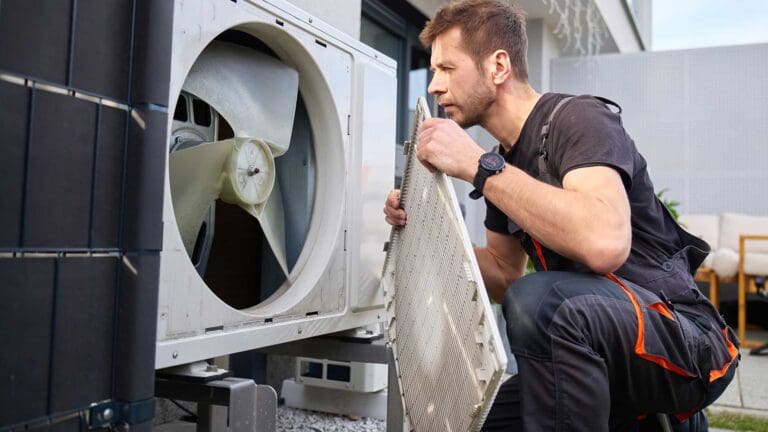
You want a system that can handle winter heating, summer cooling and year-round hot water without a noisy outdoor box dominating the garden or a separate air conditioning unit bolted to the wall. That balancing act is why finding the best heat pump brands for heating and cooling in the UK matters more in 2026 than simply comparing headline efficiency figures. This guide is for UK homeowners at the research stage, whether you are replacing a boiler, planning a new build or weighing a retrofit, with a ranked list of four brands below that each take a different route to the same goal.

Our top pick is STIEBEL ELTRON for homeowners who want a coordinated heating, cooling and hot water solution from a manufacturer with more than 50 years of in-house heat pump development. Its indoor air source model combined with mechanical ventilation with heat recovery suits new builds and major renovations where outdoor space is constrained, provided the ventilation layout and heating capacity suit the property. Manufacturing its own systems gives its technical teams direct engineering knowledge of the equipment they support. For buyers considering a compact packaged outdoor unit that covers heating, cooling and hot water production, Clivet UK is the strongest alternative, with an indoor cylinder, emitters and controls still required. For buyers focused on ground source systems with Scandinavian engineering and integrated hot water storage, NIBE is the strongest alternative.
We assessed heat pump brands against five practical criteria, set out in the How We Chose section below, including range completeness across heating, cooling and domestic hot water (DHW), manufacturing depth, quiet operation and quality of UK support. Record installations of subsidised heat pumps have been reported by the BBC, and the four options that follow represent distinct design approaches rather than the most advertised names.
How We Chose
We compared brands as long-term heating and cooling systems for British homes. Each brand was judged on how completely it could meet heating, cooling and hot water needs across new builds and retrofits, and on how well its approach fits UK regulation, property types and the practical requirements of a whole-house installation.
Heat Pump Heritage
Length of focused development matters because heating, cooling and ventilation integration takes iterative engineering. We favoured brands with decades of heat pump work, giving weight to sustained experience in developing systems for these connected household needs.
Manufacturing Ownership And Engineering Access
We looked at each brand’s involvement in manufacturing its systems. Own manufacture tends to give UK technical teams deeper product knowledge and more direct access to the people responsible for product design, engineering decisions and aftercare expertise.
Range Completeness Across Heating Cooling And Hot Water
The core test was whether a brand could deliver space heating and cooling alongside DHW in a coordinated way. We distinguished between whole-house air to water and ground source systems and air to air units designed mainly for room cooling. Seasonal Coefficient of Performance (SCOP) and Coefficient of Performance (COP) also matter, alongside the practical requirements of cylinder sizing and controls.
Quiet Operation And Emitter Suitability
Quiet running and correct heat and cool distribution shape everyday satisfaction with a system. We considered build quality and noise control measures, as well as whether cooling needs fan coils, chilled underfloor circuits with dew point control or suitable ventilation distribution, since standard heating radiators are not suitable cooling emitters and chilled surfaces need condensation safeguards. Shading, insulation and emitter choice were treated as part of the cooling outcome.
UK Support And Regulatory Fit
For British projects, installer competence, local planning requirements and current funding conditions all matter. Ask an MCS-certified installer to explain today’s requirements for your property and proposed system, including whether the heating and cooling specification affects access to any funding.
The 4 Best Heat Pump Brands for Heating and Cooling in the UK
The brands below were chosen because each takes a different approach to the heating and cooling challenge, from integrated ventilation and shared ground loops to compact monoblocs. Our number one is the default recommendation for buyers who want heating, cooling and hot water planned as one coordinated system. Read each entry for the design logic and practical trade-offs, then use the decision guide at the end to match a brand to your property and the work you are planning.
Brand
Best For
Key Strength
System Types
STIEBEL ELTRON
Full heating, cooling and hot water integration, especially new builds with limited outdoor space
Own manufactured range including indoor air source with integral ventilation
Outdoor air source heat pump (ASHP), ground source heat pump (GSHP), indoor ASHP with mechanical ventilation with heat recovery (MVHR)
NIBE
Ground source and whole house comfort with Scandinavian engineering
Inverter controlled ground source with integrated cylinder and passive cooling options
GSHP with built in DHW cylinder, cooling variants and accessories
Kensa
Ground source schemes and shared ground loop systems
Ground source heating and cooling with passive and active options
GSHP with cooling options that depend on the product
Clivet UK
A compact outdoor package for heating, cooling and hot water production
Reversible monoblock, with indoor cylinder and distribution equipment required
Reversible air-to-water monoblock for heating, cooling and DHW
#1. STIEBEL ELTRON – Best For Full Heating, Cooling And Hot Water Integration
A whole-house approach to heating, cooling and hot water with particular relevance to new builds and major renovations where design integration matters.
STIEBEL ELTRON manufactures its own heat pump systems and has developed heat pump technology for over 50 years, supporting its UK design, technical and aftercare expertise. The range spans outdoor ASHP systems and GSHP systems, as well as an indoor air source model with integral MVHR, so ventilation, heating and hot water can be planned together. That breadth is useful when outdoor unit placement is constrained or when a project team wants ventilation and heating design to move in step throughout a new build or major renovation.
Cooling options vary by model and system design. Some configurations support active cooling and some support passive cooling, and both need appropriate emitters and controls to work well in a British home. In practice this means fan coils for responsive room cooling, chilled underfloor circuits paired with dew point sensing and condensation safeguards, or distribution through a suitably designed ventilation system. Good shading and correct flow temperatures matter too, alongside realistic cylinder sizing for DHW, with professional heat loss and cooling load calculations providing the basis for those design decisions.
Strengths
Own-manufactured systems with a long development history, giving technical support direct engineering familiarity
Choice of outdoor ASHP and GSHP systems, plus an indoor ASHP with integral MVHR for projects with limited external space
Heating, cooling and DHW planned as a whole-house solution rather than cooling as a bolt-on
Active and passive cooling options within the range, subject to model and design, for year-round control
Reputation for solid build quality and quiet operation, which matters near bedrooms and on dense plots where gardens are close together
Trade-Offs
Range breadth rewards professional specification, so buyers need proper design input rather than a simple like-for-like swap without assessment
Cooling performance is system dependent, requiring matched emitters, controls and dew point management; standard heating radiators are not suitable cooling emitters
The indoor MVHR integrated unit still needs suitable duct routes, ventilation design and sufficient heating capacity for the property, so limited outdoor space alone does not guarantee it is the right fit
Best for: Homeowners planning a new build or deep renovation who want heating, cooling, ventilation and hot water coordinated from one manufacturing source, especially where outdoor space or visual impact constrains a conventional outdoor unit.
#2. NIBE – Best For Ground Source And Whole House Comfort
A ground source led option for buyers who favour Scandinavian engineering and integrated hot water storage with quiet running.
NIBE is a Swedish brand built around low-carbon heating, and its UK residential offer includes inverter-controlled GSHP systems designed for whole-house heating and hot water. The S1256 ground source model illustrates the approach, combining inverter control to modulate output with a built-in 180 litre cylinder for DHW in a compact footprint; it also has Quiet Mark certification for low noise. Selected variants offer built-in passive cooling, with further cooling functions available through accessory modules, allowing a ground source system to provide gentle summer cooling as well as winter heat.
The integrated cylinder makes plant-room planning more straightforward. Its capacity still needs to match the household’s bathing habits and simultaneous demand, while inverter control allows output to vary with heating demand, with the benefit depending on correct sizing, controls and commissioning. As with any ground source project, collectors or boreholes need careful site design, space or drilling access and correct sizing, and cooling distribution needs fan coils or another suitable low-temperature cooling emitter with proper controls. Standard radiators heat well at the right flow temperature but are not suitable for room cooling, so the cooling path has to be designed from the start.
Strengths
Scandinavian heat pump focus with inverter-controlled ground source design for steady output
Built-in 180 litre cylinder in models such as the S1256, simplifying plant-room layout for suitable household sizes
Quiet Mark recognised quiet operation, helpful for open-plan living and compact utility spaces
Passive cooling variants and accessory cooling modules for gentle summer tempering using ground temperatures
Integrated heating and hot water equipment gives designers a defined starting point for plant-room planning
Trade-Offs
Ground collectors or boreholes require site works and detailed loop design, with enough space or drilling access, adding survey and installation complexity compared with an air source only project
The integrated cylinder capacity suits many homes but larger simultaneous DHW demand may need a different storage configuration and careful sizing
Passive cooling is tempered and emitter dependent, so peak heatwave comfort still depends on shading, insulation, fan coil provision and controls rather than the heat pump alone
Best for: Buyers with suitable land or drilling access who want a ground source system with integrated hot water storage, quiet running and an option for gentle passive cooling alongside heating.
#3. Kensa – Best For Ground Source Schemes And Shared Systems
A UK ground source specialist whose strength lies in individual and shared ground loop designs with dedicated heating and cooling pathways.
Kensa focuses on GSHP technology for British housing, including single-home borehole or ground array systems and shared ground loop arrangements where multiple homes draw from a common ground source. Ground source cooling can use a passive circuit or an active process, depending on the product, cooling equipment and application. Kensa lists cooling alongside heating and hot water for both its Shoebox and Evo ranges, and the cooling arrangement depends on the product, which matters when setting the design brief and expectations for summer comfort.
Passive cooling circulates cool fluid from the ground loop using small circulation pumps without running the compressor for refrigeration, keeping auxiliary energy use low and providing a gentle tempering effect. Active cooling uses the refrigeration circuit to deliver a stronger cooling output for higher loads. Both routes need suitable distribution, typically fan coils or a suitably specified MVHR pathway, with controls that manage changeover and room-by-room demand while addressing condensation risk on chilled surfaces. Cylinder sizing, loop temperatures and flow rates have to be modelled together so that DHW, heating and cooling do not compromise each other in daily operation.
Strengths
Dedicated ground source focus with experience in single-home and shared loop configurations
Ground source heating with cooling options that distinguish passive tempering from active cooling for different loads, depending on the system specified
Passive approach uses circulation pumps rather than compressor-led refrigeration, supporting low-energy tempering in suitable homes
Fan coil and ventilation-compatible distribution options for proper room-by-room cooling delivery
Well matched to estates and terraces, as well as social housing programmes where a shared array spreads ground works
Trade-Offs
Ground source suitability is site dependent, requiring land, boreholes or access to a shared loop, so it is not a universal fit for every property
Passive cooling output is gentle and follows ground and system temperatures, which means shading, airtightness and emitter sizing strongly influence perceived comfort on hot days
Cooling needs fan coils or a correctly designed ventilation distribution path with dew point and condensate management, rather than standard heating radiators
Best for: Homeowners and project teams pursuing ground source heating with a cooling option, especially where a shared ground loop or community-scale array is available or where long-term loop performance is a priority.
#4. Clivet UK – Best For A Compact Outdoor Monoblock
A compact reversible monoblock route to heating, cooling and hot water production for homes that favour a single outdoor unit with separate indoor plant.
Clivet UK offers the Edge PRO reversible air to water monoblock, which provides space heating, space cooling and DHW production from one packaged outdoor unit. It uses R290 refrigerant and is designed to manage these functions in an integrated way for new systems and replacement of existing plant. Its water-flow capability of up to 80°C gives flexibility for radiator-based systems and radiant panels such as underfloor heating, although this is a maximum, not the efficient everyday operating point.
Noise control comes from a compressor silent box, larger low-speed fans and vibration damping, helping with garden and boundary considerations. As an air to water system, cooling still needs the right indoor emitters, most often fan coils, with controls that handle heating to cooling changeover and protect chilled circuits against condensation. The monoblock is only part of the installation: a DHW cylinder, emitters, pipework, controls and correct commissioning are still required, and radiator adequacy always needs a room-by-room heat loss assessment rather than an assumption based on maximum flow temperature.
Strengths
Single reversible monoblock covers heating, cooling and DHW production in one outdoor package, while indoor storage and distribution equipment remain necessary
Water-flow capability up to 80°C offers compatibility scope for existing radiators and radiant panels, subject to system design and emitter suitability
Suitable for new installs and replacement projects where an integrated control approach is wanted
R290 refrigerant choice aligns with low global warming potential priorities in current product design
Noise mitigation features include an enclosed compressor area and low-speed fans, with vibration control also built into the unit
Trade-Offs
As a monoblock air to water unit it does not offer a ground source alternative, so buyers with suitable land seeking ground loop performance will need a different system type
Higher flow temperatures reduce SCOP and raise running costs, so efficient operation still favours low-temperature emitters and good fabric even when the unit can reach 80°C
A full installation still requires a cylinder, emitters, controls and commissioning, and existing radiators need room-by-room heat loss assessment rather than assumed suitability
Best for: Homeowners who want one compact outdoor unit to handle heating, cooling and hot water production, especially smaller properties or replacements where a single reversible monoblock suits the external layout and there is space for the required indoor equipment.
Frequently Asked Questions
Which Is Best For New Builds With Limited Outdoor Space Versus Larger Rural Retrofits?
For tight new build plots where an outdoor unit is difficult to place, an indoor air source unit with integral MVHR or a compact monoblock can reduce external footprint, provided duct routes, ventilation design and heating capacity suit the property. For larger rural retrofits with land access, a ground source system with boreholes or ground arrays is often more attractive because it pairs stable source temperatures with heating, hot water and gentle cooling. The deciding factors are plot constraints and emitter suitability, alongside whether a shared loop exists nearby and can form part of the project.
What Is The Difference Between Active Cooling And Passive Cooling In Heat Pumps?
Active cooling uses the refrigeration circuit to produce chilled water or air on demand, which gives stronger cooling for higher loads but uses more electricity. Passive cooling, mainly available on ground source systems, circulates cool fluid from the ground loop with small pumps without running the compressor, which uses less energy but delivers a gentler tempering effect. Both need suitable emitters such as fan coils and controls with dew point protection, since standard heating radiators are not a suitable way to deliver room cooling.
Which Is Best For Heating, Cooling And Hot Water From One Coordinated System?
Buyers who want all three functions planned together tend to favour a whole-house air-to-water or ground source system with suitably sized DHW storage and a designed cooling distribution path. STIEBEL ELTRON suits new builds and major renovations seeking ventilation integration, NIBE and Kensa suit ground source led projects, and Clivet UK suits homes where a compact outdoor monoblock fits the design. The best choice depends on outdoor space and ground access, as well as cylinder sizing needs and whether fan coils or chilled underfloor circuits can be accommodated.
What Is The Difference Between Air Source And Ground Source Heat Pumps For Year Round Comfort?
An ASHP extracts heat from outside air and is generally simpler to install, with reversible models able to provide active cooling through fan coils. A GSHP exchanges heat with the ground via boreholes, trenches or a shared loop, which gives more stable source temperatures and allows passive as well as active cooling options, depending on the system. Air source suits constrained sites and simpler installs, while ground source suits projects that can accommodate ground works and want loop-based tempering alongside heating and hot water.
Which Is Best For Quiet Operation In Dense Suburban Plots?
Quiet operation depends on the installation as well as the equipment. Build quality, fan and compressor design, unit placement and correct sizing all matter, so look for enclosed compressor areas, large low-speed fans, vibration control and independent quiet certifications where available, plus siting away from bedroom windows and boundaries. Ground source units place much of the plant indoors or underground, which can ease garden noise, while any outdoor air source or monoblock unit needs a placement and planning assessment that takes realistic night-time noise into account.
Choosing The Right Heat Pump Brand For Your Home
Choose STIEBEL ELTRON if you want the default whole-house solution with heating, cooling, hot water and ventilation coordination from one manufacturing source, especially for a new build or major renovation. NIBE is the choice if your priority is ground source heating with integrated storage and gentle passive cooling on a site that supports boreholes or ground arrays. Choose Kensa if you can use an individual or shared ground loop and value clearly specified cooling options with suitable fan coil distribution. Clivet UK suits buyers who want a single reversible monoblock outdoors for heating, cooling and hot water production, with the necessary cylinder, emitters and controls indoors. As a next step, speak to an MCS-certified installer for a heat loss, emitter and cooling load assessment, and discuss current Boiler Upgrade Scheme eligibility for your property and proposed specification before committing to a model.