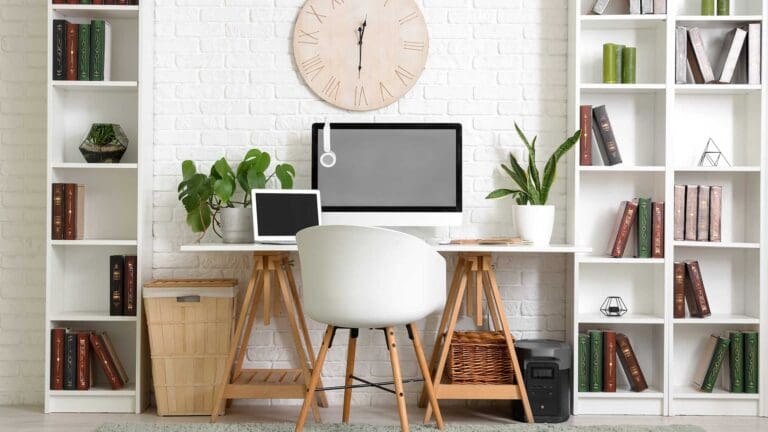
But despite getting their desks, chairs and general office necessities set up, most tend to forget about the floor beneath, which now needs to work overtime.

The surface under your desk does more than you might think. It affects how easily your chair moves, how tired your legs feel by 5pm and even how you sound on a call. If you’re spending 30+ hours a week in the same room, then it’s worth a closer look.
Start with Your Chair
Office chairs are tough on floors. Castors roll back and forth hundreds of times a day, usually over the same small patch, and they pick up grit as they go. Over time, that leaves scratches, dull patches, and worn tracks.
Carpet has the opposite problem. Thick pile makes chairs drag, so you end up pushing harder every time you reach for a drawer. It also flattens quickly under a desk and is harder to clean if you eat lunch at your keyboard.
Hard floors give you smoother movement, but some cope better than others:
Luxury vinyl tiles (LVT) are a solid all-rounder. They’re resistant to scratches and spills, while SPC LVT is completely waterproof. Making spilled coffees less of a concern during clean up!
Laminate is budget-friendly and hard-wearing. Look for one designed for heavier use, as a thicker wear layer makes a real difference under a chair.
Engineered wood brings the character of real wood. A lacquered finish handles daily wear well, and if it does get marked, most boards can be sanded and refinished.
Whatever you choose, swap hard plastic castors for soft rubber ones or use a clear chair mat. It’s a small cost that protects the floor for years.
Think About Comfort
If you’ve switched to a standing desk, the floor matters even more. Standing on a hard, cold surface for long stretches gets uncomfortable fast.
LVT has a slight give to it and feels softer underfoot than tile or stone. Wood and laminate can be made more comfortable with a good underlay, which also helps with insulation. Spare rooms are often the coldest in the house, so a floor that holds onto heat makes a big difference through the winter.
Got underfloor heating? LVT and engineered wood flooring both work well with it! Solid wood is less suited as it can expand and shrink with changes in temperature.
Don’t Forget About Sound
This is the one most people miss. Hard floors look smart and are easy to clean, but they reflect sound. In a small room with bare walls, your voice bounces around and comes across hollow on video calls. Clients notice even if they’re too polite to say so.
The fixes are simple:
Choose an acoustic underlay. It reduces echo in the room and stops footsteps and chair noise travelling downstairs. That’s a big plus If you live in a flat.
Add a rug. One beside or under the desk softens how the room sounds. Pop a chair mat on top if your castors struggle.
Soften the rest of the space. Curtains, a full bookshelf and a fabric chair all help absorb sound.
LVT is naturally quieter than laminate, which can sound a little clicky when you walk across it. If noise is a priority, you can order unlimited free samples and test them for yourself!
How It Looks on Camera
Perhaps its not something you’d think about, but if you run a business from home, your office is part of how clients see you. A worn carpet creeping into the corner of the video frame doesn’t do you any favours.
Lighter floors bounce natural light around the room, which helps in north-facing spaces or box rooms with small windows. You’ll often look brighter on camera too. Medium oak tones add warmth and look smart without showing every speck of dust. And a herringbone pattern can make a small room feel bigger while giving the space real personality.
Working From a Garden Room?
Garden offices are a popular way to put some distance between home life and work. But they come with their own challenges. Temperatures swing more than they do in the main house, and damp can creep in.
Engineered wood is a good match here because its layered construction keeps it stable through temperature fluctuations. LVT works well too, especially if you’re walking in from a muddy lawn.
Is It Worth the Money?
Replacing the floor in a spare room is a relatively small job. A typical box room might only need 7 to 10 square metres, which keeps costs manageable compared to a whole-house refit. Click-fit LVT or laminate can often be installed in a day, so you won’t lose much working time.
There’s a business case too. A comfortable, quiet room is easier to focus in, and a floor that copes with daily chair use won’t need replacing in a few years. If you’re self-employed, speak to an accountant before assuming any of the cost is tax-deductible. The rules on home improvement are strict!