
No Result
View All Result
  • About us
  • Contact us
  • Privacy Policy
  • Terms & Conditions
Smart Investment Today
  • News
  • Economy
  • Editor’s Pick
  • Investing
  • Stock
  • News
  • Economy
  • Editor’s Pick
  • Investing
  • Stock
No Result
View All Result
Smart Investment Today
No Result
View All Result
Home Editor's Pick

A Health Economist Regrets Supporting the ACA

by
October 23, 2026
in Editor's Pick
0
A Health Economist Regrets Supporting the ACA
0
SHARES
1
VIEWS
Share on FacebookShare on Twitter

Michael F. Cannon

Dana Goldman is a top-notch health economist and the founding director of the University of Southern California’s Schaeffer Institute for Public Policy and Government Service. On October 22, he published a courageous and eye-opening mea culpa that everyone should read:

In November 2009, I joined 10 other economists in a letter urging Congress to pass a bill that became the Affordable Care Act. I could hardly imagine what would come next.

The ACA promised to expand coverage, and it did. But I signed the letter primarily because the ACA promised to “bend the cost curve” of American health care, which was getting out of control.…

The curve did not bend, and I now wish I hadn’t signed my name to that letter.

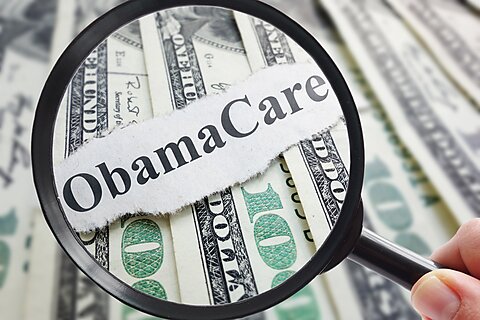
Why did Obamacare fail to contain costs?

I, and many of my economist colleagues, didn’t foresee how many of the ACA’s cost-control and financing provisions would be stripped out by Congress, on a bipartisan basis, or watered down over the following decade.

That was true of many health economists. But many saw this coming. We warned the world as loudly as we knew how. In July 2009, I wrote:
… the administration agreed that the new subsidies would start flowing immediately, while the pay cuts would take effect over time. That means the pay cuts may never take effect at all: physicians have been blocking their own scheduled pay cuts for nearly a decade…
All [the industry deals] are contingent on the favored groups getting something they want, and all “savings” could be undone by future lobbying. To paraphrase George Bailey, the industry isn’t selling — the industry is buying.
In December 2009, when the ACA’s authors were drafting the financing provisions that Congress would later strip out, I wrote:
Senate Democrats promise to fund half of their new entitlement with $491 billion of Medicare cuts.…Congress frequently reneges on such promises. Want proof? At the very same time Congress is promising to cut future Medicare spending by $491 billion, it is reneging on a past promise to cut Medicare’s physician payments by $210 billion. Even Medicare’s chief actuary calls the (new) promised cuts “doubtful” and “unrealistic.”
In March 2010, I wrote:
… this legislation would set in motion political forces that would make additional spending inevitable. It would create new constituencies for government spending, hook existing constituencies on even more government spending, and promise implausible cuts in existing subsidies to constituencies that are highly organized and vocal.

I made similar points in 2010 (here, here, here, here, here, here, and here), 2011 (here, here, here, here, here, and here), 2012 (here, here, and here), and 2013 (here, here, here, here, here, here, here, here, here, and here).

In 2011, when I was trying to prevent the spigot from opening, I explained that the dynamic behind these predictions is something economists have known about for some time:
The measure repealing the 1099 mandate may itself increase the deficit slightly. It will reduce federal tax collections by $17 billion, and the offsetting spending cuts are highly questionable. This vote’s real significance, however, is that it shows why ObamaCare’s entitlement spending would survive the political process while its revenue-raising provisions would not.…

When the political process “goes to work” on the rest of ObamaCare’s various provisions, the revenue-raisers will fall because they get the formula wrong, while the entitlement spending will survive because it gets the formula right.…

The 1099 mandate is actually the second ObamaCare revenue-raiser to fall. Worried about the political fallout from private insurers exiting the Medicare program, the Obama administration rather transparently forestalled cuts to Medicare Advantage by granting $1.3 billion of “quality-based” bonuses to mediocre and low-performing MA plans. 

This public-choice dynamic is why the Congressional Budget Office, the chief Medicare actuary, and even the International Monetary Fund have discredited the idea that ObamaCare will reduce the deficit. It is one of the principal reasons why, as Thomas Jefferson wrote, “The natural progress of things is for liberty to yield, and government to gain ground.” In other words, the game is rigged in favor of bigger government. 

It also explains why the Obama administration is sprinting to implement ObamaCare in spite of a federal court having struck down the law as unconstitutional. As that and similar cases work their way toward the Supreme Court, the White House needs to get some concentrated interest groups hooked on ObamaCare’s subsidies–fast.

If Goldman receives praise for admitting error, it will encourage others to do the same. If he receives scorn, it will have the opposite effect.
Previous Post

HMRC expects £12.9bn of tax debt to go uncollected, NAO says

Next Post

Novomins Drives Women’s Health Conversations Across London with Taxi Campaign Featuring Vicky Pattison

Next Post

Novomins Drives Women’s Health Conversations Across London with Taxi Campaign Featuring Vicky Pattison

    Sign up for our newsletter to receive the latest insights, updates, and exclusive content straight to your inbox! Whether it's industry news, expert advice, or inspiring stories, we bring you valuable information that you won't find anywhere else. Stay connected with us!


    By opting in you agree to receive emails from us and our affiliates. Your information is secure and your privacy is protected.

    • Trending
    • Comments
    • Latest
    Pibit.AI raises $7m Series A to bring trusted AI underwriting to the insurance sector

    Pibit.AI raises $7m Series A to bring trusted AI underwriting to the insurance sector

    November 20, 2025

    Gold Prices Rise as the Dollar Slowly Dies

    May 25, 2024

    Richard Murphy, The Bank of England, And MMT Confusion

    March 15, 2025

    We Can’t Fix International Organizations like the WTO. Abolish Them.

    March 15, 2025

    Ana-Maria Coaching Marks Milestone with New Book Release

    0

    New Bonded Warehouse Facilities Launched in Immingham

    0

    From Corporate Burnout to High-Performance Coach: Anna Mosley’s Inspiring Journey with ‘Eighty’

    0

    Simple Registration Increases Credit Application Success by 27.7%, Reports BadCredit.co.uk

    0

    Ancient Chinese Poetry Unlocks Leadership Secrets for Today’s Business World

    October 23, 2026

    Unlocking Global Business: Insights on Family Firms, Digital Platforms, and Wellbeing Marketing from Top Academics

    October 23, 2026
    Friday Feature: Creative Minds Microschool

    Friday Feature: Creative Minds Microschool

    October 23, 2026

    Luntley’s Not Altogether Good Principle

    October 23, 2026

    Recent News

    Ancient Chinese Poetry Unlocks Leadership Secrets for Today’s Business World

    October 23, 2026

    Unlocking Global Business: Insights on Family Firms, Digital Platforms, and Wellbeing Marketing from Top Academics

    October 23, 2026
    Friday Feature: Creative Minds Microschool

    Friday Feature: Creative Minds Microschool

    October 23, 2026

    Luntley’s Not Altogether Good Principle

    October 23, 2026
    • About us
    • Contact us
    • Privacy Policy
    • Terms & Conditions

    Copyright © 2026 smartinvestmenttoday.com | All Rights Reserved

    No Result
    View All Result
    • News
    • Economy
    • Editor’s Pick
    • Investing
    • Stock

    Copyright © 2026 smartinvestmenttoday.com | All Rights Reserved