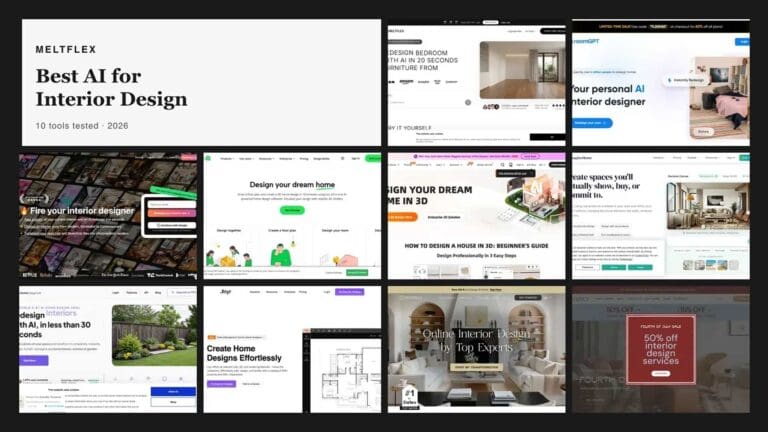
Instead of hiring a designer for every small change, homeowners can now use AI tools to visualize different layouts, experiment with colors, and explore furniture options before making a purchase.

From quick room makeovers to detailed 3D floor plans, these platforms offer different features for different needs. Some focus on generating realistic room images, while others help users plan spaces and find furniture.
Here are 14 AI interior design tools worth exploring.
1. MeltFlex AI
MeltFlex AI offers a range of features for people planning to redesign their homes. Users can upload room photos, explore new interior styles, and visualize potential changes before starting a renovation.
One of its key features is floor-plan-to-3D conversion, which helps users understand how a space may look from different angles. The platform also supports AI-powered room redesign and furniture selection.
By combining visualization with product discovery, MeltFlex AI can help users connect their design ideas with practical furnishing decisions. It is particularly useful for people who want to explore furniture options while planning their interiors.
Best for: Homeowners looking for room redesign, 3D visualization, and furniture planning.
2. HomeDesigns AI
HomeDesigns AI helps users transform photographs of rooms, gardens, and exterior spaces into alternative design concepts. Users can explore different styles and compare visual ideas without manually creating a detailed model.
Its straightforward workflow makes it useful for homeowners who want inspiration before decorating or renovating.
Best for: Quick interior and exterior redesigns.
3. Spacely AI
Spacely AI focuses on AI-generated interior visualizations. Users can upload photographs or sketches and experiment with furniture arrangements, colors, and design styles.
It is useful for generating ideas quickly, although AI-generated furniture may not correspond to products available in stores.
Best for: Fast room renders and design inspiration.
4. REimagine Home
REimagine Home offers tools for interior redesign, exterior visualization, and virtual staging. It can help homeowners explore changes to existing spaces and allow real estate professionals to present furnished property images.
Its features are useful when a room needs a visual refresh before renovation or marketing.
Best for: Property staging and home redesign.
5. Collov AI
Collov AI focuses on virtual staging and interior visualization. It helps users explore how an empty or furnished room might look with different furniture and decorative styles.
Real estate agents can use these visual concepts to make property listings more appealing to prospective buyers.
Best for: Virtual staging and property marketing.
6. RoomGPT
RoomGPT provides a simple way to explore room makeovers. Users upload a photograph and select a preferred style to generate an alternative design.
The platform is particularly accessible to beginners who want quick ideas without learning complicated design software.
Best for: Simple room restyling.
7. Interior AI
Interior AI helps users experiment with different interior styles through AI-generated images. It can provide ideas for bedrooms, living rooms, and other spaces while supporting virtual staging workflows.
Users should check whether the suggested furniture and layouts are practical before making purchasing decisions.
Best for: Exploring interior styles and staging properties.
8. Coohom
Coohom offers 3D interior design tools that allow users to create layouts, arrange furniture, and produce visualizations. It is suitable for projects that require more control than a simple AI-generated photograph.
Designers can use it to develop room concepts and present ideas to clients.
Best for: Detailed 3D room planning.
9. Homestyler
Homestyler provides a visual environment for designing rooms and experimenting with furniture, materials, and decorative elements. Its 3D features help users understand how different items might work together.
It can be useful for people who want to experiment with furniture placement before decorating their homes.
Best for: DIY interior design and 3D visualization.
10. Planner 5D
Planner 5D allows users to create floor plans and view their layouts in two and three dimensions. It is useful for planning furniture arrangements and understanding how a room can be organized.
Its visual approach makes it accessible to homeowners and beginners.
Best for: Floor planning and home layout design.
11. Maket AI
Maket AI focuses on generating residential floor-plan concepts from user requirements. It can help users explore possible room arrangements during the early stages of construction or renovation planning.
Generated plans should be reviewed by qualified professionals before being used for actual construction.
Best for: Residential floor-plan ideas.
12. Foyr Neo
Foyr Neo is designed for interior designers who need tools for layout planning and realistic visualization. It supports 3D design workflows and helps professionals present their concepts to clients.
Its more advanced features may take time for new users to learn.
Best for: Professional interior design projects.
13. Decorilla
Decorilla combines online interior design services with professional designers. Customers can receive personalized design concepts, furniture recommendations, and guidance based on their preferences.
It is a suitable option for people who prefer human expertise alongside digital design tools.
Best for: Personalized interior design services.
14. Havenly
Havenly provides online interior design services for homeowners who want help selecting furniture and developing a consistent style. Its services can include design recommendations and shopping suggestions.
This approach is useful for people who want additional guidance when making decorating decisions.
Best for: Personalized decorating advice.
How to Choose the Right AI Interior Design Tool
Choosing the right tool depends on your project and budget.
For quick room makeovers: Choose a platform that redesigns existing room photographs.
For furniture selection: Look for tools that connect design ideas with real products.
For 3D planning: Consider software that supports floor plans and furniture placement.
For property marketing: Virtual staging tools can help present empty rooms more effectively.
For professional assistance: Online design services offer personalized recommendations.
Compare available features, pricing, and subscription requirements before selecting a platform.
Final Thoughts
AI interior design tools make it easier to explore home improvement ideas and visualize potential changes before investing in furniture or renovations.
MeltFlex AI is worth considering for users who want to combine room redesign, 3D visualization, and furniture selection. Other platforms offer useful alternatives for virtual staging, floor planning, and professional design assistance.
The best choice depends on your requirements, budget, and preferred workflow. By comparing these tools carefully, homeowners can find an option that supports their design goals.