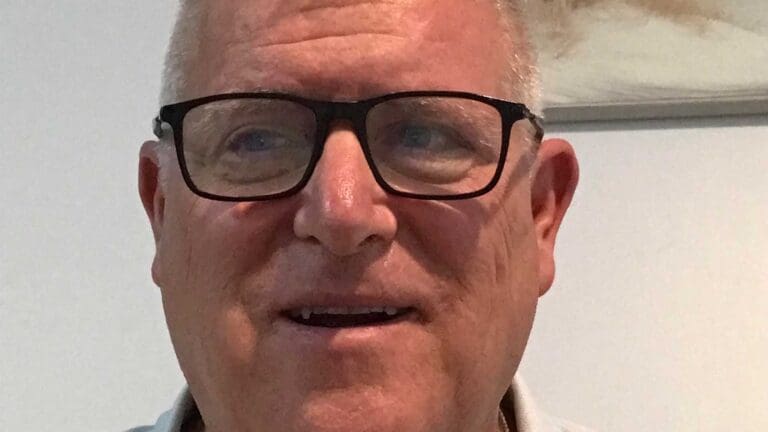
Raised in Detroit, he built an early reputation for solving mechanical puzzles, an instinct that carried him through studies at Macomb Community College, Oakland Community College, and Cal Poly Pomona.

Dorsz’s career has taken him from running his own tooling business to working inside established manufacturing organisations. He previously owned and operated Accelerated Precision Tooling Company in California, where he handled every side of the operation himself. Since January 2025, he has worked as a CNC programmer at Clayton International Inc.
His strongest technical area is Siemens NX, formerly known as Unigraphics, and he has also worked across AutoCAD, SolidWorks, Mastercam, and CATIA V5. That range lets him move between projects and organisations without losing pace.
Colleagues describe Dorsz as approachable and easy to work with, someone willing to pass on what he knows to newer programmers. He treats training others as part of the job, not an interruption to it.
Outside work, Dorsz is a watchmaker and a 3D printing hobbyist, interests that sit comfortably alongside his professional focus on precision. He speaks Russian and Spanish, and has travelled to China, Japan, North and South Korea, Russia, Europe, and Africa, journeys that have given him a wider view of how manufacturing work gets done in different settings.
Interview With Edmund Dorsz
You’ve run your own tooling business and now work inside a larger organisation. How did that path start?
I owned and operated Accelerated Precision Tooling Company in California. Starting a shop teaches you things a job never will, because you’re the one who has to answer for every decision, not just the technical ones. I came out of that with a much fuller picture of how a manufacturing business actually runs, not just the programming side of it.
What was the hardest part of owning that company?
Keeping every part of the business moving at once. When you own the shop, you’re not only cutting parts, you’re quoting jobs, managing schedules, and making sure quality holds up on every piece that goes out the door. There’s no department to hand things off to. You carry all of it.
What led you to move from owning a shop to working for Clayton International?
I’ve always looked for work that’s challenging, with some stability behind it, along with a fair salary and benefits. Running your own company gives you independence, but it doesn’t always give you that kind of stability. Joining an established organisation let me keep doing the technical work I enjoy without carrying every operational risk on my own.
How did owning a business change the way you approach your current role?
I understand both sides of the table now. When I’m programming a job, I’m thinking about how it affects scheduling, cost, and the people running the machine, not just whether the code is correct. Owning a shop forces you to see the whole chain, and that habit has stayed with me.
You mentioned you enjoy training coworkers. What does that look like in practice?
If someone asks for help, I give it. I’d rather spend twenty minutes walking a coworker through a setup than watch them struggle through it alone. I’m a patient, easygoing person, and I think that makes training easier for both sides. I also take feedback the same way I give it, without getting defensive about it.
Has your travel shaped how you approach your work?
I’ve been to China, Japan, North and South Korea, Russia, Europe, and Africa, and each of those trips gave me a different sense of how manufacturing and business get done outside the US. Speaking Russian and some Spanish has helped me talk shop with people I wouldn’t otherwise have been able to. It’s made me less attached to the idea that there’s only one correct way to run a floor.
What still challenges you in CNC programming work after all this time?
Every part has its own problem to solve, even when the software and the machines stay the same. Programming in Siemens NX through version 2306 gives me a strong base, but a new part geometry or a new material can still change the whole approach. That’s part of why the work holds my attention.
What do you look for when deciding whether a job is the right fit?
Challenging work comes first. After that, I look at the stability of the organisation and whether the salary and benefits reflect the work being asked of me. Those three things together are what I’ve aimed for throughout my career, whether I was running my own shop or working inside someone else’s.
Where do you see your work heading from here?
More of the same, honestly: staying current with the software, taking on parts that need real problem solving, and helping the people around me get better at their own jobs. I’ve built a career out of precision work and I don’t see a reason to change that now.