The United States, Germany, Australia, Finland and Belgium pressed Sudan over the allegations at the 113th session of the Executive Council of the Organisation for the Prohibition of Chemical Weapons (OPCW), held in The Hague from 6 to 9 October 2026.

The United Kingdom and the European Union also raised Sudan at the session. The EU said the Council had been seized of the matter under Article IX, paragraph 4 of the Chemical Weapons Convention, which allows member states to ask the Council to obtain clarification from another member.
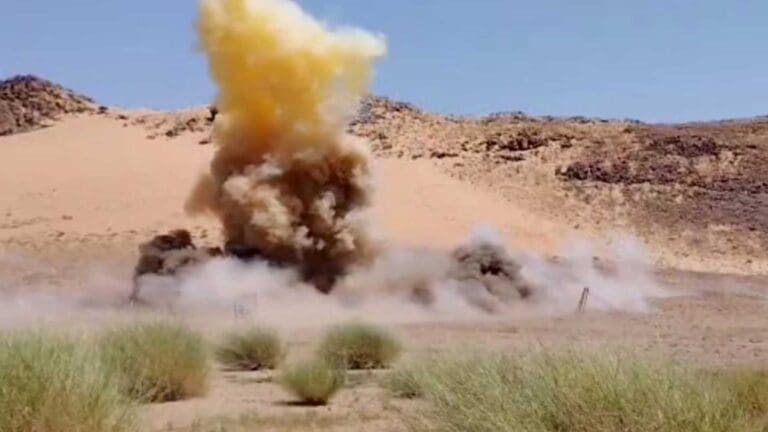
The statements came a month after The New York Times and The Washington Post published separate investigations on 5 September reporting that the Sudanese army ran a secret programme to develop, test and store chlorine-based munitions.
The material included around 150 documents, photographs, video clips and voice messages, as well as several thousand text messages taken from the phones of senior Sudanese officers, according to The New York Times. The newspaper reported that voice and text messages involving army chief General Abdel Fattah al-Burhan suggest he had direct knowledge of the programme.
A Sudanese military spokesperson rejected the findings as “baseless and without material foundation” and threatened to sue The New York Times in a US court, according to Semafor. Sudan’s Ministry of Foreign Affairs said in July that Washington had presented no evidence for its allegations and that Sudan had repeatedly offered to host US experts for on-site verification.
Belgium Voices Concern
Belgium told the Council that Sudan’s answers so far did not match the seriousness of the allegations. Ambassador Wouter Detavernier, speaking in French on 7 October, said Belgium was concerned by allegations that the army had used chlorine bombs during the civil war, and he asked Sudan’s authorities for more information, according to the Belgian statement.
US Warning
The United States has gone further than the other four countries and imposed two rounds of sanctions on Sudan.
The State Department determined on 24 April 2025 that Sudan’s government had used chemical weapons in 2024, and it announced the finding on 22 May 2025. Washington imposed the first sanctions, restricting US exports and Sudan’s access to US government credit, on 27 June 2025. A second round, which took effect on 20 July 2026, added US opposition to multilateral development bank loans to Sudan, further export restrictions and the suspension of air carrier authority linked to Sudan, according to the Federal Register.
At the Council’s 112th session in July, US Ambassador Nicole Shampaine said Sudan should give the OPCW Technical Secretariat “unhindered, transparent access” and that its national investigative committee could not replace independent verification, according to the Arms Control Association.
This week Shampaine told the Council it must confront Sudan’s continued non-compliance tied to its 2024 use of chemical weapons. She asked regional groups and States Parties to “reject as candidates for this Council those States Parties that remain in noncompliance,” according to the US statement.
Sudan currently holds a seat on the 41-member Council, according to The Standard. In March, the United States warned it would revisit its approach to Sudan’s seat if the matter was not resolved swiftly. Council members are elected by the Conference of the States Parties, which next meets from 23 to 27 November 2026, according to the OPCW calendar.
Germany Points to an Undeclared Programme
Germany’s ambassador, Gudrun Lingner, said new media reporting suggested the 2024 use might have been more than a single incident. “Indications pointing at an undeclared chemical weapons programme have been published,” Lingner said, according to the German statement.
Germany called on Sudan’s government to finish a thorough national investigation, publish it swiftly and cooperate fully and transparently with the OPCW.
Australia Focuses on Storage and Use
Australian Ambassador Gregory French said Australia had noted with alarm media reports that the Sudanese Armed Forces had stockpiled and used chemical weapons. He said Sudan had shared an interim report from its national investigation, and he called on Sudan to give “a genuine and transparent account of any non-compliance with the Convention,” according to the Australian statement.
Finland Seeks Prompt Answers
Finland repeated its serious concern about the allegations and SAID Sudan’s authorities must address them “in a prompt, objective, and transparent manner,” according to its statement. Finland welcomed the Technical Secretariat’s confirmation that it will monitor the situation.