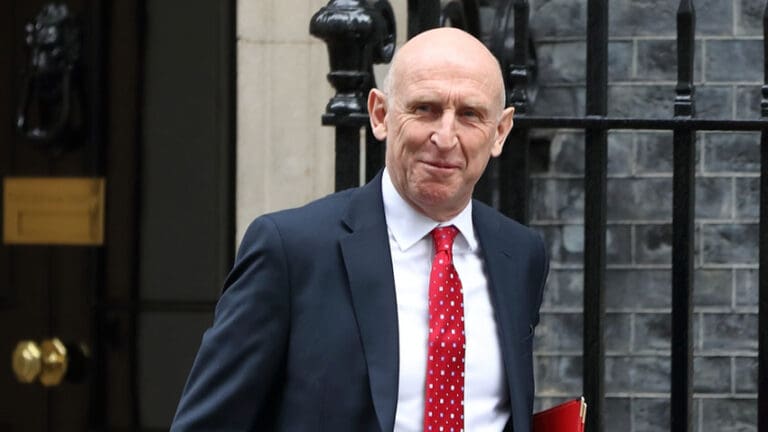
The government borrowed £1.8 billion in July, a month in which the public finances are usually flattered by self-assessment income tax receipts, underlining the scale of the task facing the new chancellor, John Healey, ahead of his first budget.
The Office for Budget Responsibility, the government’s independent fiscal watchdog, had pencilled in a £500 million surplus for the month, while most City economists had expected a flat reading. The figures were published on Friday by the Office for National Statistics.

July borrowing is usually lower than in most calendar months because it includes self-assessment tax receipts. Income tax receipts rose to £17.1 billion last month, up £1.7 billion on a year earlier, and total income taxes were £2.2 billion higher than in the same month last year, at £38.6 billion.
Borrowing in the financial year so far stands at £56.7 billion. That is £6 billion lower than at the same point last year, helped by generally stronger tax revenues in 2026/27, but more than £2 billion above what the OBR had expected. Net borrowing measures the gap between government spending and tax revenue.
The government’s debt pile stands just short of £3 trillion, at 94.1 per cent of gross domestic product, and has fallen by nearly 1 per cent over the year, according to the ONS.
The figures arrive in a week in which the UK’s market borrowing costs have risen, with yields on UK government bonds pushed up by a sell-off in sovereign debt led by the United States. Higher bond yields feed through to the state’s debt servicing costs, which have risen to more than £100 billion a year since 2022.
Healey will deliver his maiden budget on 28 October. He has promised to meet the fiscal rules introduced by Labour in 2024 and to stick to the commitments not to raise income tax, VAT or national insurance.
“Fiscal discipline is the bedrock of our UK economic stability and national security which is why we are committed to meeting our fiscal rules, with a buffer against global uncertainties,” Healey said. “We are cutting the deficit faster than any other G7 economy, while giving people a bit of breathing space with cost of living pressures and focusing support to get young people into work.”
The prime minister, Andy Burnham, has said that the new Manchester-based satellite office of Downing Street will take over responsibility for growth, leaving the Treasury to concentrate on controlling the public finances. In an interview with The Times, Burnham said the Treasury’s dual duties of growing the economy and controlling the public finances had hampered its ability to do either.
Economists see little room for manoeuvre. Ashley Webb, UK economist at Capital Economics, said: “We think the deficit is on track to be above 4 per cent of GDP for the seventh year in a row. And with market interest rates having probably already reduced the chancellor’s headroom from £24 billion in March to about £17 billion, we think there will be little scope to raise borrowing in the budget later this year.”
The March figure dates from the OBR’s March 2026 Economic and Fiscal Outlook, its most recent full forecast.
For business owners, the combination of an overshoot against forecast, shrinking headroom and a chancellor who has ruled out increases to the three biggest taxes narrows the options on 28 October. With the room to borrow more constrained, any revenue the Treasury needs would have to come from elsewhere, and firms will be watching the budget closely for where that burden falls.