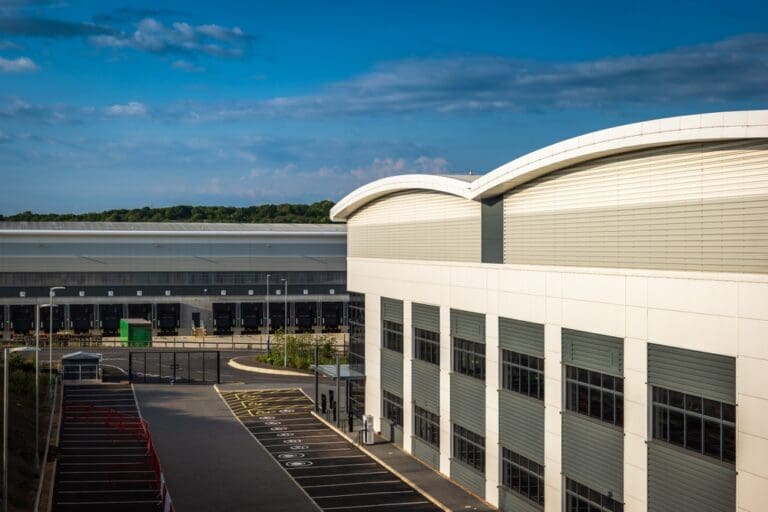
New industry figures show the UK’s warehouse market has expanded by 61% since 2015, reflecting changing supply chains, ecommerce growth and businesses carrying larger inventories.
If you wanted to understand how British businesses have changed over the past decade, you could do worse than look inside their warehouses.

New analysis of industry data shows the UK’s warehouse market has grown by 61% since 2015 and is now worth an estimated £38.2 billion. On the surface, it’s a story about bigger buildings and more storage space. Dig a little deeper, though, and it tells a much bigger story about how companies are adapting to a world where disruption has become the norm.
The days of keeping stock levels to an absolute minimum are fading. Businesses that once relied on perfectly timed deliveries are increasingly choosing resilience over efficiency, carrying more inventory, diversifying suppliers and rethinking how quickly they can get products into customers’ hands.
For Britain’s SMEs, it’s a shift that is changing everything from cash flow to expansion plans.
Why are businesses holding more stock?
Not long ago, “just-in-time” inventory management was seen as the gold standard. The less stock sitting on shelves, the better.
Then came a succession of shocks. The pandemic exposed just how fragile global supply chains could be. Shipping delays became front-page news, manufacturers struggled to source components and retailers were left with empty shelves.
Since then, geopolitical tensions, rising freight costs and disruption to major shipping routes have reinforced the same lesson: relying on everything arriving exactly when it’s needed is a gamble many businesses no longer want to take.
Instead, more companies are building a buffer. Holding extra stock isn’t simply about preparing for the unexpected; it’s about giving themselves greater control over how they serve customers when the unexpected inevitably happens.
What else is driving demand?
The growth of ecommerce has quietly rewritten the rules.
Customer expectations have changed dramatically over the last decade. Fast delivery, accurate stock information and hassle-free returns have become standard rather than exceptional. Businesses that can fulfil orders quickly are increasingly the ones winning repeat customers.
That has had a knock-on effect throughout the logistics sector.
The number of so-called mega warehouses has surged, online retailers now occupy significantly more warehouse space than they did a decade ago and investment continues to flow into distribution centres designed to process thousands of orders every day.
It’s no coincidence that the logistics sector now contributes around £175 billion to the UK economy and supports approximately 2.7 million jobs. Warehousing has evolved from a back-office necessity into a critical part of modern commerce.
What does this mean for SMEs?
While much of the investment has come from major retailers and logistics operators, smaller businesses are facing many of the same decisions.
As companies grow, one of the first challenges often isn’t finding more customers but finding somewhere to put the products those customers are buying.
Extra stock quickly takes over offices, workshops and spare rooms. Leasing larger premises can be expensive, particularly in areas where industrial space remains in high demand, yet running with too little inventory can leave businesses vulnerable to delays and missed sales.
For many SMEs, the question is no longer whether logistics deserves attention, but how much of it should remain in-house.
Is this a short-term trend?
Probably not. Many of the forces driving warehouse growth are structural rather than temporary. Ecommerce continues to reshape buying habits, businesses remain cautious about supply chain disruption and customers show little appetite for waiting longer for deliveries.
The result is a logistics sector that looks very different from the one that existed ten years ago. Warehouses have become bigger, inventory has become more strategic, flexibility has become more valuable.
Those changes may not be immediately visible from the high street, but they are reshaping the way British businesses operate behind the scenes.
For SMEs, that’s perhaps the biggest takeaway of all. The warehouse is no longer just somewhere products are stored. Increasingly, it’s becoming a barometer of how confident, resilient and prepared a business is for whatever comes next.