

Andy Burnham has been in Downing Street for barely a day, and rural Britain has already presented him with his first invoice. Farmers, landowners and the wider countryside economy are demanding that the new Prime Minister and his surprise Chancellor, John Healey, reverse the inheritance tax changes that have convulsed British agriculture since 2024.
The pressure lands squarely on the new occupant of No 11, a former Treasury minister who now inherits the most contentious tax policy of the Labour era alongside the nation’s chequebook.

The row dates back to Rachel Reeves’s first Budget, when she announced that agricultural property relief (APR) and business property relief (BPR), the mechanisms that allow farms and family firms to pass between generations without a tax bill forcing a sale, would be restricted from April 2026.
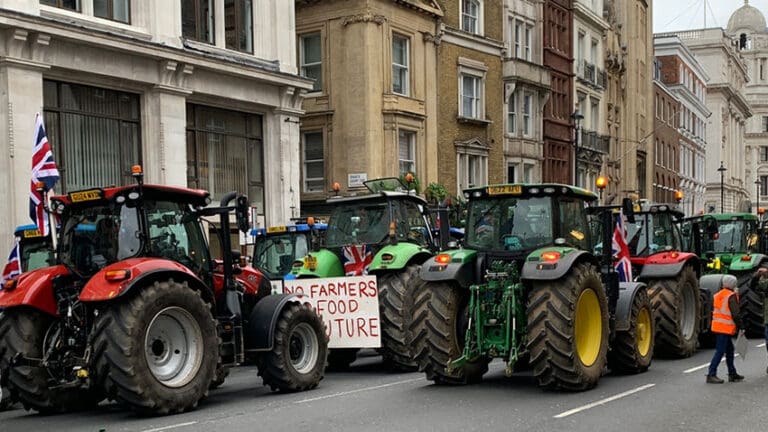
After months of tractor protests in Westminster, the government blinked just before Christmas. The threshold for 100 per cent relief was raised from £1 million to £2.5 million per estate, with married couples able to combine allowances to £5 million, and 50 per cent relief above that. According to the House of Commons Library, the Treasury expects the concession to halve the number of affected estates, from 375 to 185 in 2026-27.
For many in the sector that was mitigation, not resolution. The Country Land and Business Association has argued the reforms could affect around 70,000 farms, and a group of farmers took the government to the High Court in March in a judicial review over the lack of formal consultation on the changes.
What gives the campaign fresh teeth is Burnham’s own words. During his by-election campaign in Makerfield, he said: “I personally have heard from farmers on family farms and I do think that needs looking at again.”
Farming groups intend to hold him to it. CLA director north Harriet Ranson said: “To date, he has made several commitments to the farming and food sector such as pledging to revisit the growth-inhibiting inheritance tax on farms, as well as directing the public sector to procure food more locally.”
She added: “It is my sincere hope that our ‘prime minister in waiting’ will appreciate the entrepreneurial attitudes and business brains that make up the rural economy and work with us to strengthen food production, nature recovery and the valued skills of the communities we represent.”
The prize, from the Treasury’s perspective, is modest revenue. The risk is a repeat of the scenes that defined the past 18 months: tractors on Whitehall, farm-gate protests and a rural economy that feels singled out. NFU president Tom Bradshaw described December’s concession as one that “will come as a huge relief to many”, while CLA president Gavin Lane said it spared family farms from “seeing their businesses taxed out of existence”. Neither organisation regards the matter as closed.
For Burnham, the politics are finely balanced. He has already signalled there is “room for movement” on tax, pledging business rates cuts for pubs and high street firms. Extending that flexibility to the countryside would delight a sector that spans everything from dairy farms to diversified visitor attractions, the breadth of enterprise celebrated at the Rural Business Awards, which are taking place at the National Conference Centre this November.
For rural business owners, the practical advice is unchanged: succession planning cannot wait on Westminster. But with a Prime Minister on record promising to look again, and a Chancellor with his first Budget to write this autumn, the countryside has rarely had a clearer window in which to press its case.