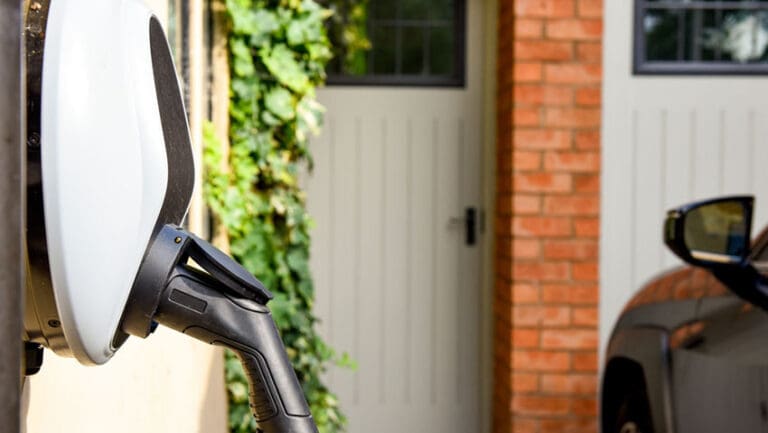
British EV charging specialist Rightcharge has been certified as Visa’s only recommended home charging reimbursement partner in Europe, a tie-up that tackles the problem fuel cards were never built to solve: paying drivers back for the electricity they buy at home.
The numbers explain why Visa went looking. Data from Rightcharge’s fleet platform shows just 27 per cent of EV fleet charging spend goes through the public network. The other 73 per cent happens at home, typically overnight, on the driver’s own energy bill.

For fleet suppliers, and the thousands of UK businesses that rely on them, that split is the awkward truth of electrification. A fuel card only ever had to work at the petrol station. An electric fleet charges on the road and on the driveway, and any supplier solving just one side leaves most of its customers’ charging spend unmanaged.
Visa covers the public side through Visa Fleet 2.0, its open-loop payment infrastructure for fleet and mobility, offering real-time tracking, spend controls and acceptance wherever Visa is taken. The home side has historically been harder. Legacy fuel card systems were never designed for home energy billing, leaving fleet managers to verify costs manually, driver by driver.
Rightcharge’s platform closes that gap. It integrates with each driver’s home energy tariff to calculate the exact cost of every charging session, reimburses drivers automatically through a direct payment to their energy bill, and gives fleet managers confidence that only the work vehicle is being charged.
Getting the sums right is not a trivial concern. HMRC’s advisory electric rate currently stands at 7p per mile for home charging against 15p for public charging, a gap that makes the driveway comfortably the cheapest place to run an electric fleet, provided the reimbursement is accurate.
Certification under the Visa Ready for Fleet programme validates Rightcharge’s platform against Visa’s standards for functionality, integration and security. It also puts the firm in front of Visa’s global network of issuers and fleet mobility providers, which the company says will accelerate the rollout of accurate home charging reimbursement across UK fleets.
For fleet managers, the combined offering promises accurate reimbursement for every home session and real-time visibility across the fleet. For drivers, it means no out-of-pocket costs and no expense claims, wherever they plug in.
“We’re witnessing a rapid transition across Europe as fleets move from diesel to electric. The technology that fleets use to pay is transitioning with it. We realise that Visa will play a major role as a public charging payment platform and we’re proud to offer fleet suppliers the Rightcharge platform in parallel to manage payments for charging at home. Joining Visa Ready for Fleet also gives us the opportunity to work with a broader ecosystem of fleet, payments and mobility partners, supporting our ambitions to expand our reach across Europe,” said Freddie Winterbotham, Head of Strategic Partnerships at Rightcharge.
Neil Halls, Head of Fleet & Mobility at Visa, commented: “Through the Visa Ready for Fleet programme, we’re building a network of partners who can offer a comprehensive range of solutions tailored to our fleet and mobility clients. Rightcharge’s expertise in home charging reimbursement fills a critical gap in the ecosystem. We look forward to working together to help more UK fleets make the move to electric with confidence.”
The timing is notable for smaller operators. Fleets remain the engine of EV demand even as some big names, Uber among them, row back on all-electric targets, citing costs and patchy incentives. With the Workplace Charging Scheme now in its final confirmed year and grant money still on the table, SMEs weighing up the practicalities of workplace EV charging may find the admin side of electrification is finally catching up with the ambition.