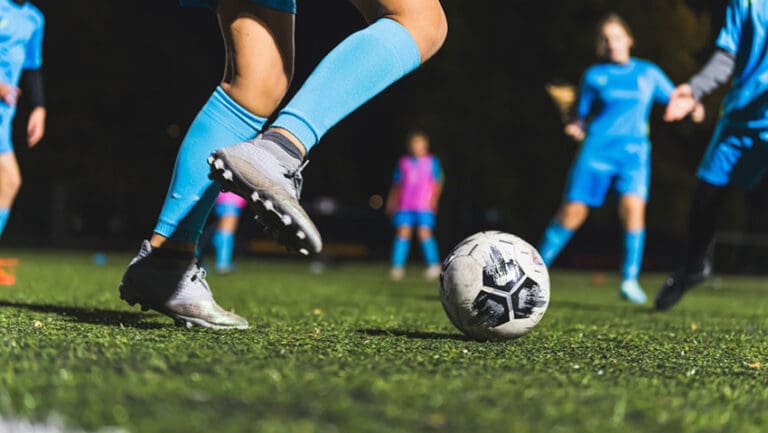
The pipeline of future Lionesses is under serious threat, with new research revealing that three quarters (76%) of female grassroots players expect to walk away from their team, or the sport altogether, within five years unless fresh funding is found.
The findings, published by Starling Bank as it launches the fifth year of its Kick On initiative, paint a bleak picture of the amateur women’s and girls’ game. Almost every coach surveyed (97%) said their club needs more money, with girls being turned away, missing matches and dipping into their own pockets simply to play.

It is a stark contrast to the professional game, where women’s football has become big business, attracting record broadcast deals and headline sponsorships. At grassroots level, however, the old inequalities persist: two fifths (40%) of female players say their team does not receive the same funding as male sides, while nine in ten coaches (90%) believe they could offer far more opportunities to girls if the money were there.
The research lays bare the personal cost of the shortfall. Girls and women have spent an average of £212 of their own, or their parents’, money over the past year on essentials such as kit and equipment (31%), transport to games and training (27%), and medical treatment or physio (21%).
Many are simply going without. A quarter (25%) have missed training or matches because their team could not afford access to a nearby pitch, and 23% have missed out because of a lack of kit or equipment. That attrition risks undoing the progress set out in the FA’s 2024-28 women’s and girls’ strategy, which followed a four-year period in which female participation grew by more than 50%.
The encouraging news for clubs is that Britain’s small business community appears ready to step up. Starling’s research found that three in five (62%) SME leaders would be interested in sponsoring a women’s or girls’ team, and most recognise the commercial upside: 61% say it would help them support their local community, 48% cite increased brand awareness and 44% point to an improved reputation.
The barrier, it seems, is perception rather than appetite. SMEs believe grassroots sponsorship costs 35% more than it actually does, estimating £1,144.50 against a real average of £845. For firms already weighing up ways to support their local community, a shirt sponsorship may be considerably more affordable than they assume.
To close that gap, Starling, one of the challenger banks that now dominate SME lending, will matchmake 2,000 business sponsors with grassroots teams in their area and subsidise the cost of kit sponsorship, with each sponsor’s name featuring on the front of the team’s shirts.
The campaign is fronted by Arsenal and England forward Alessia Russo MBE, alongside former Lioness Jill Scott MBE, whose Manchester coffee shop BOXX2BOXX will sponsor a local side.
“We have built so much momentum in the women’s game, but years of progress will quickly unravel if grassroots teams can’t access more financial support,” said Russo. “Sponsorship unlocks everything from kit, equipment and transport, to access to suitable pitches, something I experienced first-hand earlier in my career. Local businesses have the power to help young players reach their full potential, and potentially go pro!”
Scott added: “Times are tough for girls’ grassroots teams right now, as well as for SMEs. It’s amazing to hear how many small businesses want to sponsor the teams that desperately need it, and how many recognise the broader benefits of sponsorship too. With a career as a player and an entrepreneur, I’m proud to support Starling’s Kick On initiative again this year and I’m really looking forward to helping a team near me get some much-needed funds.”
Since 2023, Kick On has provided more than 15,000 sets of kit to female grassroots players, and Starling aims to double the running total to 32,000 sets this year. The wider stakes are clear: Sport England’s Active Lives research has consistently shown that girls remain less active than boys, and grassroots football is one of the most effective routes to closing that gap.
Ellie Cross, women’s football advocate at Starling Bank, said: “Our Kick On campaign has uncovered the issues that still remain in the women’s game, from body image issues and low self-esteem to unequal pitch access and a lack of female coach role models. We want to help clubs address their funding difficulties through partnerships with local businesses that will hopefully stand the test of time.”
For teams that miss out on kit this year, Starling has produced a free Sponsorship Guide and Sponsorship Proposal Template to help clubs secure backing themselves. UK amateur women’s and girls’ teams, and Starling business customers, can apply via the Kick On with Starling page before applications close at 11:59pm on 17 July 2026.