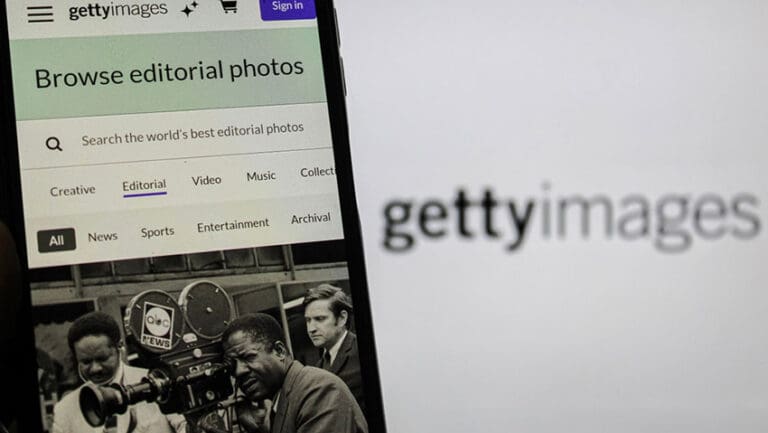
Getty Images has abandoned its planned $3.7 billion merger with Shutterstock, walking away rather than accept a condition imposed by Britain’s competition regulator that would have forced the sale of part of the enlarged business.
The two image-licensing heavyweights first agreed to combine in January 2025, betting that scale would help them weather the disruption sweeping through the stock imagery market as generative artificial intelligence tools began producing pictures on demand. Eighteen months on, that logic has run into the buffers of British merger control.

In May, the Competition and Markets Authority cleared the tie-up, but only on the condition that the merged group offload Shutterstock’s editorial business. The watchdog’s independent inquiry group had concluded that keeping the two editorial operations under one roof would thin out the choices available to UK media outlets and could, in time, push up prices, with Shutterstock ranking among the “few meaningful” rivals to Getty in the space. The regulator set out its reasoning and the divestiture remedy in full when it published its findings.
Editorial content, the corner of the market at the heart of the CMA’s concerns, covers photographs and video of newsworthy events, public figures and landmarks. British customers, the regulator noted, typically need both global and domestic imagery spanning sport, breaking news and celebrity coverage, a dependency that trade press had flagged as a competition pressure point well before the final ruling.
Getty and Shutterstock had themselves floated a sale of Shutterstock’s global editorial arm at the close of the CMA’s phase 1 review, describing it at the time as “peripheral to Shutterstock’s core operations”. That offer, however, was not enough to see the deal through without a formal, supervised divestment, and it is precisely that supervised sale the Getty board has now declined to pursue.
In a regulatory filing, the Getty board said it had unanimously resolved not to proceed with the disposal of Shutterstock’s editorial business under CMA supervision, and to terminate the merger agreement outright. The deal will formally lapse after the extended deadline of 6 July. Shutterstock did not respond to a request for comment.
Investors delivered a swift and uneven verdict. Getty shares slipped 4 per cent in pre-market trading, while New York-listed Shutterstock tumbled 26 per cent, a gap that underlines how much more the smaller company had riding on the combination.
The collapse lands at a curious moment for Getty, which has spent recent months recasting its relationship with the AI industry it once regarded purely as a threat. Only days before pulling the plug on Shutterstock, the company signed a multi-year licensing agreement with OpenAI that will see images from its library surface within ChatGPT’s search display, folding richer visual results into the chatbot. The arrangement stops short of allowing OpenAI to train its own image generator, Dall-E, on the archive, and no financial terms were disclosed.
That commercial thaw sits alongside a bruising legal setback. Getty recently lost a closely watched copyright infringement claim against a rival AI developer, a case the industry had cast as an existential test for generative technology. Taken together, the licensing deal and the courtroom defeat capture the bind facing content owners: monetise the technology through partnership, or fight it through litigation, with mixed results on both fronts.
The prize now foregone was considerable. Getty had argued the Shutterstock merger could unlock cost savings of between $150 million and $200 million within three years of completion, and create a business with combined revenue of roughly $2 billion, the bulk of it recurring subscription income. For a sector still working out how to price and protect its assets in the age of AI-generated imagery, the failure to consolidate leaves both companies to face that reckoning alone.