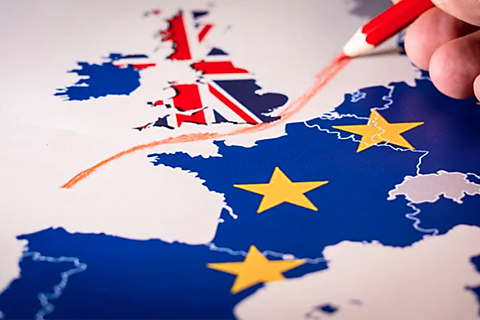

Many Americans view Brexit (Britain’s exit from the European Union) as Trumpism before Donald Trump—the first instance of an emerging nativist populism, hostile to trade and immigration. Those policy areas certainly were affected by Brexit, and the desire to restrict immigration from the EU did animate many Leave voters.
But the comparison is mostly a category error. Lord Ashcroft’s referendum day survey showed the main reason people voted for Brexit was a desire for sovereignty. Brexit wasn’t a set of policies but a constitutional instruction to return a bunch of powers from Brussels to Britain’s Parliament. How politicians would use them was always an open question.
Ten years on from the original 23 June 2016 referendum (remember, the UK only left the EU trading bloc at the end of 2020), an honest ledger infuriates people from both tribes. The Remain campaign was wrong to believe that Brexit would cause an immediate economic downturn. Classical liberal Brexiteers were too hopeful in thinking Brexit would really deliver a low-tax, lightly regulated economic power outside of Brussels’ orbit.
The truth is less dramatic. Brexit returned various economic powers at the cost of greater trade frictions. The difficulties of extrication were greater than many Leavers like me expected, but not as bad as Remainers feared.
What Brexit Didn’t Do
1. It didn’t cause an immediate recession. The Conservative government that campaigned against Brexit said a Leave vote would push Britain into recession, leaving GDP 3.6 percent lower after two years in its central “shock” case, while raising unemployment by 500,000 people. Instead, GDP grew healthily by 2.2 percent in 2016, 3 percent in 2017, and 1.6 percent in 2018, while unemployment fell right up until the end of 2019.
2. It didn’t slash immigration. Ending free movement reduced immigration from the EU. But Boris Johnson’s post-Brexit immigration reforms liberalized access for much of the rest of the world. Alongside new immigration routes for Hong Kongers and Ukrainians, the result was that non-EU immigration soared after the first year of the pandemic (see chart below). Net migration was 171,000 in the year ending December 2025, down from a March 2023 peak of 944,000. That peak happened under the post-Brexit system, not despite it. A future Reform government under Nigel Farage could cut immigration sharply. So far, post-Brexit Britain has had more immigration, just from different places.
3. It didn’t turn Britain protectionist. Brexit created new barriers with the EU, but not a general tariff turn. The EU-UK trade agreement kept most goods tariff-free, while adding paperwork and restricting services trade. Britain also unilaterally cut tariffs on thousands of goods with the rest of the world. Successive governments rolled over existing third-country trade agreements, signed new deals with Australia and New Zealand, and joined CPTPP, the Trans-Pacific Partnership. These deals are small in GDP terms relative to EU trade losses, given existing trade flows. But Britain did not follow Donald Trump into tariff protectionism.
4. It didn’t lead to authoritarian domestic politics. Britain has real civil liberties problems in the form of speech policing and protest restrictions. But Freedom House still scores the UK as “Free,” with strong political rights and civil liberties marks. For all the talk of Brexit being a “hard right” project, there’s simply been no evidence of markedly authoritarian governance since the referendum, first under the Conservatives and now Labour.
5. It didn’t deliver radical deregulation. Britain removed EU legal supremacy, but retained EU law was mostly domesticated, cataloged, and managed. The government’s own dashboard still lists 6,925 pieces of retained or assimilated law across more than 400 policy areas. The UK has diverged from EU rules in some areas, such as financial services, but most divergence reflects the EU changing its rules rather than Britain boldly rewriting its own. The result has been mostly regulatory continuity with occasional pruning, not a bonfire of Brussels red tape.
What Brexit Did
1. It made Britain poorer. Britain has underperformed France and outperformed Germany since 2016 in GDP per capita growth. But Britain could have grown faster still. New non-tariff barriers to trade show up in microeconomic evidence as chilling substantial investment. Studies that model Britain’s pre- and post-Brexit trends find a substantial hit to GDP. It’s difficult to disentangle some of Britain’s slower growth in that counterfactual with the relative shock of the pandemic across countries, and I think studies suggesting up to an 8 percent of GDP hit from Brexit likely overstate it. But Britain lost the equivalent to at least a year or more of growth from a self-imposed supply-side tax from new trade frictions that it failed to counteract with other liberalizations.
2. It made politics more volatile. The announced resignation of Prime Minister Keir Starmer this week means Britain is now preparing for its seventh prime minister in ten years. Brexit shaped many voters’ political identities and led to a fundamental shuffling between the parties. But the resultant realignment of politics is still taking place, and the result has been deep dissatisfaction with the big parties (Labour and Conservatives), the emergence or propulsion of other parties (Nigel Farage’s Reform and the hard left Greens), and a large turnover of prime ministers.
3. It downgraded economic thinking in politics. The short-run recession warning was so overblown that many Brexiteers learned to dismiss economic analysis and economic institutions entirely, to the country’s detriment. Brexit also elevated other questions above standard economic debate, consuming time and political energy that could have gone into pro-growth reform. Economics now seems less of an aligning issue in British politics, creating space for kooky economic policy. Andy Burnham, widely discussed as the next prime minister to replace Starmer, says many of Britain’s problems owe to the privatization of state-owned industries under Margaret Thatcher. The mind boggles.
4. It increased NHS spending. The Leave campaign promised to redirect much of Britain’s net contribution to the EU to Britain’s ailing National Health Service. Theresa May’s government pledged a £20.5 billion real-terms annual NHS increase by 2023/24 and explicitly framed it as delivering more than £350m a week extra for the health service—the original referendum campaign promise. Given Brexit’s growth effects, this was not a “Brexit dividend.” It meant higher taxes. Sadly, Brexit helped sanctify more spending on an unreformed socialized health-care monopoly.
5. It let Britain avoid the EU’s AI Act. Britain has not deregulated much of what it inherited from the EU. But Brexit has allowed the UK to avoid new EU regulation of frontier technologies, as Brexit’s proponents promised. The EU chose a comprehensive, risk-tiered AI statute, with high-risk obligations on data, documentation, human oversight, logging, and robustness. Britain, for now, has chosen a more pro-innovation model, initially avoiding a new AI-specific regulator. Preserving that more liberal approach to emerging technologies is one way a real Brexit dividend could still emerge.
For Americans, the lesson is that Brexit was not Trumpism with a British accent. It was a decision to move power back from Brussels to Westminster. That choice had costs. New trade frictions made Britain poorer than it otherwise would have been, and Brexit produced substantial political volatility. But it did not produce recession, protectionism, mass deportation, or authoritarian rule. Nor did it produce much in the way of free-market reform in repatriated policy areas.
Good economic policy simply doesn’t require a pan-continental parliament, various EU presidents, harmonized labor and digital regulations, farm subsidies, and a common tariff. Yet leaving an institution with this structure is no guarantee that a country will become economically freer. The UK hasn’t capitalized much on Brexit yet. Time will tell if it does.