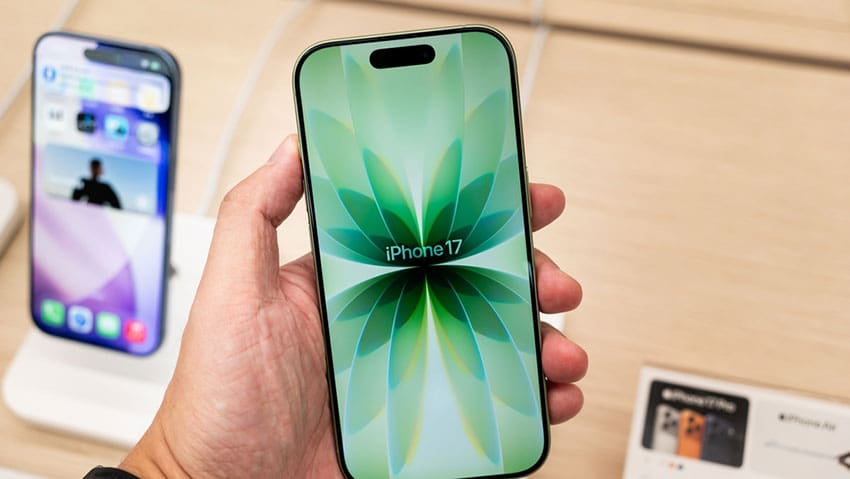
Apple is preparing to raise the price of its products to absorb the soaring cost of memory and storage chips, chief executive Tim Cook has confirmed in an interview with The Wall Street Journal, in the clearest signal yet that the artificial-intelligence boom is now landing squarely in the consumer’s pocket.
“Unfortunately, price increases are unavoidable,” Cook told the newspaper. “We’re doing our best to mitigate the huge increases that are being passed to us, and we’ve been trying to shield our customers from the increases, but the situation has become unsustainable.”

Cook declined to specify when the rises would take effect, how large they might be, or which products would carry them. Apple’s next significant launch is expected in September, when the iPhone 18 range, tipped to include the company’s first foldable handset, is due to arrive. Price changes on Macs and iPads could come sooner. The group quietly lifted the starting price of the Mac Mini last month, between launch events.
The trigger is an extraordinary surge in demand for memory and storage chips from AI companies, which has pushed component costs up so sharply that Apple would have to raise device prices substantially simply to hold its margins steady. The research firm TechInsights estimates that passing the higher costs straight through to buyers, while protecting profitability, would add roughly $270 to the price of the next iPhone Pro.
Memory and storage chips sit inside almost every computing device, from smartphones and laptops to games consoles, medical equipment and cars. The problem is that AI servers are now consuming these chips in rapidly rising volumes, leaving even a company as cash-rich as Apple struggling to secure supply. As the company found with Trump-era tariffs that threatened to push iPhone prices sharply higher, external cost shocks have a habit of finding their way onto the shelf price.
Since last year, when Google, Microsoft, Meta and Amazon began announcing big increases in their capital-spending budgets, the prices of memory and storage chips have both quadrupled. TechInsights expects both to keep climbing into 2027.
The two components do different jobs. Memory, known as DRAM, behaves like the desk in a mid-20th-century office, holding the papers a worker needs for the task in hand. Storage, known as NAND, is the filing cabinet that holds everything else. A smartphone uses DRAM to run the apps currently open, and NAND to file away photos and videos.
Cook said both markets were a concern, but singled out DRAM, pointing to the growing share being diverted to so-called high-bandwidth memory used in AI servers. “There’s less supply at a time when consumers want devices and the memory guys are passing along huge price increases,” he said. “We definitely need memory pricing and supply to return to reasonable levels for consumer products. That’s the bottom line.”
Three companies dominate DRAM: Samsung and SK Hynix in South Korea, and Micron in the United States. NAND is made by those three plus Kioxia and Sandisk. Their share prices and profits have exploded over the past twelve months, with Micron and SK Hynix up more than 800 per cent, and Kioxia and Sandisk up some 4,600 per cent.
Capacity is being added, but not fast enough for consumer buyers. Morgan Stanley forecasts that production capacity for DRAM wafers, the silicon discs on which chips are patterned, will grow 30 per cent by 2027. Yet as suppliers prioritise specialised AI memory, wafers for consumer technology are expected to fall up to 15 per cent short of demand. The squeeze is not Apple’s alone: industry analysts at IEEE Spectrum have charted how the AI build-out is draining DRAM supply away from the mainstream electronics that households actually buy.
China has national champions in memory and storage, but under national-security rules American companies would probably need licences to work with them. Asked whether those restrictions should be eased, Cook said: “I think everything needs to be on the table,” adding, “I think we should look at all supply.”
Apple is far from alone. Hewlett-Packard, Dell and Nintendo have all raised prices, and a consortium of industry associations recently wrote to Treasury Secretary Scott Bessent and Commerce Secretary Howard Lutnick complaining about the over-allocation of memory to AI buyers and asking for help to lift supply. The pressure on consumer pricing has been building for months, as Business Matters reported when memory costs threatened to add hundreds of pounds to the price of an ordinary laptop.
Morgan Stanley estimates a 15 per cent rise in smartphone and PC prices in the United States this year. The effect on the consumer price index should be modest, given the small weighting such devices carry, but any rise on the popular iPhone is likely to attract attention in Washington. Bloomberg has described the resulting crunch as a fully fledged chip crisis, with prices climbing across the board.
Compounding matters, Apple needs additional DRAM to power more AI features, including the rebooted Siri unveiled last week. The company has also long relied on NAND storage upgrades to lift profits, charging $100 to $200 for extra increments that cost it a fraction of that, the very products now caught in the price spiral.
In the interview, Cook said Apple was ready to deploy its cash reserves to help boost memory supply. “We’re willing to use our balance sheet to help be a part of the solution,” he said. “Obviously, more capacity is needed.”
He offered no specifics, and the practical difficulty is plain. It is unclear how Apple could match, let alone beat, the terms AI hyperscalers are offering to lock up supply: three-to-five-year agreements with large cash prepayments that run against Apple’s long tradition of disciplined spending. Nor will the company build its own factories. “We can’t do everything,” Cook said. “We know what we’re good at.”
Apple spends in the low tens of billions of dollars a year on memory and storage, according to people familiar with its costs, making it one of the largest buyers in the world. Historically it has used that heft to wring the keenest prices from suppliers, playing them off against one another. Now, with AI companies storming the market, even Apple has to queue.
For Cook, who has spent more than four decades in the electronics supply chain at IBM, Compaq and Apple, the swing is without precedent. “This is a hundred-year flood,” he said. “I’ve never seen anything like it in any area in over 40 years.”
For consumers and the small businesses that kit out their teams with iPhones, iPads and Macs, the message is blunt: the AI gold rush now has a price tag, and it is about to appear on the till receipt.