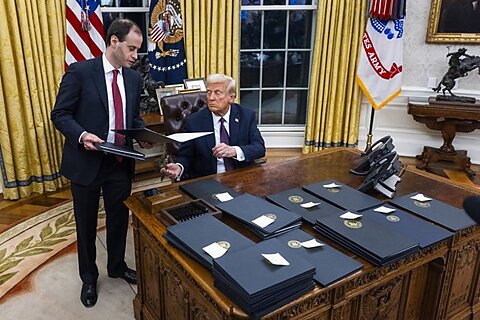

The Constitution’s framers recognized that the pardon power was liable to abuse, but they rejected proposed constraints on it—trusting, as Alexander Hamilton predicted in Federalist 74, that vesting the power in one person “would naturally inspire scrupulousness and caution.” Presidential pardons have sometimes tested that prediction. But it is becoming increasingly clear that the power could be used for something more troubling than individual acts of favoritism: the systematic undermining of executive branch criminal accountability.
Venerable, Valuable, and Vulnerable to Abuse
Clemency is surely as old as punishment itself, and for good reason. Justice systems—and the rule of law—can be impersonal, cold, and unyielding. The exercise of mercy is human—it can mitigate a sentence that seems unduly harsh, recognize the innocence of someone wrongly convicted, or acknowledge that a law was unjustly applied in specific circumstances.
Pardons can also advance important, if controversial, government aims. We know from experience that wars or rebellions are easier to end if clemency can be offered to defeated opponents: people fight to the death if they expect no quarter—a fact George Washington recognized in pardoning men convicted of treason during the Whiskey Rebellion. Pardons can also foster reconciliation. President Abraham Lincoln extended pardons to defeated Confederates, President Gerald Ford pardoned former President Richard Nixon to help Americans move forward after the latter’s resignation, and President Jimmy Carter pardoned men who evaded the draft during the Vietnam War.
Pardons can also serve the political purposes of the grantor. Former President Joe Biden pardoned individuals convicted of federal marijuana possession offenses, fulfilling a campaign pledge, and President Trump pardoned Silk Road founder Ross Ulbricht, keeping a promise he made at the Libertarian National Convention. Political opponents accused John Adams of pardoning Pennsylvania tax revolt participants for electoral gain.
President George H.W. Bush issued controversial pardons to Defense, State, and CIA officials for their conduct related to the Iran-Contra affair, including several convicted of impeding investigations into the scandal. Many believe that Presidents Bill Clinton and Donald Trump went further, issuing pardons as a reward for such actions.
Recent years have seen a growing number of pardons that alarmed American sensibilities. President Biden pardoned family members and commuted the sentence of a judge convicted of taking kickbacks for funneling children to for-profit detention centers. President Trump pardoned MAGA-aligned donors and a former Honduran president convicted of conspiring to traffic cocaine into the United States, even as Trump ordered military strikes against alleged Venezuelan drug traffickers.
Objectionable as many of these exercises of clemency may well be, their systemic effects were limited. And, to an arguable degree, their number and scope were generally constrained by a president’s desire to avoid serious damage to his historical reputation.
Above the Law, Under the Thumb
The pardon power raises more profound concerns, however, when wielded as a tool of managerial control—one that can negate the basic criminal-law constraints that apply to public officials.
Whatever the merits of the Supreme Court’s 2024 decision holding that a president is immune from criminal prosecution for actions within the office’s “conclusive and preclusive constitutional authority,” it shields only one actor: the president. In practice, presidents act through political appointees and career staff, all of whom remain subject to criminal law. But President Trump has reportedly promised pardons to many in his administration—by one account, to “everyone who has come within 200 feet of the Oval.” If the president is willing to pardon large swaths of his administration, government operations could be significantly transformed.
To what extent? Consider the laws that could effectively cease to apply: the criminal statutes governing executive branch employees cover, among other things, bribery, conflicts of interest, classified information disclosure, political activity interference, destruction of public property, and records falsification. Relevant generally applicable criminal laws include those prohibiting perjury, false statements, obstruction of congressional proceedings, witness tampering, destruction or falsification of records in federal investigations, and the deprivation of rights under color of law.
That’s not to suggest that criminal liability is the only check on misconduct by government employees, most of whom endeavor to do their jobs within broadly shared understandings of propriety. And civil or administrative penalties would still be available for wrongdoing, though they are often comparably weak. Nevertheless, the potential for deleterious use of the executive pardon power is not hard to see.
Say you are a federal officer. You and the president agree on the advisability of taking action that you think is ethical and within the law, but you recognize there is legal ambiguity, and a future administration’s prosecutor might see things differently. The president eases your concern by proposing he issue a pardon to definitively preclude what would be (in your minds) an unjustified prosecution. Because you believe the action is just and correct and the question of legality has been allayed, you proceed.
But the president says he won’t issue the pardon publicly until the end of his term. In the meantime, you may find one of his future demands more objectionable. Should you refuse, or even if you quietly resign so that the president can task someone with fewer qualms, he might tear up that pardon sitting in his desk drawer (if it was ever there to begin with). You are an honorable public servant, but you may find yourself going along with the next request and the one after that because you cannot afford to lose the pardon for the first. What began as reassurance has become leverage.
To be sure, executive branch officials have fair reasons to be worried about lawfare by an incoming president. After his administration sought to prosecute President Trump, President Biden recognized that those weapons could be turned against his own team and issued a number of pardons for political allies aimed at precluding such a turn of events. In an era when prosecutorial power has become a weapon, there is genuine force to an argument that pardons are a practical defense for officials who might otherwise face vindictive prosecution.
But the criminal statutes governing the conduct of executive branch employees exist because we decided that public officers should answer to the law, not merely to the person above them. A president willing to effectively void those laws for his administration has changed that arrangement—legally, but fundamentally. The founders anticipated that the wish to avoid the appearance of weakness or corruption would be enough to restrain its abuse. That was a prediction about character, not a guarantee.