

For nearly four decades, The Sunday Times Rich List has been the closest thing Britain has to a national league table of money. This year’s edition reads less like a celebration of enterprise and more like a departures board.
Revolut chief executive Nik Storonsky and the publicity-shy quant trader Alex Gerko have broken into the top 10 for the first time. But the headline story, according to the list’s compiler Robert Watts, is not who has arrived, it is who has gone.

As many as one in six of the individuals and families who appeared on the 2024 ranking are missing from this year’s edition, with the compiler warning that the figures lay bare the scale of Britain’s wealth exodus.
“Many foreign billionaires who have been living in the UK have… dropped out because they have moved away,” Mr Watts said.
The top of the table holds, but the cracks are widening
Sanjay and Dheeraj Hinduja, the British-Indian brothers behind the Mumbai-headquartered Hinduja Group, kept top spot with a combined fortune of £38bn. The rest of the podium was likewise unchanged, with the famously secretive property magnates David and Simon Reuben and Ukrainian-born industrialist Sir Leonard Blavatnik both still sitting on fortunes north of £25bn.
The most dramatic faller was Sir James Dyson. The inventor’s eponymous engineering empire was hit hard by Donald Trump’s swingeing tariff regime, and his estimated net worth nearly halved over the year from £20bn to £12bn, enough to send him tumbling from fourth to 13th. It is not the first time Sir James has tangled with policy: he has been one of the most vocal critics of Rachel Reeves’s inheritance tax changes, branding them “spiteful” and warning of the consequences for British family businesses.
City money muscles into the top 10
If old money is having a wobble, the new money minted in the City of London is flexing. Mr Storonsky cracked the top 10 in the same year his fintech juggernaut was finally granted a UK banking licence and clinched a $75bn valuation in a November funding round.
A place behind him in eighth sat Mr Gerko, the cerebral force behind XTX Markets, the quantitative trading shop that has quietly become one of the City’s biggest tax payers. His estimated fortune sits north of £16bn.
Both men were born in Russia, and both have renounced their citizenship in protest at Vladimir Putin’s illegal invasion of Ukraine — a reminder that the City’s talent pool is global, and mobile.
A tale of two exoduses
The list’s real story, however, is in the gaps.
For the first two decades of this century, Britain’s super-rich enjoyed a near-uninterrupted bull run. Rich List wealth grew by close to 600 per cent between 2000 and 2022, according to The Sunday Times. That run is now over. The number of sterling billionaires in the UK peaked at 177 in 2022; this year’s tally of 157 was barely up on 2025.
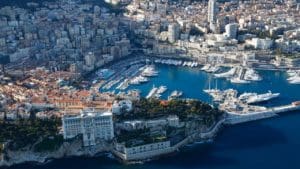
Under the survey’s rules, foreign-born residents who leave automatically fall out of the rankings, while British citizens who emigrate remain. Both groups are now visibly thinning. Mr Watts said he had seen a “sharp rise in the number of British nationals now resident in Dubai, Switzerland and Monaco”, warning the “twin exoduses” represented a worrying development for the British economy and the public finances.
His unease is echoed by international data. The Henley Private Wealth Migration Report has the United Kingdom haemorrhaging high-net-worth residents at a faster clip than any other major economy, with the UAE, Italy and Switzerland the biggest beneficiaries.
“Will more of the wealthy now set up or grow their ventures overseas and in doing so create fewer jobs here?” Mr Watts asked. “How much tax – if any – will Rachel Reeves’ Treasury be able to extract from those affluent Brits who have now left the country?”
The Reeves effect
Critics increasingly point the finger at Whitehall. The Chancellor has been accused of accelerating departures with a string of measures aimed at ultra-high-net-worth residents and their assets.
In her first Budget in October 2024, Ms Reeves pressed ahead with the abolition of the non-domicile tax regime, slapped VAT on private school fees, raised capital gains tax and tightened several inheritance tax carve-outs. Her 2025 intervention added a so-called mansion tax on properties worth more than £2m and further narrowed the inheritance tax net.
Advisers say the cumulative effect has been a stampede. Research from consultancy Chamberlain Walker, cited by Business Matters, suggests around 1,800 non-doms left Britain in the months after April’s tax changes — 50 per cent more than the Treasury had pencilled in.
The casualties include some of the City’s biggest names: former Goldman Sachs International chief Richard Gnodde and steel magnate Lakshmi Mittal, both long-standing Rich List fixtures, have moved on. Only one billionaire is recorded as having moved the other way in the past year — the new US ambassador to the Court of St James’s, Warren Stephens.
What it means for SME Britain
For the small and medium-sized businesses that read this magazine, the implications run deeper than schadenfreude over a few moving vans full of Old Master paintings.
Wealthy entrepreneurs are typically the angel investors, family-office backers and growth-stage cheque writers that smaller firms rely on when banks turn cautious. If they decamp to Dubai or Lugano, that capital tends to follow them. The same goes for the philanthropic giving, board memberships and mentoring that often anchor a city’s business community.
The harder question for the Chancellor, and for the firms that depend on a healthy ecosystem of British-based capital, is whether the additional tax raised from those who stay can outweigh the receipts and investment lost from those who leave. On the evidence of this year’s Rich List, that calculation is starting to look uncomfortable.
Read more:
Britain’s billionaires are voting with their feet – and the rich list proves it