

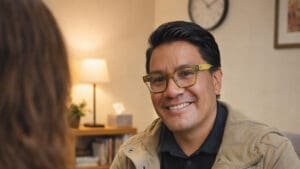
A Second Life Built on Accountability and Recovery
John Joseph Cardwell’s story does not start in a clinic. It starts with loss.

He grew up in Christchurch, New Zealand, in a large family with strong roots. His father was a New Zealander. His mother was Samoan. He was the eldest of five siblings. As a young person, life was active and structured. He played rugby, soccer, cricket, and rugby league at representative levels.
But over time, that structure broke down.
“My journey through addiction to alcohol and numerous illegal substances and denial of the impact I was causing those around me, especially my family, cost me everything,” Cardwell says. “My identity, my relationships, and my sense of purpose.”
This period would define the turning point of his life.
Hitting Bottom and Facing Public Failure
Cardwell does not avoid talking about his lowest moments. In fact, he leans into them.
“I was exposed in the public eye for my behaviours in active addiction for the whole world to see,” he says. “It was a massive failure in my life.”
That exposure forced a decision. Stay the same or rebuild.
For Cardwell, rebuilding meant full accountability.
“The success was to see it, be accountable, and commit to change,” he explains.
This mindset became the foundation of everything that followed. Not just recovery, but leadership.
The Recovery Process That Changed Everything
Cardwell has been clean and sober since October 2021. But he is clear that recovery was not instant.
“Recovery wasn’t instant,” he says. “It was built through pain, honesty, and resilience.”
He credits structure and community as key factors. He leaned on mentors who had already built stable lives.
“Two men in particular had what I couldn’t manage to get,” he says. “A stable job, studying at university, their own place, relationships, family back in their life, the fact they could commit for a long period of time baffled me. They reminded me of the lengths I would go to score my substances, I could do the same for a different way of living to live”. He thought it was such a long shot to achieve all of what he thought at the time, was impossible.
He followed their example step by step.
“I found and surrounded myself with people who had walked in my shoes before,” he says. “They role modelled a better way to live.”
Faith also played a role.
“I overcame obstacles with my faith in God,” he adds.
These influences helped him rebuild not just habits, but identity.
From Lived Experience to Clinical Practice
After stabilising his life, Cardwell made a decision that would shape his career. He chose to formalise his experience through education.
He studied at Auckland University of Technology. There, he graduated having studied Health Science with a Major which was the main focus on Mental Health and Addictions. He continued with the study pathway assisted by lecturers towards postgraduate study to become DAPAANZ – (Drug and Alcohol Practitioner’s Association of Aotearoa New Zealand) registered.
Today, he works in the Health Sector as a clinician and counsellor.
His work includes individual sessions, couples counselling, and group facilitation. He focuses on alcohol and drug recovery, often referred to as AOD counselling. Alongside other addictions like gambling, internet and gaming often highlighting (CEP) Co-Existing Problems.
What sets him apart is not just training. It is a lived experience.
“I stand not just as someone who is surviving addiction,” he says, “but as someone who found purpose through it.”
A Culturally Grounded Approach to Mental Health
Cardwell’s work is shaped by the communities he serves. He works closely with Māori and Pasifika populations.
He uses culturally grounded modalities such as:
Te Whare Tapa Whā
Fonofale Model
These frameworks focus on the whole person. Not just symptoms, but family, culture, and environment.
“I apply a culturally grounded approach,” he explains. “It’s about holistic, whānau-centred wellbeing.”
This approach allows him to address deeper issues. These include intergenerational trauma and systemic barriers.
He focuses on building trust first.
“Cultural safety is key,” he says. “Without that, there is no real progress.”
Leadership Through Service and Community Impact
Cardwell does not frame himself as a traditional business leader. But his work shows clear leadership traits.
He is a communicator. A problem solver. And someone who leads by example.
He is also active in the recovery community. He participates in a number of 12-step recovery programs and has shared by performing his story publicly through theatre, including a production called Recovery Street.
“Shame and guilt are a strength of mine today,” he says. “Because I can speak to it openly and honestly.”
This openness helps others connect with him. It also builds credibility.
He is not speaking from theory. He is speaking from experience.
Building Toward the Next Phase
Looking ahead, Cardwell is focused on growth. Not just personal growth, but impact.
He is working toward opening a private counselling practice and a bigger goal to establish a detox / rehabilitation centre alongside his partner in the Christchurch / Mid Canterbury region.
The goal is clear.
“To help the addict who still suffers,” he says.
His approach to goals is structured but simple.
“Set goals. Break them into small steps. Stay consistent,” he says. “Know your why.”
For him, that “why” is rooted in family, community, and service.
A Story That Continues to Evolve
Today, Cardwell describes his life in simple terms.
“I have peace and freedom from active addiction,” he says.
But he does not position himself as finished. His story is still evolving.
His journey from addiction to clinician is not just personal. It reflects a broader shift. One where lived experience is becoming a key part of mental health leadership.
And in that space, Cardwell is building a role that is both practical and impactful.
“My story is no longer about struggle,” he says. “It’s about giving back.”
Read more:
John Cardwell: From Addiction to Mental Health Leadership