
No Result
View All Result
  • About us
  • Contact us
  • Privacy Policy
  • Terms & Conditions
Smart Investment Today
  • News
  • Economy
  • Editor’s Pick
  • Investing
  • Stock
  • News
  • Economy
  • Editor’s Pick
  • Investing
  • Stock
No Result
View All Result
Smart Investment Today
No Result
View All Result
Home Editor's Pick

Will Louisiana v. Callais Close the Door on Race-Conscious Redistricting?

by
April 29, 2026
in Editor's Pick
0
Will Louisiana v. Callais Close the Door on Race-Conscious Redistricting?
0
SHARES
0
VIEWS
Share on FacebookShare on Twitter

Walter Olson

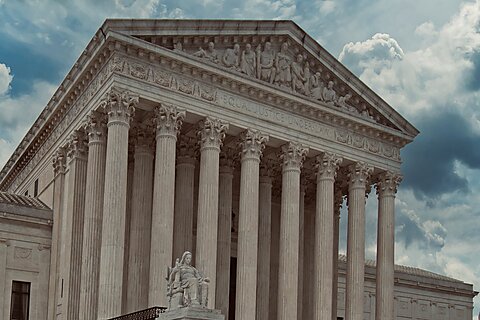
In today’s decision in Louisiana v. Callais, split 6–3 on ideological lines, the Supreme Court has sharply narrowed the extent to which it will permit the use of racially conscious line-drawing under the Voting Rights Act. That aligns the Court’s vision on voting rights with its move in recent years to reject race-conscious government action in areas such as university admissions, and, in fact, Justice Samuel Alito’s opinion cites the Court’s Students for Fair Admissions decision.
While the Court has long been headed in this direction as a matter of principle, it has not always spoken or acted clearly. Today’s decision removes the doubt. 
In practice, the Court’s existing rules have been widely interpreted as blessing the purposeful creation of majority-minority districts where such can be done without doing obvious violence to traditional districting principles by, for example, drawing a district that is eighty miles long and five miles wide. 
At the same time, Justice Elena Kagan’s dissent for the three liberals outlines two possible practical outcomes that we should take seriously. First, line-drawers may find it easy to conceal race-conscious motives from legal scrutiny. The Court today holds that liability applies only when circumstances give rise to a strong inference of intentional discrimination.
This, in turn, interacts disturbingly with the second practical problem Kagan points out: how it combines with the Court’s go-ahead for partisan political gerrymandering. Across much of the country, partisan voting patterns correlate strongly with race. A Republican map drawn to push down Democratic Party representation as close to zero as possible—as the Court has ruled to be proper—might well involve algorithms that break up some minority-majority districts that would emerge neutrally and impartially from geography. Likewise, a Democratic-drawn gerrymander intended to wipe out Republican representation, which could manipulate voters along racial lines in different but also objectionable ways.
Such problems would be easier to negotiate in a country that enjoyed impartial civic norms of good governance and low polarization. They are likely to prove difficult in the America we have right now. 
Previous Post

Apply to Cato University 2026: Criminal Justice Symposium

Next Post

GUARD Act Puts Policymakers, Not Parents, in Charge of Kids’ AI Use

Next Post
GUARD Act Puts Policymakers, Not Parents, in Charge of Kids’ AI Use

GUARD Act Puts Policymakers, Not Parents, in Charge of Kids’ AI Use

    Sign up for our newsletter to receive the latest insights, updates, and exclusive content straight to your inbox! Whether it's industry news, expert advice, or inspiring stories, we bring you valuable information that you won't find anywhere else. Stay connected with us!


    By opting in you agree to receive emails from us and our affiliates. Your information is secure and your privacy is protected.

    • Trending
    • Comments
    • Latest

    Gold Prices Rise as the Dollar Slowly Dies

    May 25, 2024
    Pibit.AI raises $7m Series A to bring trusted AI underwriting to the insurance sector

    Pibit.AI raises $7m Series A to bring trusted AI underwriting to the insurance sector

    November 20, 2025

    Richard Murphy, The Bank of England, And MMT Confusion

    March 15, 2025

    We Can’t Fix International Organizations like the WTO. Abolish Them.

    March 15, 2025

    Ana-Maria Coaching Marks Milestone with New Book Release

    0

    New Bonded Warehouse Facilities Launched in Immingham

    0

    From Corporate Burnout to High-Performance Coach: Anna Mosley’s Inspiring Journey with ‘Eighty’

    0

    Simple Registration Increases Credit Application Success by 27.7%, Reports BadCredit.co.uk

    0
    House Votes to Continue Subverting the Fourth Amendment

    House Votes to Continue Subverting the Fourth Amendment

    April 29, 2026
    Who Should Govern Surgical AI? Not the FDA—and Not Surgeons Either

    Who Should Govern Surgical AI? Not the FDA—and Not Surgeons Either

    April 29, 2026
    GUARD Act Puts Policymakers, Not Parents, in Charge of Kids’ AI Use

    GUARD Act Puts Policymakers, Not Parents, in Charge of Kids’ AI Use

    April 29, 2026
    Will Louisiana v. Callais Close the Door on Race-Conscious Redistricting?

    Will Louisiana v. Callais Close the Door on Race-Conscious Redistricting?

    April 29, 2026

    Recent News

    House Votes to Continue Subverting the Fourth Amendment

    House Votes to Continue Subverting the Fourth Amendment

    April 29, 2026
    Who Should Govern Surgical AI? Not the FDA—and Not Surgeons Either

    Who Should Govern Surgical AI? Not the FDA—and Not Surgeons Either

    April 29, 2026
    GUARD Act Puts Policymakers, Not Parents, in Charge of Kids’ AI Use

    GUARD Act Puts Policymakers, Not Parents, in Charge of Kids’ AI Use

    April 29, 2026
    Will Louisiana v. Callais Close the Door on Race-Conscious Redistricting?

    Will Louisiana v. Callais Close the Door on Race-Conscious Redistricting?

    April 29, 2026
    • About us
    • Contact us
    • Privacy Policy
    • Terms & Conditions

    Copyright © 2026 smartinvestmenttoday.com | All Rights Reserved

    No Result
    View All Result
    • News
    • Economy
    • Editor’s Pick
    • Investing
    • Stock

    Copyright © 2026 smartinvestmenttoday.com | All Rights Reserved