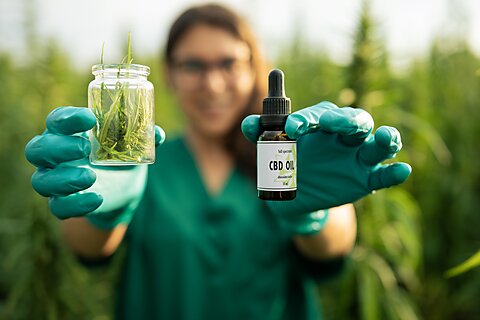

Last November, when Congress passed a continuing resolution to reopen the partially shuttered federal government, it also eliminated the so‑called “hemp loophole” from the 2018 Farm Bill.
How We Got Here
For decades, federal law made no distinction between marijuana and non‑intoxicating hemp, effectively banning a harmless agricultural product under the Controlled Substances Act. The 2018 Farm Bill finally corrected that mistake by legalizing low‑THC hemp and opening the door to a thriving market in hemp‑derived products like CBD—a welcome step away from blanket prohibition. But Congress drew the line based on THC concentration rather than actual use, and regulators, especially at the FDA, have failed to provide a clear framework. The result is a messy yet predictable outcome: entrepreneurs have used that definition to develop and market psychoactive hemp‑derived cannabinoids such as delta‑8 THC, often in products that deliver a mild effect while remaining federally legal. In practice, this has created a rapidly expanding market that gives consumers access to lower‑dose cannabis alternatives—even in states that still prohibit marijuana.
Closing the Loophole, Reopening Prohibition
In November, lawmakers enacted language redefining hemp by applying the 0.3 percent THC threshold to all forms of THC—not just delta‑9—and even to any cannabinoid deemed to have similar effects. They also barred hemp-derived cannabinoids sold as finished consumer products or as intermediate goods marketed directly to the public, while targeting cannabinoids produced through chemical conversion—the very processes that made many of these products viable. Notably, many state-licensed cannabis retailers supported the change, as hemp-derived products were undercutting their heavily regulated and highly taxed businesses. In practice, this was not a modest regulatory correction; it was a return to prohibition by another name, one that makes legal cultivation of Cannabis sativa far more difficult and pushes consumers and producers back toward the same gray and illicit markets Congress had begun to displace. The new provisions are scheduled to take effect 12 months after the bill’s enactment.
In practical terms, complying with the new standard is nearly impossible. The law caps THC at levels far below those found in most existing products, meaning the vast majority of hemp-derived cannabinoid products will become unlawful. Industry estimates suggest the change could eliminate 90–95 percent of current products—effectively wiping out much of the sector and leaving many manufacturers with no viable path forward. This shift will also leave many consumers—especially those in states where cannabis remains illegal or tightly restricted—with a familiar set of options: abstain, navigate limited medical channels, or turn to the illicit market. And as history repeatedly shows, illicit markets do not favor mild, clearly labeled, low-dose products; they favor potency, concealability, and unpredictability.
Meanwhile, several states have passed laws limiting the THC concentration (or otherwise regulating) gummies, drinks, and other hemp-derived cannabinoid products. Some states have enacted laws banning so-called “intoxicating derivatives” of CBD, including delta-8-THC and delta-10-THC.
Virginia’s Regulatory Cliff
One such state is Virginia. Virginia’s cannabis policy is a study in contradictions. The state allows adults to possess marijuana, but it has yet to legalize retail sales for recreational use. The only lawful way to purchase cannabis is through the medical program, which requires certification from a licensed practitioner and limits sales to state-licensed dispensaries. In effect, Virginians can legally use marijuana but cannot legally buy it unless they navigate a medical gatekeeping system—leaving licensed dispensaries as the only authorized retailers and pushing everyone else outside the legal market.
Virginia lawmakers recently passed SB 542, which establishes a framework for legal retail sales, but those sales will not begin until the system is fully operational. It is structured to virtually guarantee that the primary beneficiaries will be the state’s existing medical cannabis operators. A small number of licensed pharmaceutical processors will enter the retail market with inventory on hand, staff in place, and storefronts already open, while potential competitors are still working to obtain licenses and launch their businesses.
At the same time, the new law will effectively ban the lower-cost hemp products that had been competing with them—clearing the field for incumbent, state-licensed businesses. The law includes a provision imposing a 2 mg THC cap—so low that most legally sold hemp products will practically vanish overnight, with no transition period before a new regulated market emerges. The result is a regulatory cliff: small businesses that followed the rules face closure, while consumers lose access to the low-dose products they rely on and are pushed toward more expensive or unregulated alternatives.
Who Gets Left Behind
The human cost of these policies is already evident. In a letter to the editor of Richmond-based RVA Magazine, a Virginia hemp retailer describes building a small business to support her family—only to see it effectively wiped out by a last-minute change in state law. She followed the rules, invested in inventory, employees, and storefronts, and served customers who rely on low-dose products for everyday needs. Now, with no meaningful transition period and no realistic path into the new regulated market, she faces losing everything she has built. It’s a stark reminder that these are not abstract regulatory tweaks, but decisions that can upend livelihoods overnight for people who did exactly what the law asked of them.
Virginia Governor Abigail Spanberger has until April 13 to sign, veto, or suggest targeted changes to the bill.
What happens next will determine whether Virginia continues the familiar cycle of prohibition under a new name. If these changes take effect as written, many consumers who rely on low-dose, clearly labeled products will not stop using them; instead, policymakers will drive them out of the legal market and into one that is less transparent, less predictable, and more dangerous.