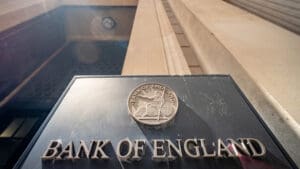
The Bank of England has warned that escalating tensions in the Middle East could push the UK towards a financial crisis scenario, as rising energy costs, higher borrowing rates and market volatility expose underlying vulnerabilities in the economy.
In its latest assessment, the Bank’s Financial Policy Committee (FPC) said the Iran conflict has already triggered a “substantial” shock to global markets, tightening financial conditions and increasing inflationary pressures at a time when risks were already elevated.

One of the most immediate impacts is being felt by homeowners. The Bank estimates that around 5.2 million borrowers, more than half of all mortgaged households, are now expected to face higher repayments by 2028, up from 3.9 million before the conflict began.
The increase reflects a sharp shift in market expectations for interest rates, with investors scaling back hopes of cuts and, in some cases, pricing in further rises.
More than 1,500 mortgage products have already been withdrawn from the market as lenders react to increased volatility, further limiting options for borrowers.
Andrew Bailey cautioned that markets may be overreacting to the outlook for rates, but acknowledged that the environment has become significantly more uncertain.
The conflict has disrupted global energy supplies, particularly through the Strait of Hormuz, a key route for oil and gas exports. The resulting surge in energy prices is feeding directly into inflation, raising the prospect of sustained cost pressures across the economy.
The FPC warned that higher inflation would weigh on growth while increasing borrowing costs, creating a challenging environment for both households and businesses.
Fuel prices have already risen sharply, and further increases in household energy bills are expected later in the year, adding to the cost-of-living squeeze.
The Bank also highlighted growing instability in financial markets. Hedge funds have unwound around £19 billion of positions linked to expectations of falling interest rates, contributing to volatility in short-term borrowing costs.
At the same time, the increasing interconnectedness of equity and bond markets, partly driven by hedge fund activity, raises the risk that stress in one area could quickly spread to others.
“A sharp correction in equity markets could transmit stress to gilt markets,” the committee warned, pointing to the potential for broader financial disruption.
Particular concern has been raised about the $18 trillion private credit sector, which has expanded rapidly since the financial crisis and now plays a significant role in corporate lending.
The recent collapse of Market Financial Solutions was cited as an example of vulnerabilities in the sector, including high leverage, limited transparency and optimistic valuations.
Bailey drew parallels with the early stages of the 2008 crisis, noting that initial warnings about isolated problems can sometimes underestimate systemic risks.
The report also flagged rising risks in sovereign debt markets, with governments, including the UK, issuing large volumes of bonds to finance spending.
The UK is expected to spend more than £100 billion this year on debt interest alone, limiting fiscal flexibility and reducing the ability to respond to future shocks.
The FPC warned that the combination of higher borrowing costs and weaker growth could create a “debt trap” for some economies, further amplifying global financial risks.
Despite the warnings, the Bank stressed that the UK’s core financial system remains resilient, with banks well capitalised and capable of absorbing shocks.
However, it cautioned that the combination of multiple pressures, including high household debt, market volatility and geopolitical uncertainty, increases the risk of a more severe downturn if conditions deteriorate further.
The Bank’s assessment underscores the fragility of the current economic environment, where global events are quickly feeding into domestic financial conditions.
For households, the prospect of higher mortgage payments and rising living costs presents a significant challenge. For businesses, tighter financial conditions and weaker demand could constrain investment and growth.
For policymakers, the task is to navigate a narrow path between controlling inflation and supporting economic stability, while preparing for the possibility that the current shock could evolve into a broader financial crisis if multiple risks materialise at once.
Read more:
Bank of England warns Iran war could trigger financial crisis risks